
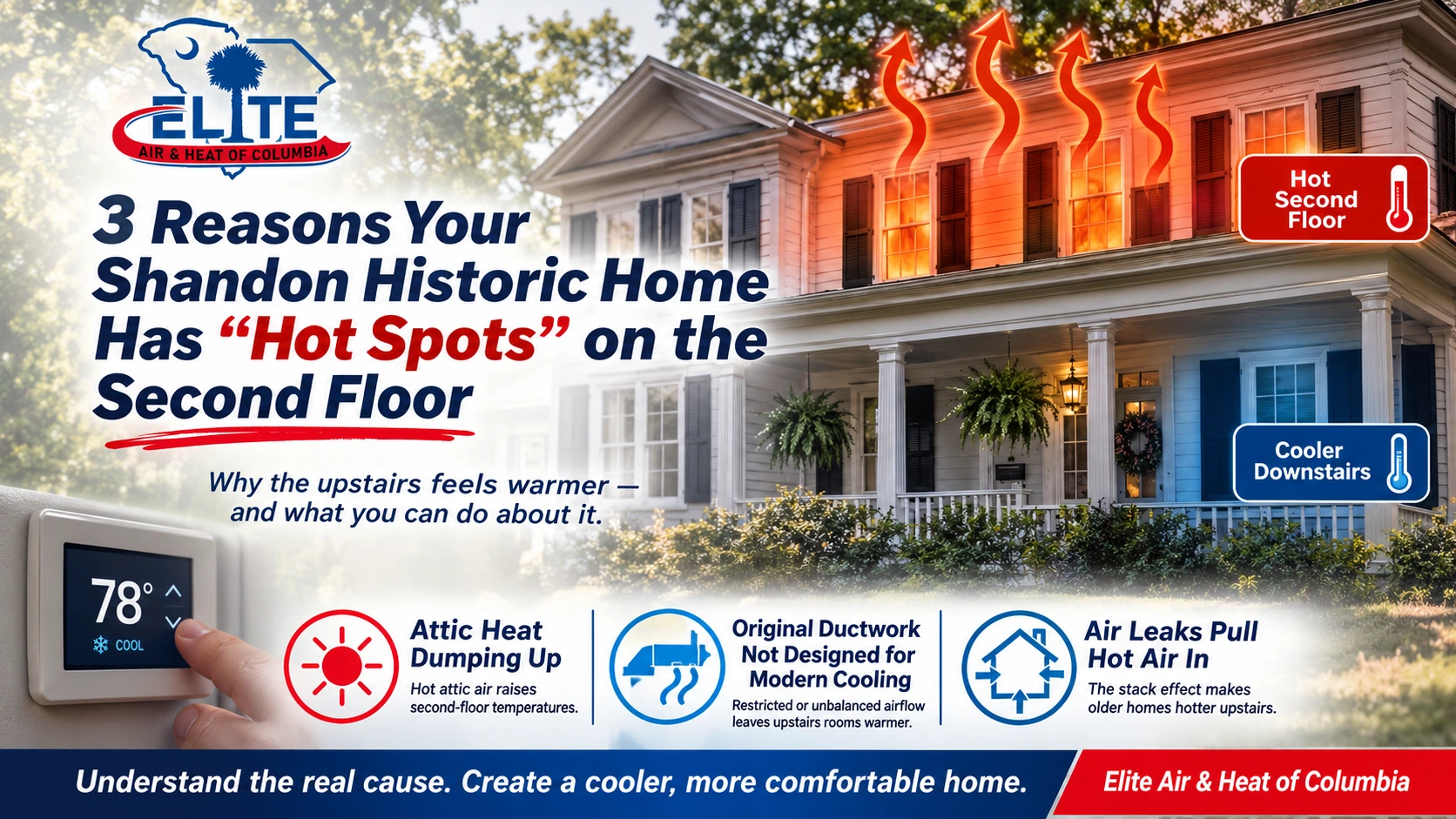

If you live in Shandon and find yourself constantly adjusting the thermostat because the upstairs feels much warmer than the rest of the house, you’re not alone.
Many historic homes throughout Shandon were built long before modern air conditioning systems became standard. While these homes offer charm, character, and craftsmanship that are hard to find today, they often present unique comfort challenges.
One of the most common complaints homeowners have is:
“The downstairs feels fine, but the second floor is always hot.”
Here’s the plain answer:
The problem is usually not a single bad HVAC component. In many historic homes, hot spots develop because the house, ductwork, and cooling system were never originally designed to work together the way modern homes are.
That doesn’t automatically mean you need a new air conditioner.
In fact, replacing the HVAC system without identifying the real cause often leaves homeowners frustrated when the upstairs remains uncomfortable after spending thousands of dollars.
The goal is not to buy the biggest repair.
The goal is to understand why your home is holding heat differently than the rest of the house.
Hot Upstairs, Cool Downstairs?
Your HVAC system may need professional attention. Call today to restore balanced comfort throughout your home.
Why Historic Homes Often Struggle With Upstairs Comfort
Before discussing specific causes, it’s important to understand what makes older homes different.
Many homes in Shandon were built decades before central air became common. As a result:
- Original floor plans weren’t designed around airflow.
- Ductwork was often added later.
- Attic insulation may be outdated.
- Air leakage is usually higher than in modern homes.
- Second floors are naturally exposed to more heat.
Even when the HVAC equipment is functioning correctly, these factors can create significant temperature differences between floors.
If you only remember one thing, remember this:
An upstairs hot spot is often an airflow and heat-management problem—not necessarily an air conditioner problem.
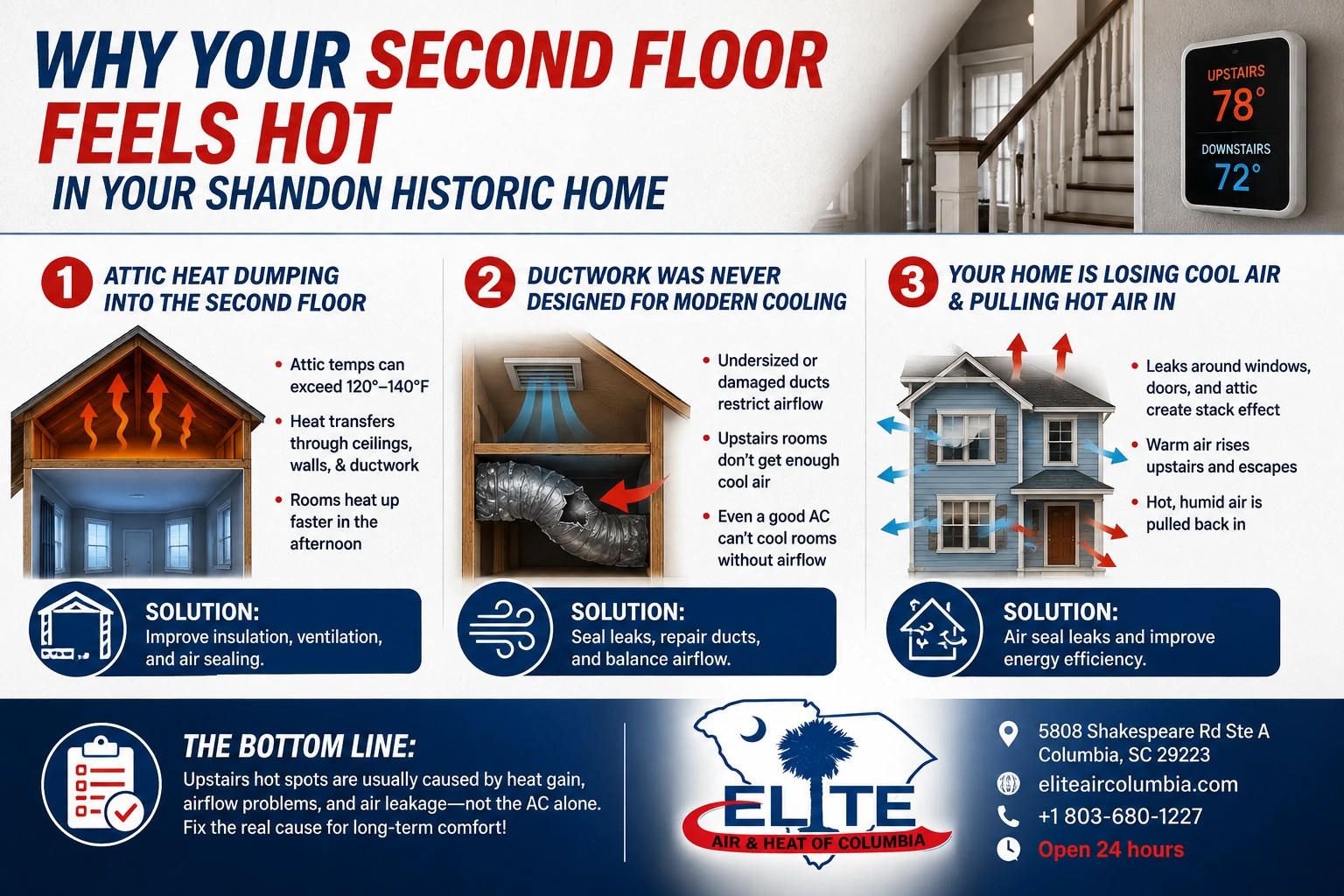
Reason #1: Your Attic Is Dumping Heat Into the Second Floor
In many historic homes, the biggest contributor to second-floor hot spots is the attic.
During a South Carolina summer, attic temperatures can easily exceed 120 to 140 degrees.
That heat doesn’t stay confined to the attic.
It transfers through:
- Ceilings
- Walls
- Recessed lighting
- Attic access doors
- Ductwork
- Gaps around framing
The rooms directly beneath the attic absorb that heat throughout the day.
As a result, the second floor is constantly fighting an uphill battle.
Signs Attic Heat Is the Problem
You may notice:
- Rooms heat up rapidly in the afternoon.
- Bedrooms remain warm even after sunset.
- Upper ceilings feel noticeably warmer.
- Cooling improves significantly at night.
This is where homeowners sometimes get into trouble.
They assume the air conditioner is undersized when the real issue is excessive heat entering the home.
What a Good Technician Should Inspect
A thorough evaluation should include:
- Attic insulation levels
- Ventilation performance
- Air sealing gaps
- Duct insulation
- Attic access insulation
Simply adding a larger HVAC system without addressing attic heat gain often leads to higher utility bills without solving the comfort problem.
Reason #2: The Original Ductwork Was Never Designed for Modern Cooling
Many Shandon homes have had HVAC systems added or modified over decades.
The ductwork often tells that story.
In some cases:
- Original ducts were undersized.
- Additions were connected improperly.
- Renovations altered airflow.
- Multiple rooms compete for limited airflow.
The result is uneven cooling throughout the home.
How Airflow Problems Create Hot Spots
Your HVAC system can only cool rooms that receive enough conditioned air.
If upstairs bedrooms receive inadequate airflow, they will naturally stay warmer.
Even a perfectly functioning air conditioner cannot compensate for severely restricted airflow.
Common duct issues include:
- Crushed flex ducts
- Leaking duct connections
- Poor duct design
- Closed dampers
- Improper balancing
- Long duct runs to upstairs rooms
Many homeowners assume they need a larger system when the existing equipment simply cannot deliver enough air to the areas that need it most.
Warning Signs of Airflow Problems
Look for:
- Weak airflow from upstairs vents
- Certain rooms always feeling warmer
- Large temperature differences between floors
- Whistling vents
- Rooms that never seem comfortable
A good technician should measure airflow rather than simply guessing.
Airflow can be tested, measured, and balanced.
That’s often more effective than replacing equipment blindly.
Reason #3: Your Home Is Losing Cool Air and Pulling Hot Air In
Historic homes are beautiful.
They’re also notoriously leaky.
Over time, homes develop countless small openings around:
- Windows
- Doors
- Plumbing penetrations
- Electrical penetrations
- Attic bypasses
- Crawl space connections
These openings allow conditioned air to escape while pulling hot, humid outdoor air inside.
Second floors are particularly vulnerable because warm air naturally rises.
This phenomenon, known as the stack effect, is one of the biggest reasons older homes develop temperature imbalances.
What Is the Stack Effect?
Think of your home as a chimney.
As indoor air warms, it rises toward the upper levels.
When that air escapes through leaks near the attic, it creates negative pressure that pulls replacement air into the home from lower levels and outside.
The result:
- Hotter upstairs rooms
- Higher humidity
- Increased HVAC runtime
- Uneven temperatures
Many homeowners never realize how much comfort can improve simply by reducing air leakage.

Why Columbia’s Pine Pollen Is a “Biological Blanket” for Your HVAC
Every spring in Columbia, it happens almost overnight. Cars turn yellow.Porches turn yellow.Driveways turn yellow. And your HVAC system? It…
Signs Air Leakage Is Contributing
Common clues include:
- Drafts near windows
- Dust accumulation
- Humidity issues
- Rooms that cool slowly
- Significant temperature swings
A comfort issue that seems like an HVAC problem may actually be a building-envelope problem.
Why Bigger HVAC Systems Usually Don’t Fix Upstairs Hot Spots
When homeowners become frustrated with second-floor temperatures, the first instinct is often:
“I need a bigger air conditioner.”
Unfortunately, that’s often the wrong solution.
Oversized systems can create new problems:
- Short cycling
- Poor humidity control
- Uneven temperatures
- Higher operating costs
- Increased wear and tear
In Columbia’s climate, comfort is not just about temperature.
Humidity plays a major role.
An oversized system may cool quickly but fail to remove enough moisture from the air.
The home feels cooler on paper but less comfortable in reality.
A good technician should evaluate:
- Airflow
- Duct design
- Heat gain
- Insulation
- Air leakage
before recommending larger equipment.
What Homeowners Can Check Themselves
There are a few things you can safely inspect before scheduling an evaluation.
Check Vent Airflow
Compare airflow between:
- Downstairs vents
- Upstairs vents
Noticeable differences can indicate duct issues.
Inspect Air Filters
Restricted filters can reduce airflow throughout the system.
Replace dirty filters according to manufacturer recommendations.
Check Attic Access Doors
Many attic hatches leak significant amounts of heat.
Look for:
- Missing weatherstripping
- Gaps
- Uninsulated covers
Observe Temperature Patterns
Pay attention to:
- Which rooms are hottest
- What time of day problems occur
- Whether comfort improves at night
These clues help identify the root cause.
When It Makes Sense to Call a Professional
If the problem has persisted for multiple seasons, guessing usually becomes expensive.
A proper comfort evaluation should examine:
- Duct performance
- Airflow measurements
- Static pressure
- Insulation levels
- Heat gain
- System sizing
- Indoor humidity
The goal is to identify why the second floor is overheating—not simply replace parts until something changes.
If the issue keeps coming back, replacing equipment blindly usually is not the answer.
The Real Solution Is Usually a Combination of Improvements
One of the biggest misconceptions homeowners have is believing there’s a single fix.
In many historic homes, comfort improves through a combination of:
- Air sealing
- Insulation upgrades
- Duct improvements
- Airflow balancing
- Ventilation adjustments
- HVAC optimization
That’s why two homes on the same street can have completely different solutions.
A good technician should be able to explain what is contributing most to your specific situation.
Before You Replace Your HVAC System, Understand Why the Upstairs Is Hot
Many Shandon homeowners assume their air conditioner is failing when the second floor becomes uncomfortable.
Sometimes that’s true.
More often, the issue involves a combination of attic heat, airflow limitations, and air leakage that has developed over decades.
Replacing the HVAC equipment without addressing those underlying issues can leave you with the same comfort problems and a much larger bill.
The Best Next Step for Solving Second-Floor Comfort Problems
If your upstairs stays hot year after year, focus on understanding the cause before investing in major HVAC upgrades.
A thorough comfort evaluation should identify where heat is entering the home, how air is moving through the duct system, and whether the equipment is actually the problem.
Elite Air & Heat of Columbia helps homeowners diagnose persistent hot spots, airflow problems, humidity issues, and uneven temperatures so you can make improvements that actually solve the problem instead of masking it.
Second Floor Too Hot to Handle?
Get your Shandon home comfortable again with professional HVAC service. Call today for expert help.