
If you’ve lived through a South Carolina spring, you already know the struggle.
One day your car is clean.
The next morning it looks like someone dusted it with yellow powder.
That same pollen finds its way onto porches, outdoor furniture, clothing, and unfortunately, into homes.
For many homeowners, spring means:
- Sneezing
- Congestion
- Itchy eyes
- Dust buildup
- Poor indoor air quality
That’s usually when the question comes up:
“Should I stick with a standard air filter, or is an electronic air cleaner worth the upgrade?”
Here’s the plain answer.
A quality standard air filter can capture a significant amount of pollen, but an electronic air cleaner is generally much more effective at removing smaller airborne particles and improving overall indoor air quality. That doesn’t automatically mean every home needs one, but for allergy sufferers, the difference can be noticeable.
The goal is not to buy the most expensive air-cleaning device available.
The goal is to understand what each system actually does and whether it solves the problem you’re trying to fix.
Breathe Cleaner Air Today
Stop pollen, dust, and airborne allergens before they circulate through your home. Call now to find the right indoor air quality solution.
Why Pollen Is Such a Challenge
Many homeowners assume pollen only becomes a problem outdoors.
Unfortunately, that isn’t how it works.
Pollen enters homes through:
- Open doors
- Open windows
- Clothing
- Shoes
- Pets
- Air leaks around doors and windows
- Ventilation systems
Once inside, pollen becomes part of your indoor environment.
Every time your HVAC system runs, air circulates throughout the home.
Without proper filtration, pollen continues moving through living spaces and settling on surfaces.
For allergy sufferers, this can make symptoms linger long after they’ve come indoors.
What a Standard HVAC Air Filter Actually Does
Let’s start with the most common filtration system.
A standard HVAC filter sits inside your heating and cooling system and captures airborne particles before they move through the equipment.
Its primary purpose is often misunderstood.
Many homeowners believe the filter exists primarily to clean indoor air.
In reality, its first job is protecting HVAC equipment.
The filter helps keep:
- Dust
- Dirt
- Debris
- Pet hair
from accumulating on sensitive system components.
Fortunately, many modern filters also provide decent air-cleaning performance.
Basic Fiberglass Filters
These are the inexpensive filters commonly found in big-box stores.
Advantages:
- Low cost
- Minimal airflow restriction
Disadvantages:
- Limited particle capture
- Poor pollen filtration
- Weak allergy protection
These filters primarily protect equipment rather than improve indoor air quality.
Pleated Filters
Pleated filters offer significantly better performance.
Depending on their MERV rating (Minimum Efficiency Reporting Value), they can capture:
- Pollen
- Dust
- Pet dander
- Mold spores
- Larger airborne particles
For many homes, a quality pleated filter provides a substantial improvement over basic fiberglass filters.
What Is an Electronic Air Cleaner?
Electronic air cleaners go beyond traditional filtration.
Instead of relying solely on filter media, these systems use electrical charges to capture airborne contaminants.
The process varies by manufacturer, but generally works like this:
- Air passes through the system.
- Particles receive an electrical charge.
- Collection plates attract and trap the charged particles.
- Cleaner air continues through the home.
Because they target very small particles, electronic air cleaners can often capture contaminants that standard filters struggle to remove.
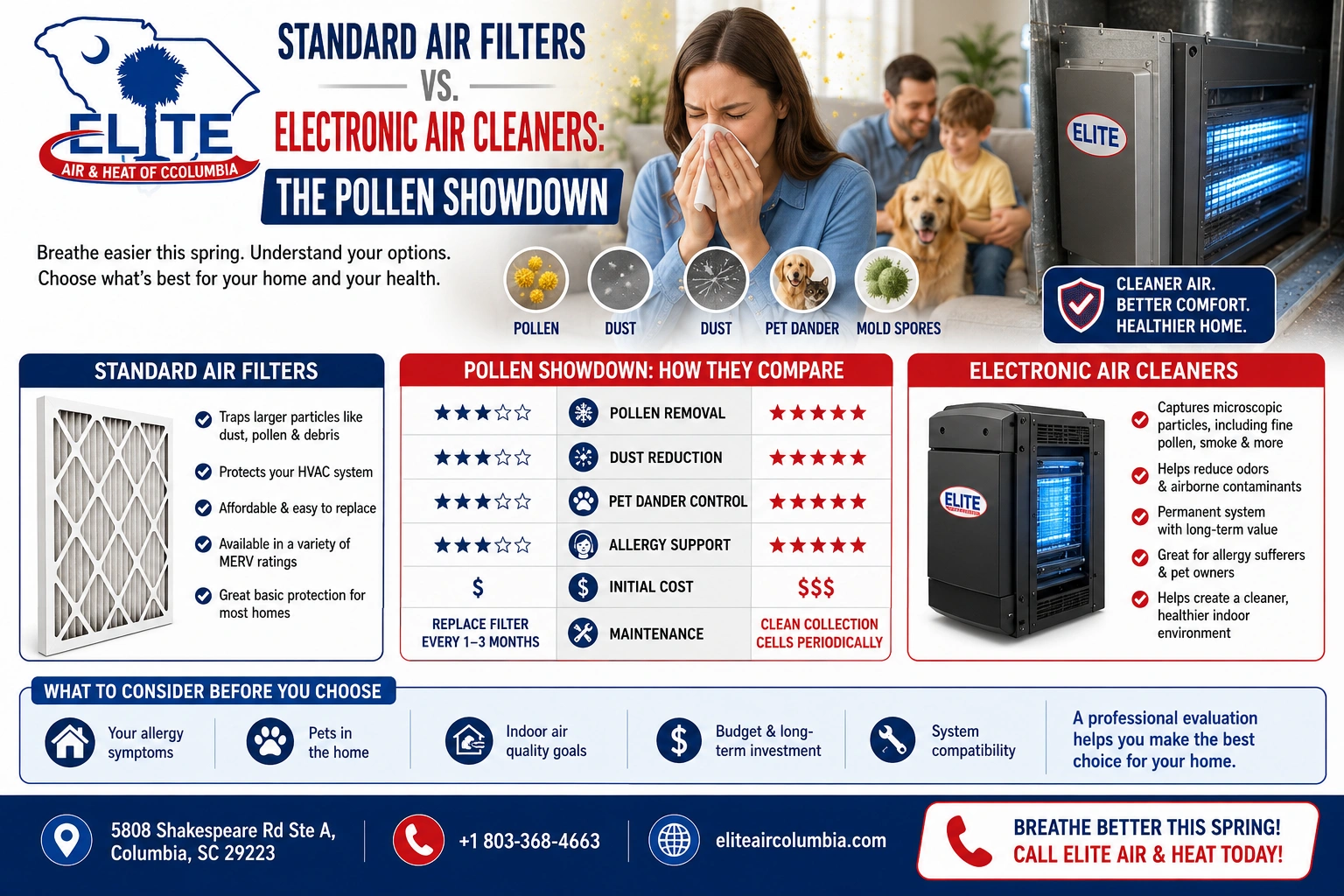
The Pollen Showdown: Which One Wins?
When the goal is reducing pollen inside the home, both systems can help.
But they perform differently.
Standard Air Filters
A quality pleated filter can remove a large amount of pollen.
Benefits include:
- Lower cost
- Simple maintenance
- Easy replacement
- Widely available
For many households, upgrading from a cheap fiberglass filter to a higher-quality pleated filter creates a noticeable difference.
Electronic Air Cleaners
Electronic air cleaners often excel at capturing:
- Pollen
- Fine dust
- Smoke particles
- Pet dander
- Certain microscopic contaminants
Because they target smaller particles more effectively, they generally provide a higher level of indoor air cleaning.
For severe allergy sufferers, this can be meaningful.
The Winner?
If pollen removal is the only category being judged, electronic air cleaners typically outperform standard filters.
However, performance is only one part of the equation.
Cost, maintenance, and homeowner expectations matter too.
What Many Homeowners Get Wrong
This is where homeowners sometimes get into trouble.
They install an electronic air cleaner expecting it to eliminate all allergy symptoms.
No filtration system can completely eliminate exposure.
Pollen can still enter the home through:
- Open doors
- Open windows
- Clothing
- Pets
- Unsealed gaps
Even the best filtration system cannot create a completely allergen-free environment.
A good HVAC professional should explain realistic expectations.
The goal is improvement, not perfection.
Comparing Costs
Let’s talk about what many homeowners really want to know.
Standard Air Filters
Typical annual cost:
- Approximately $50–$300 per year
depending on:
- Filter type
- Replacement frequency
- Filter size
Electronic Air Cleaners
Installation costs often range from:
- $1,000–$3,000+
depending on:
- Equipment type
- System compatibility
- Installation requirements
Maintenance costs vary but are generally lower than homeowners expect when systems are properly maintained.
The upfront investment is substantially higher than standard filtration.
That is why understanding your goals matters.
The Danger of “Frozen Pipes” in South Carolina (Yes, It Happens in HVAC Too)
Most South Carolina homeowners do not spend much time worrying about frozen pipes. That concern is usually associated with places…
Who Should Consider an Electronic Air Cleaner?
An electronic air cleaner may make sense if:
Someone Has Significant Allergies
Many homeowners notice improved comfort during pollen season.
There Are Multiple Pets
Pet dander can be a major indoor air quality concern.
Indoor Air Quality Is a High Priority
Some families simply want the cleanest indoor environment possible.
Dust Is a Constant Frustration
Electronic air cleaners can help reduce airborne dust particles that eventually settle throughout the home.
When a Standard Filter May Be Enough
Not every home requires advanced air cleaning.
A quality pleated filter may be sufficient when:
- Allergy symptoms are mild
- Indoor air quality concerns are limited
- Budget is a major consideration
- Existing filtration performs adequately
In many cases, upgrading from a cheap fiberglass filter to a properly selected pleated filter produces meaningful improvements.
That does not automatically mean you need an electronic air cleaner.
What a Good HVAC Technician Should Evaluate
Before recommending either option, a professional should look at more than just the filter.
Indoor air quality depends on multiple factors.
A proper evaluation should include:
Air Leakage
Unsealed homes allow outdoor contaminants to enter continuously.
Ductwork Condition
Leaky ducts can pull contaminants into the system.
Humidity Levels
In Columbia’s climate, humidity plays a major role in indoor comfort.
Air quality is not just about particles.
Excess humidity can contribute to:
- Mold growth
- Musty odors
- Comfort issues
Existing Filtration
Sometimes homeowners already have a decent filtration setup that simply needs maintenance.
A good technician should identify the actual problem before recommending upgrades.
Maintenance Requirements
This is another area where expectations matter.
Standard Filters
Maintenance usually involves:
- Replacing the filter every one to three months
- Monitoring airflow
- Using the correct filter type
Simple and straightforward.
Electronic Air Cleaners
These systems typically require:
- Cleaning collection plates
- Periodic inspections
- Routine maintenance
While maintenance is not usually difficult, it is different from simply replacing a disposable filter.
Ignoring maintenance reduces effectiveness.
What About Airflow?
One concern homeowners sometimes hear is that better filtration restricts airflow.
There is some truth to that.
A highly restrictive filter can:
- Reduce airflow
- Increase system strain
- Affect efficiency
That is why filter selection matters.
The highest-rated filter is not automatically the best filter for every HVAC system.
A good technician should ensure filtration upgrades remain compatible with the equipment.
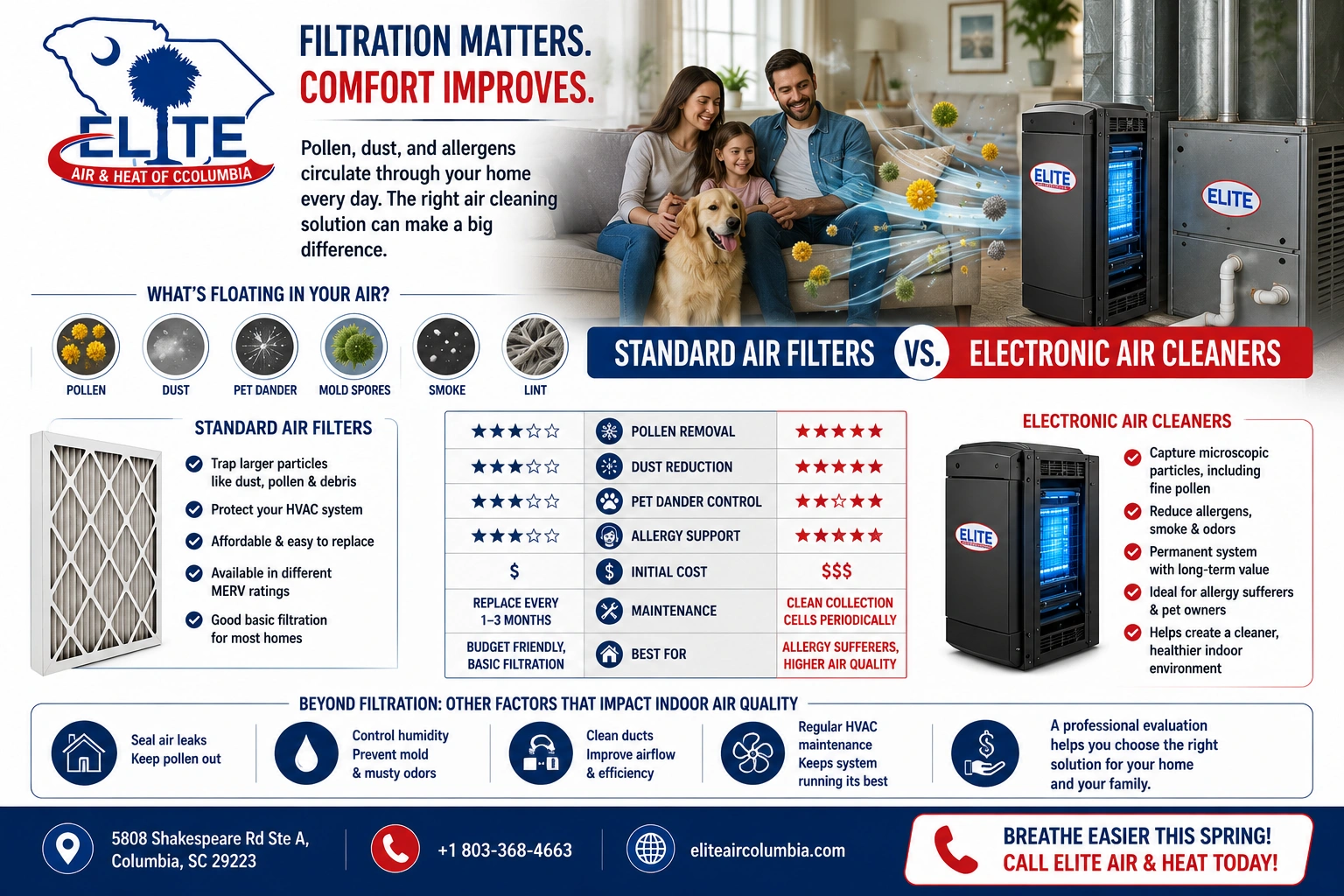
Electronic Air Cleaner vs. Standard Filter: Quick Comparison
| Feature | Standard Pleated Filter | Electronic Air Cleaner |
| Initial Cost | Lower | Higher |
| Maintenance | Replace Filter | Clean Components |
| Pollen Removal | Good | Excellent |
| Dust Reduction | Good | Excellent |
| Pet Dander Control | Moderate | Strong |
| Allergy Support | Good | Better |
| Equipment Protection | Good | Good |
| Long-Term Investment | Lower | Higher |
If You Only Remember One Thing
When it comes to pollen control, electronic air cleaners generally outperform standard air filters. However, that does not mean every homeowner needs one.
For some families, upgrading to a high-quality pleated filter may provide all the improvement they need. For others—especially those dealing with significant allergies, pet dander, or persistent indoor air quality concerns—an electronic air cleaner may be worth the investment.
The most important step is identifying the actual problem before choosing a solution. A good HVAC professional should evaluate your filtration system, airflow, humidity levels, and indoor air quality concerns before recommending upgrades. The goal is not to install the most expensive air-cleaning equipment. The goal is to create a healthier, more comfortable home with a solution that makes sense for your family.
Keep Pollen Outside Where It Belongs
Protect your family with the right whole-home air filtration system. Schedule your consultation today.