
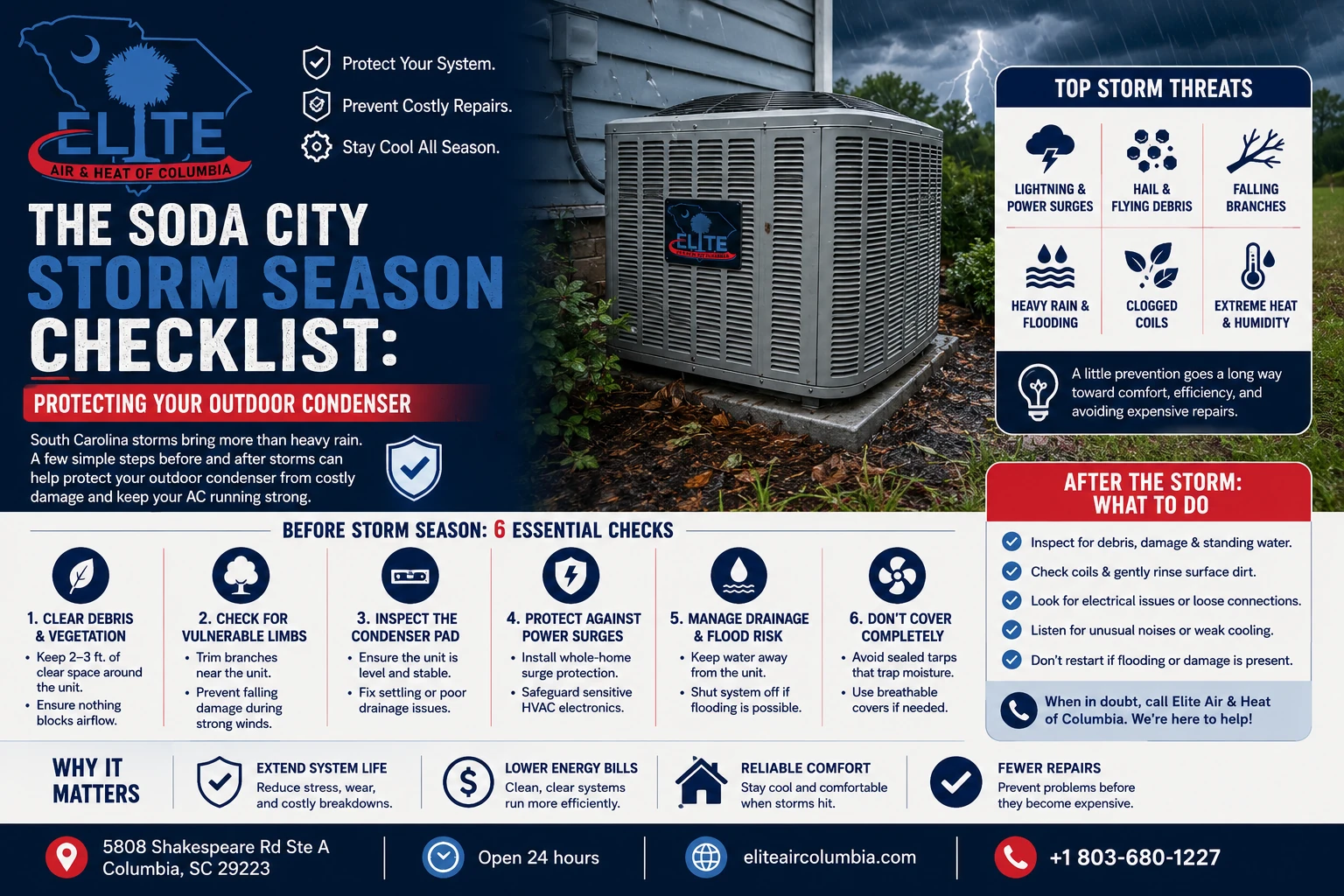

In Columbia, storm season does not just mean heavy rain.
It means:
- lightning
- hail
- falling branches
- power surges
- clogged outdoor coils
- flooded yards
- flying debris
- nonstop humidity
And your outdoor condenser sits directly in the middle of all of it.
Most homeowners do not think much about the outdoor unit unless the AC stops working. But during Midlands storm season, that equipment takes a beating.
Here’s the plain answer:
A few simple preventative steps before and after storms can help protect your outdoor condenser from expensive damage, reduced efficiency, electrical failures, and shortened system lifespan.
And some of the most common storm-related HVAC problems are preventable.
Storm Season Coming? Protect Your AC
Keep your outdoor condenser ready for severe weather. Call now for professional HVAC service and protection.
First: What Your Outdoor Condenser Actually Does
Your outdoor condenser is responsible for releasing the heat your AC removes from inside the home.
That means:
- refrigerant carries indoor heat outside
- the condenser coil releases that heat
- the fan moves outdoor air across the coil
- the system cools properly only if airflow stays unobstructed
In Columbia’s summer heat, the condenser already works hard.
Storm season adds:
- debris
- water
- electrical stress
- physical damage risk
which can quickly affect efficiency and reliability.
Why Storm Season Is Especially Hard on HVAC Systems in Columbia
Soda City storms often combine:
- intense heat
- saturated humidity
- lightning activity
- rapid temperature swings
- high winds
- prolonged rainfall
That creates multiple risks simultaneously.
For example:
- heavy pollen and debris clog coils
- lightning creates electrical surges
- wet conditions encourage corrosion
- branches block airflow
- flooding affects electrical components
Many HVAC breakdowns during summer storms are not random.
They are systems already under stress finally reaching failure points.
The First Thing To Check Before Storm Season Starts
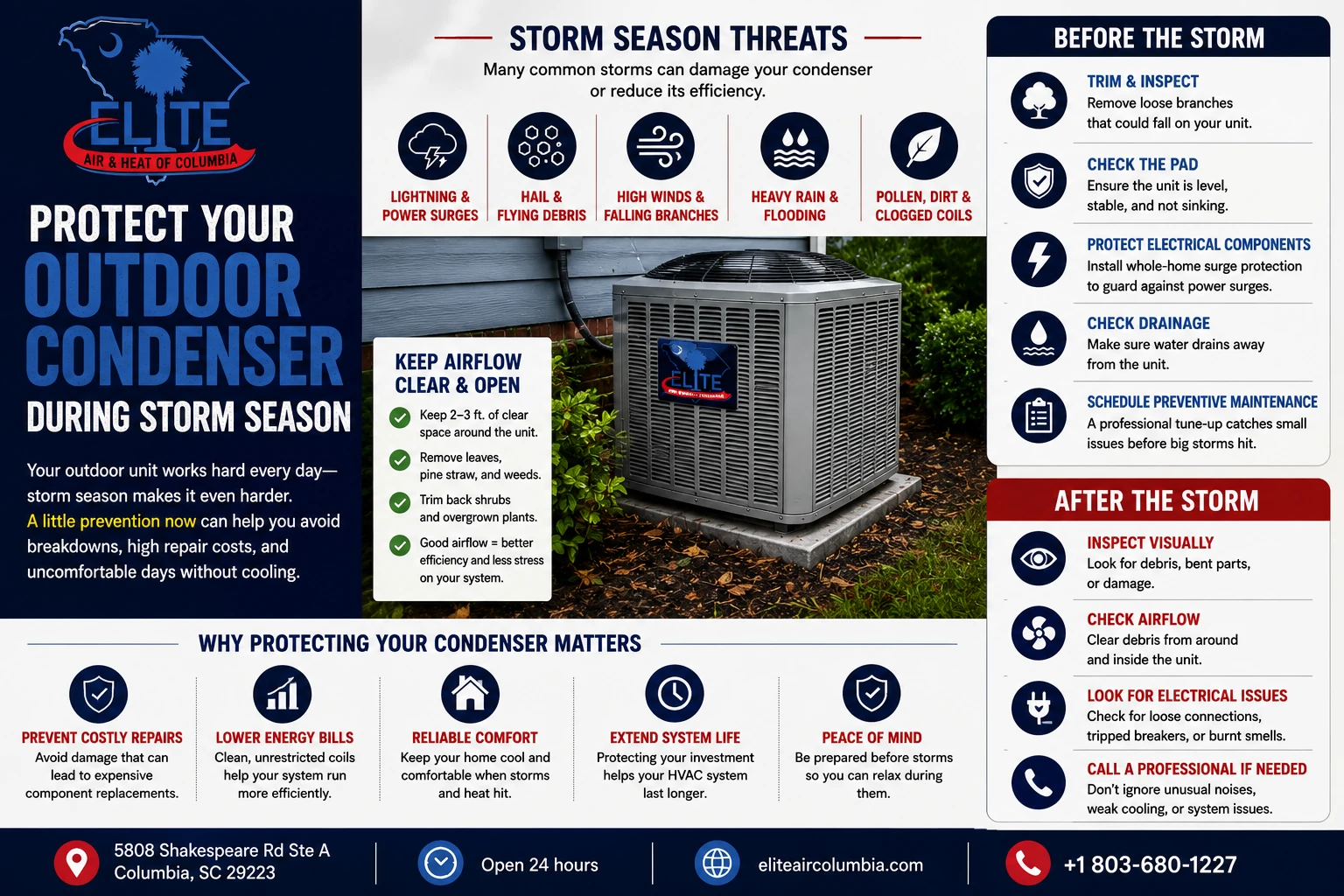
Clear Debris Around the Condenser
Your outdoor unit needs breathing room.
Unfortunately, many condensers slowly become surrounded by:
- shrubs
- leaves
- pine straw
- weeds
- fencing
- overgrown landscaping
Restricted airflow forces the system to:
- run hotter
- cool less efficiently
- consume more electricity
- stress the compressor
Good Rule:
Maintain at least:
- 2–3 feet of open space around the condenser
especially during heavy summer runtime.
This is one of the easiest and most overlooked ways to improve efficiency and reduce storm-related debris problems.
Check for Vulnerable Tree Limbs
Large branches hanging over outdoor equipment become dangerous during Midlands thunderstorms.
Falling limbs can:
- crush fan grilles
- damage coils
- destroy refrigerant lines
- collapse the cabinet
- damage disconnect boxes
This is where homeowners sometimes get into trouble.
They focus on roof protection while forgetting the condenser sits fully exposed.
A large branch impact can turn a functioning system into a full replacement situation instantly.
Inspect the Condenser Pad
The outdoor unit should sit level and stable.
Storm erosion, poor drainage, or soil shifting can cause:
- tilting
- sinking
- vibration problems
- refrigerant line stress
Older homes especially may have settling pads after years of heavy rain cycles.
If the unit becomes noticeably uneven, it deserves inspection before line stress or drainage problems worsen.
Protect Against Power Surges
This is one of the biggest storm-season threats in South Carolina.
Lightning and power fluctuations can damage:
- capacitors
- contactors
- control boards
- compressors
- thermostats
- variable-speed electronics
And modern HVAC systems contain far more sensitive electronics than older units did.
Whole-Home Surge Protection Matters
A properly installed whole-home surge protector can help reduce electrical damage risk during severe storms.
This becomes especially important for:
- variable-speed systems
- communicating systems
- smart thermostats
- newer inverter equipment
The cheaper option is not always wrong, but replacing multiple control boards after one storm often costs far more than preventative protection.
Shut the System Off During Severe Flooding Risk
Most condensers are designed to handle rain.
Rain itself is not usually the problem.
Flooding is.
If standing water threatens to rise around the condenser:
- shut the system off
- avoid operating submerged equipment
- do not restore operation until inspected if flooding occurred
Floodwater can damage:
- motors
- wiring
- electrical connections
- capacitors
- control systems
This is especially important in low-lying areas around Columbia where drainage problems develop during major storms.
Who’s the Go-To HVAC Company for Residential AC Services in Westwood, Columbia, SC?
For homeowners in Westwood, Columbia, SC, Elite Air & Heat of Columbia stands out as a trusted name in residential…
Never Cover the Condenser Completely During Summer
Homeowners sometimes panic before storms and wrap the entire unit tightly with tarps or plastic.
That can create problems.
Outdoor condensers are designed for outdoor weather exposure.
Completely trapping moisture can encourage:
- corrosion
- mold
- restricted ventilation
- trapped debris
If hail protection is needed temporarily, breathable manufacturer-approved covers are safer than improvised sealed wrapping.
After the Storm: The First 10 Minutes Matter
Once the weather clears, do a quick visual inspection before assuming everything is fine.
Look for:
- bent fan grilles
- fallen branches
- damaged refrigerant lines
- disconnected electrical conduit
- visible coil damage
- standing water
- unusual noises
- fan obstruction
Do not immediately restart the system if:
- electrical components appear wet or damaged
- debris is inside the fan
- flooding reached the equipment
- refrigerant lines appear bent or broken
Check for Airflow Restrictions
Storm debris commonly clogs condenser coils.
That includes:
- leaves
- pine needles
- grass clippings
- dirt
- pollen sludge
Dirty outdoor coils reduce heat transfer dramatically.
That can cause:
- higher Dominion Energy bills
- weak cooling
- long runtime
- overheating
- compressor stress
Homeowners can safely:
- gently rinse surface debris with light garden hose pressure
But aggressive pressure washing can bend delicate fins.
This is where homeowners sometimes accidentally damage the condenser trying to clean it too aggressively.
Watch for Delayed Storm Damage
Some HVAC damage does not appear immediately.
After major storms, pay attention to:
- weak cooling
- hard starting
- buzzing sounds
- breaker trips
- inconsistent airflow
- rising utility bills
- systems struggling during afternoon heat
Electrical surge damage can partially weaken components before complete failure occurs later.
Why Older Systems Are More Vulnerable
Older HVAC systems often become more storm-sensitive because:
- capacitors weaken
- insulation deteriorates
- coils corrode
- electrical connections age
- compressors operate under higher strain
That does not automatically mean replacement is necessary.
But older systems often have less tolerance for:
- voltage fluctuation
- restricted airflow
- prolonged extreme heat
- repeated storm stress
The Most Overlooked Problem: Dirty Coils After Pollen Season
In Columbia, storm season overlaps heavily with pollen season.
That means outdoor coils often become coated with:
- pine pollen
- dirt
- moisture residue
Once rain hits that buildup, it can harden into thick airflow restriction.
Many homeowners never realize their condenser is slowly suffocating through summer.
A good technician should inspect:
- coil cleanliness
- refrigerant performance
- electrical condition
- airflow operation
- capacitor health
before peak summer strain causes failures.
What You Can Safely Do Yourself
Homeowners can safely:
- clear vegetation
- inspect visible debris
- trim branches
- rinse surface dirt gently
- monitor drainage
- check for standing water
- observe unusual noises
But electrical repairs, refrigerant issues, surge diagnostics, and internal component testing are not DIY-safe.
Storm-damaged HVAC systems can involve dangerous voltage exposure.
Signs You Should Call for Inspection
Call for professional evaluation if you notice:
- weak cooling after storms
- loud buzzing or humming
- breaker trips
- fan not spinning
- ice buildup
- burning smells
- visible line damage
- flood exposure
- major debris impact
A good technician should be able to explain:
- whether damage is cosmetic or functional
- whether airflow is restricted
- whether electrical components were affected
- and whether repairs are actually necessary
The Bottom Line
South Carolina storm season puts real stress on outdoor HVAC equipment.
And many expensive failures start with preventable issues like:
- debris restriction
- electrical surges
- poor drainage
- neglected maintenance
- clogged condenser coils
- falling branches
Protecting your outdoor condenser is not about wrapping it in panic every thunderstorm.
It is about:
- maintaining airflow
- reducing electrical risk
- monitoring drainage
- keeping debris clear
- and catching storm damage early before it becomes major system failure
If your AC struggles after heavy storms, Elite Air & Heat of Columbia can help inspect whether the issue is airflow restriction, electrical surge damage, coil contamination, storm debris, or a larger system problem before small damage becomes an expensive breakdown.
Don’t Let the Next Storm Damage Your AC
Get your outdoor condenser checked before rough weather arrives. Call today to schedule professional service.