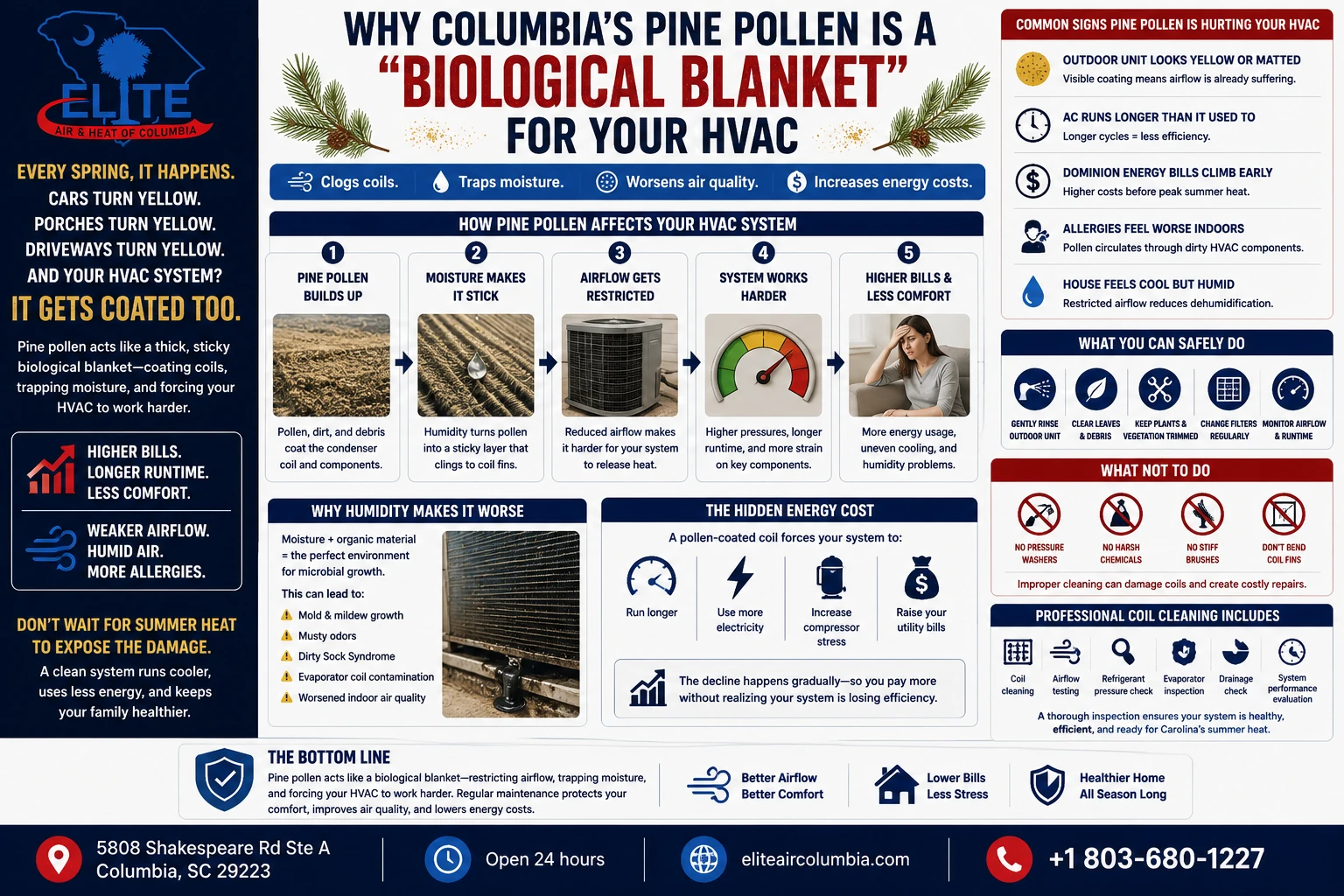

Every spring in Columbia, it happens almost overnight.
Cars turn yellow.
Porches turn yellow.
Driveways turn yellow.
And your HVAC system?
It gets coated too.
Most homeowners think pine pollen is just annoying dust floating through the air. But for your HVAC system, it behaves more like a thick biological blanket that slowly smothers airflow, traps moisture, and creates ideal conditions for efficiency loss and microbial buildup.
Here’s the plain answer:
Pine pollen in the Midlands can clog outdoor condenser coils, restrict airflow, trap humidity, worsen indoor air quality, and force your HVAC system to work significantly harder during the exact months it already faces extreme cooling demand.
And because the buildup happens gradually, many homeowners do not realize how much strain pollen season creates until:
- utility bills rise
- airflow weakens
- the house feels humid
- or the AC starts struggling during summer heat.
Pine Pollen Clogging Your HVAC?
Keep your system breathing freely. Call now for professional HVAC service before pollen buildup affects comfort and efficiency.
First: Why Pine Pollen Is So Hard on HVAC Systems
Pine pollen is not like ordinary household dust.
It is:
- extremely fine
- sticky when wet
- produced in massive quantities
- easily pulled into HVAC airflow systems
And Columbia’s climate makes the problem worse because:
- humidity stays high
- spring storms create moisture
- AC systems start ramping up runtime
- airborne pollen levels remain heavy for weeks
Once pollen combines with moisture, it starts behaving almost like paste.
That is where homeowners sometimes get into trouble.
The system may still “work,” so they assume everything is fine while airflow and heat transfer quietly decline.
The Outdoor Condenser Takes the First Hit
Your outdoor condenser is designed to release heat pulled from inside the house.
To do that, outdoor air must move freely across the condenser coil.
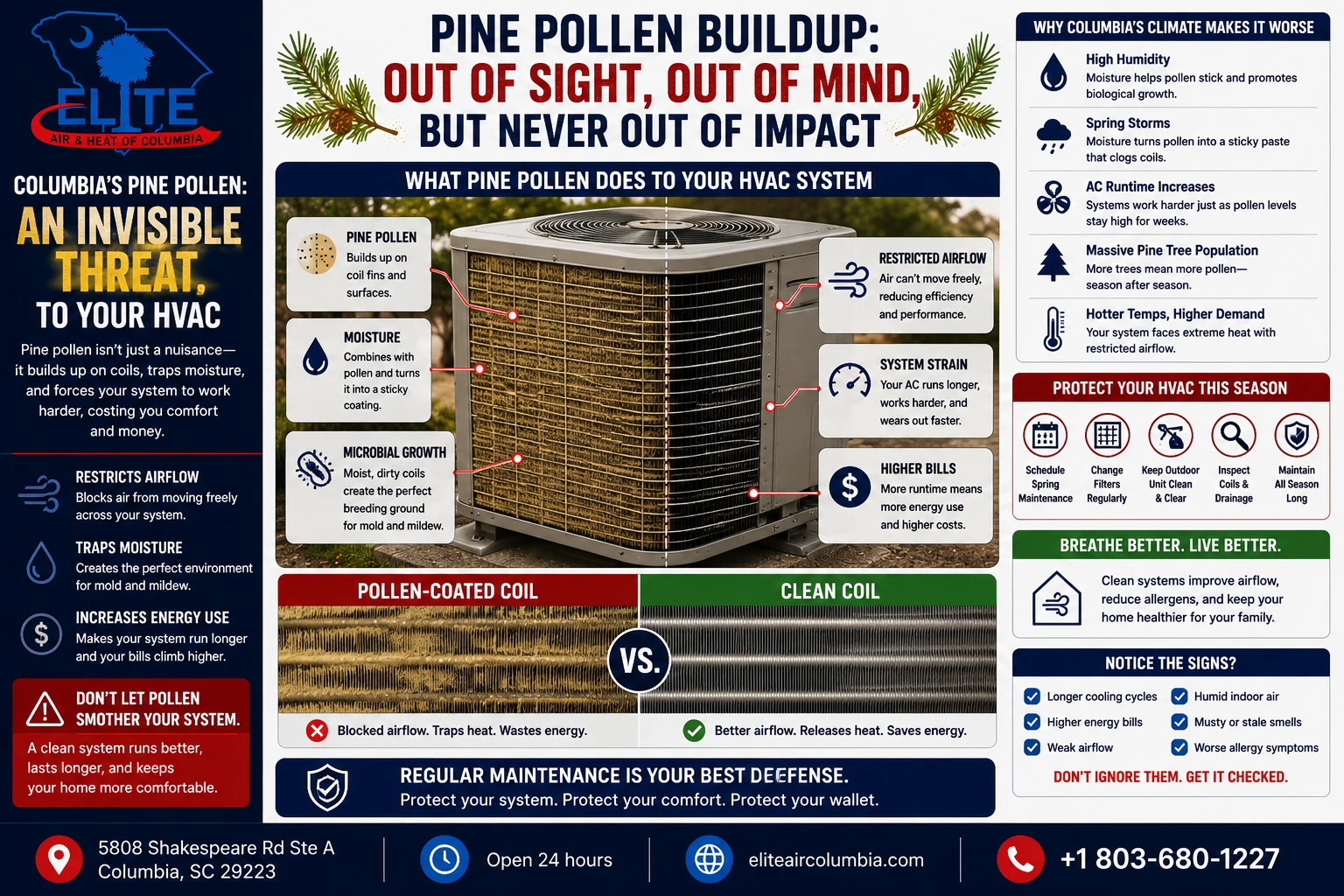
But during pollen season, the coil can slowly become coated in:
- pine pollen
- dirt
- grass residue
- humidity residue
- organic debris
Once moisture hits that pollen layer, it begins sticking tightly to the coil fins.
Over time, this creates an insulating layer that restricts heat transfer.
That is why pine pollen acts like a biological blanket.
The condenser can no longer “breathe” efficiently.
What Happens When Airflow Gets Restricted
When condenser airflow drops:
- the system runs hotter
- cooling efficiency falls
- runtime increases
- electrical usage rises
- compressor stress increases
The AC still runs.
But it works much harder to achieve the same result.
Many homeowners notice:
- longer cooling cycles
- weaker comfort during afternoons
- rising Dominion Energy bills
- systems struggling during 95-degree days
And because Columbia’s cooling season is already long, that extra runtime compounds quickly.
Pine Pollen Also Worsens Indoor Air Quality
Outdoor coils are not the only issue.
Pollen also enters homes through:
- open doors
- windows
- attic leakage
- duct leakage
- return air systems
- crawlspace infiltration
Once inside the HVAC system, pollen can settle on:
- evaporator coils
- blower components
- duct interiors
- drain pans
- filters
That buildup becomes food for microbial growth when moisture is present.
In Columbia’s humidity, HVAC systems constantly manage condensation and moisture removal.
Add organic debris to damp surfaces, and biological growth becomes much more likely.
Why Humidity Makes Everything Worse
Humidity is the multiplier.
Dry pollen is annoying.
Wet pollen becomes a sticky contaminant that clings to HVAC components.
This is especially problematic because South Carolina systems often run:
- long cooling cycles
- continuous dehumidification
- heavy condensate production
Moisture plus organic material creates ideal conditions for:
- mold growth
- mildew odors
- Dirty Sock Syndrome
- evaporator coil contamination
That is why many homeowners notice:
- musty smells
- worsening allergies
- damp indoor air
- reduced airflow
shortly after heavy pollen season.
The Hidden Energy Cost of Pollen Buildup
Most homeowners never connect pollen season to their power bill.
But restricted coils can absolutely increase cooling costs.
Here is why:
A clean condenser transfers heat efficiently.
A pollen-coated condenser struggles to release heat, forcing:
- higher operating pressures
- longer runtime
- increased compressor strain
- greater electrical consumption
And because the decline happens gradually, homeowners adapt to it without realizing the system is losing efficiency.
The thermostat eventually gets lowered further.
The AC runs longer.
Humidity rises.
The electric bill climbs.
This is one of the biggest hidden costs of neglected condenser maintenance in the Midlands.
Why Older HVAC Systems Struggle More
Older systems are especially vulnerable because they may already have:
- weakened airflow
- aging blower motors
- partially clogged coils
- duct leakage
- declining efficiency
Pine pollen simply pushes the system harder.
That does not automatically mean replacement is necessary.
But older equipment often has less performance margin available once airflow restrictions begin building.
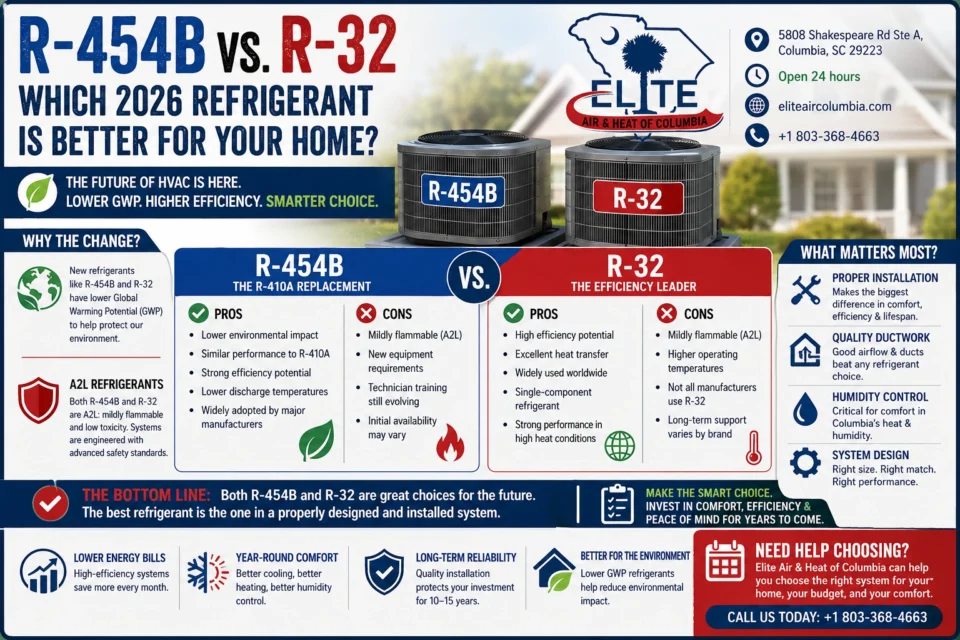
R-454B vs. R-32: Which 2026 Refrigerant Is Better for Your Home?
If you are replacing your HVAC system in 2026 or getting quotes on a new heat pump or air conditioner,…
Signs Pine Pollen Is Affecting Your HVAC
1. Your Outdoor Unit Looks Matted or Yellow
This is the obvious warning sign.
If you can visibly see:
- yellow coating
- thick debris buildup
- matted coil fins
the airflow is likely already suffering.
2. The AC Runs Longer Than It Used To
Longer runtime during spring and early summer often points toward declining efficiency.
Especially if:
- weather conditions are similar to previous years
- thermostat settings have not changed
- comfort feels worse
3. Your Dominion Energy Bill Climbs Early in the Season
If cooling costs spike before peak summer heat even arrives, restricted airflow may already be hurting efficiency.
4. Allergies Feel Worse Indoors
Poor filtration and contaminated HVAC components can circulate pollen throughout the home repeatedly.
5. Your House Feels Cool But Humid
Restricted airflow and dirty coils often reduce dehumidification performance.
In Columbia’s heat and humidity, moisture control matters just as much as temperature.
Why Homeowners Sometimes Make the Problem Worse
This happens constantly.
Homeowners see pollen buildup and immediately grab:
- pressure washers
- harsh cleaners
- stiff brushes
trying to blast the unit clean.
Unfortunately, condenser fins are delicate.
Aggressive cleaning can:
- bend fins
- damage coils
- restrict airflow further
- create expensive repair issues
This is where homeowners sometimes accidentally create larger problems trying to “deep clean” the condenser themselves.
What You Can Safely Do Yourself
Homeowners can safely:
- gently rinse the condenser with light hose pressure
- clear leaves and debris
- keep vegetation trimmed back
- replace filters regularly
- monitor airflow and runtime
But coil disassembly, chemical cleaning, electrical work, and fin straightening should usually be handled professionally.
What Professional Coil Cleaning Actually Does
A proper condenser cleaning goes beyond spraying water on the outside.
A good technician may inspect:
- coil restriction
- airflow performance
- refrigerant pressures
- blower performance
- condensate drainage
- static pressure
- evaporator cleanliness
Because many pollen-related comfort issues involve more than just the outdoor unit.
The indoor coil often matters too.
The Bigger Problem: Pollen Exposes Existing Weaknesses
Pine pollen itself is not always the entire problem.
It often exposes:
- weak airflow
- dirty evaporator coils
- leaking ducts
- oversized systems
- neglected maintenance
- poor filtration
That is why some homes struggle far more than others during pollen season.
A healthy, properly maintained system usually handles seasonal buildup much better.
How Often Should HVAC Systems Be Cleaned During Pollen Season?
In Columbia, many systems benefit from:
- spring maintenance before peak cooling season
- condenser inspection after major pollen waves
- filter changes more frequently during spring
Especially in homes with:
- pets
- heavy tree coverage
- allergy sufferers
- older duct systems
- high HVAC runtime
The Bottom Line
Columbia’s pine pollen is not just cosmetic.
For HVAC systems, it behaves like a biological blanket that:
- restricts airflow
- traps heat
- holds moisture
- worsens efficiency
- contributes to microbial growth
- increases runtime and electrical usage
And because the buildup happens slowly, many homeowners do not realize how much stress it places on the system until summer heat arrives.
A good HVAC company should be able to explain:
- whether pollen buildup is hurting airflow
- whether indoor coils are contaminated
- whether humidity is contributing to biological growth
- and whether maintenance can realistically recover lost efficiency
If your AC feels weaker, your bills are climbing, or allergy problems worsen every spring, Elite Air & Heat of Columbia can help determine whether pollen buildup, airflow restriction, humidity imbalance, or dirty coils are quietly reducing your system’s performance before the peak summer heat arrives.
Don’t Let Pollen Choke Your AC
Columbia’s heavy pine pollen can restrict airflow and strain your system. Schedule HVAC service today to keep your home comfortable.