
The cost to install a home EV charger depends far more on your home’s existing electrical setup than on the charger itself. Here’s a real breakdown of what drives the price up or down, typical cost ranges, and what to ask an electrician before you commit to a quote.
Key Takeaways
• A straightforward Level 2 home EV charger project commonly falls around $900–$3,800 total when charger equipment and installation are combined, although actual pricing can vary significantly by home. EnergySage reported a 2026 national average installation cost of about $2,442 before charger equipment.
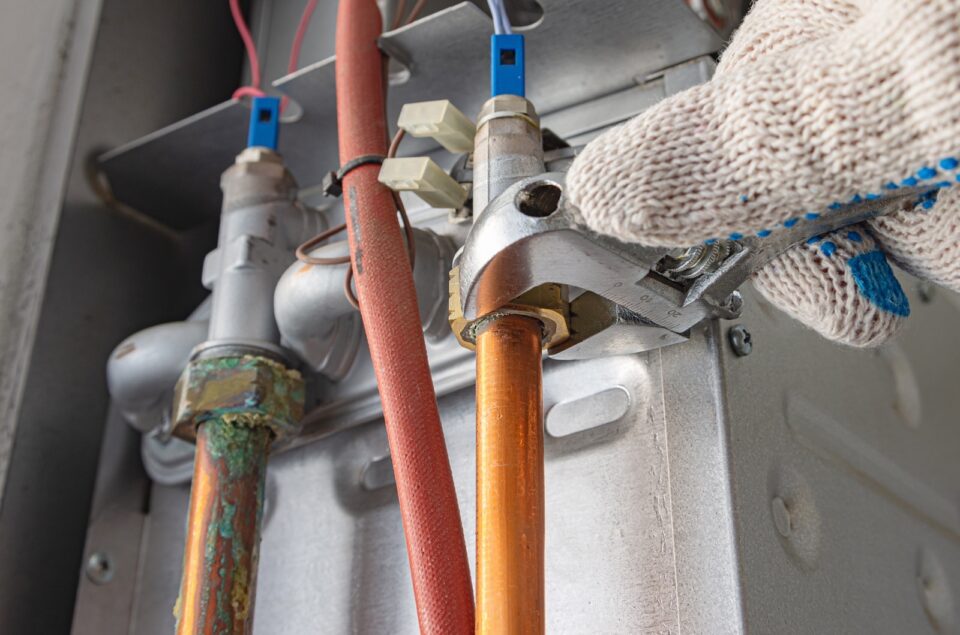
• One of the biggest cost drivers is the distance from your electrical panel to the charger location. Long wire runs through walls, attics, exterior conduit, or detached structures can add $1,000–$1,500 in more complicated installations.
• If your panel doesn’t have enough capacity or breaker space, additional electrical work may be needed. Depending on the home, that could involve load-management equipment, a sub-panel, or a full panel or service upgrade costing several thousand dollars.
• The federal EV charger tax credit has now expired for new installations placed in service after June 30, 2026. Factor the actual out-of-pocket cost into your decision rather than assuming a federal credit will offset it.
What Does a Home EV Charger Installation Actually Cost?
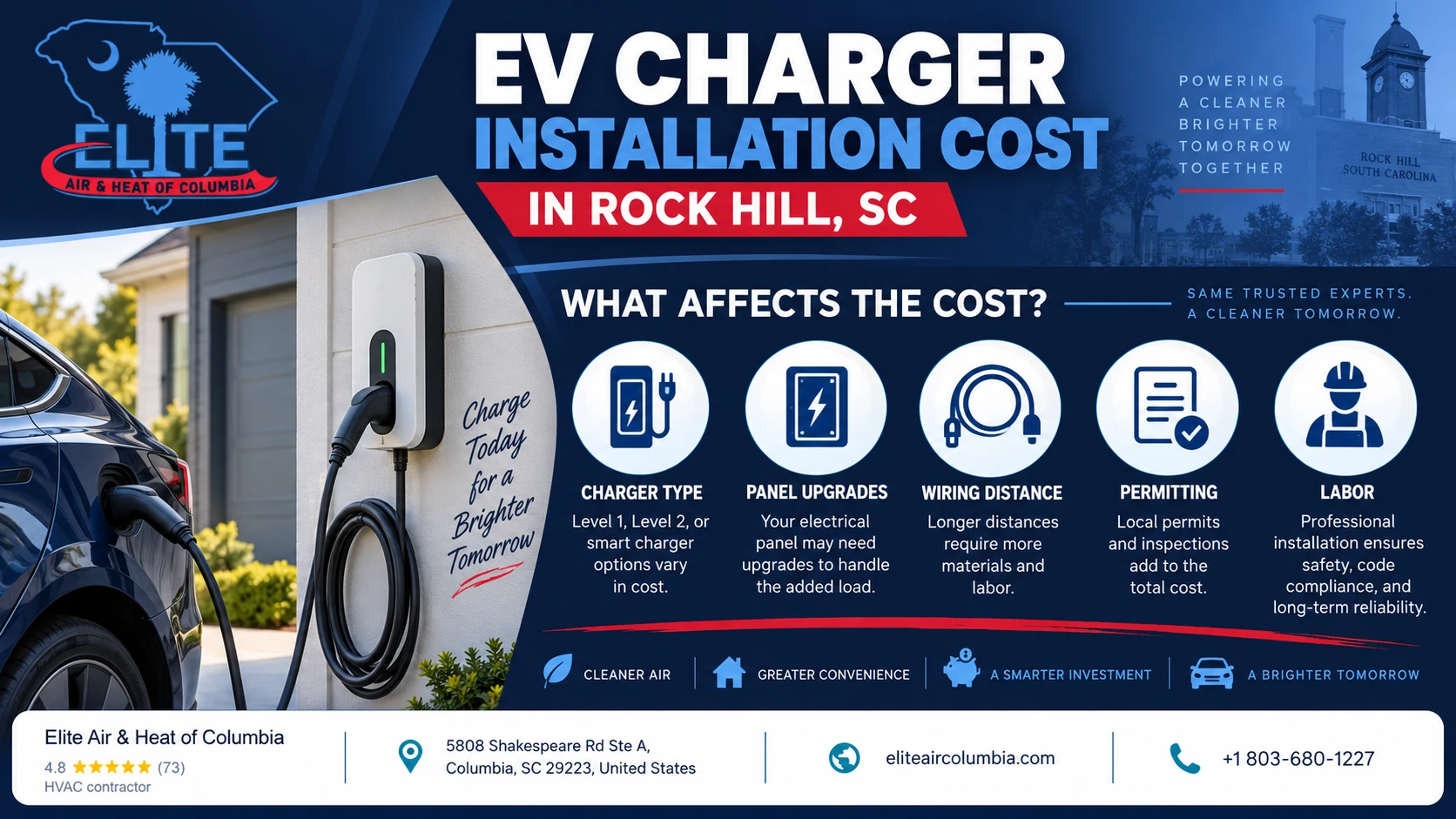
Pricing generally breaks down into three parts: the charger equipment, the labor and materials needed to run the circuit and mount the charger, and any electrical panel or service work required to safely support the additional load.
| Repair / Item | Typical Cost Range |
| Charger unit (Level 2) | $300–$600 (range: about $100–$800) |
| Standard installation, excluding charger | $800–$3,000 |
| Additional long or difficult wire run | May add $1,000–$1,500 |
| Sub-panel installation | $500–$1,500 |
| Full panel/service upgrade, if needed | Approximately $1,500–$5,000+ |
National average planning ranges based on 2026 EnergySage EV charger installation data. Confirm against Elite’s current pricing before publishing.
⚠ Confirm before publishing: These cost ranges are national 2026 averages, not Elite’s own price sheet. Confirm actual Rock Hill/York County pricing before publishing.
Why Does the Same Charger Cost So Differently From House to House?
The charger itself may have a fairly predictable purchase price, but where it needs to go relative to your electrical panel can change the installation cost significantly.
A garage right next to the panel may only need a relatively short dedicated circuit. A charger mounted on the far side of a detached garage, outdoors, or far from the electrical panel can become a much bigger project once wiring distance, conduit, trenching, wall access, and electrical capacity are factored in.
This is why an in-home electrical evaluation generally provides a more reliable final quote than estimating the project based only on the charger model.
Do I Need a Panel Upgrade Before Installing a Charger?
It depends on your home’s existing electrical capacity, breaker space, charger output, and what else is drawing power from the same service.
Older homes, or homes that already have several high-draw electrical loads, may be more likely to need additional electrical work. Depending on the load calculation and available capacity, that could involve a new dedicated circuit, load-management equipment, a sub-panel, or a full panel or service upgrade.
Our electrical panel upgrade service handles panel work as either a standalone project or as part of a larger electrical upgrade when needed.
What About the Federal Tax Credit for EV Chargers?
The federal Alternative Fuel Vehicle Refueling Property Credit under Section 30C has now expired for new installations.
The One Big Beautiful Bill Act shortened the program’s previous expiration date, but unlike the Section 25C residential HVAC credit, Section 30C remained available through June 30, 2026. EV charging equipment placed in service after June 30, 2026 does not qualify for the federal credit under current law.
Homeowners who placed qualifying charging equipment in service on or before June 30, 2026 may still be able to claim the credit, subject to the program’s former eligibility requirements, including eligible census-tract rules.
You can also see our full breakdown of the separate HVAC credit changes in the federal HVAC tax credit ending.
For a new EV charger installed after June 30, 2026, don’t build your budget around a federal tax credit that’s no longer available. Check for any active state, local, manufacturer, or utility-level EV charging incentives instead, since those programs vary by location and can change independently of federal policy.
⚠ Confirm before publishing: Confirm the current status of federal, South Carolina, City of Rock Hill, York Electric Cooperative, Duke Energy, and other applicable EV-charging incentives at the time of publishing.
What to Ask Before You Get a Quote
An on-site evaluation can help make the final quote more accurate because the electrician can inspect your panel, existing loads, proposed charger location, and wiring route.
Before committing, ask whether the quote includes an assessment of your existing electrical capacity, whether the wiring distance from the panel to the charger location has been measured, whether additional panel or load-management work may be required, and whether any required electrical permit and inspection costs are included in the price.
Frequently Asked Questions
How long does an EV charger installation take?
A straightforward installation can often be completed in several hours when the electrical panel has sufficient capacity and the charger is located relatively close to it. Projects requiring long wiring runs, trenching, panel work, utility coordination, permits, or additional inspections may take longer.
Can I install a Level 2 charger myself?
Level 2 chargers commonly require a dedicated 240V circuit and must be installed according to applicable electrical codes and the charger’s manufacturer instructions. Because permitting, inspection, circuit sizing, grounding, and electrical-capacity requirements may apply, hiring a licensed electrician is the safest approach for most homeowners.
Does Elite Air & Heat install EV chargers for major vehicle brands?
Yes. Elite installs Tesla Wall Connectors and other major Level 2 charging systems for Tesla and non-Tesla vehicles. Charger selection and electrical requirements can vary based on connector type, charger output, vehicle charging capability, installation method, and the home’s available electrical capacity.
Will installing an EV charger increase my electric bill significantly?
Charging an EV at home will increase electricity use, but the amount depends on how many miles you drive, your vehicle’s efficiency, charging losses, and your local electricity rate. Reviewing your driving habits and utility rate can give you a more accurate estimate of the expected monthly charging cost.
Get an Accurate EV Charger Quote — Not a Phone Guess
We evaluate your panel capacity, electrical load, proposed charger location, and wiring route so you have a clearer picture of the work required before installation begins.
Call (803) 366-4663 or request service online to schedule.
Elite Air & Heat LLC | (803) 366-4663 | 2175 Mt Gallant Rd, Rock Hill, SC 29732