
“Green HVAC” used to sound like something meant for experimental homes or homeowners willing to pay a premium just to reduce their environmental impact. In 2026, that is changing.
Many of the biggest HVAC trends we are seeing around Columbia and the Midlands are simply about using less energy to create better comfort. Variable-speed heat pumps, smarter controls, lower-impact refrigerants, improved duct systems, and zoned heating and cooling are becoming increasingly relevant because they can address problems South Carolina homeowners already deal with: high summer electric bills, humidity, hot upstairs rooms, aging equipment, and wasted conditioned air.
At Elite Air & Heat of Columbia, we do not believe every homeowner needs the newest HVAC technology just because it carries a “green” label. The system still has to make sense for the house, the budget, and the way the family uses it.
With that in mind, here are five energy-focused HVAC trends Midlands homeowners should understand in 2026.
Lower Your Energy Bills Today!
Discover smarter, greener HVAC solutions for your Midlands home. Call now to explore your options!
1. Variable-Speed Heat Pumps Are Becoming a Bigger Part of the Electrification Conversation
Heat pumps are not new to South Carolina.
In fact, they already make a lot of sense for our climate because one system can provide both heating and cooling.
What is changing is the technology inside them.
Traditional single-stage equipment generally has two operating states:
On at full output or off.
Variable-speed heat pumps can adjust their capacity to better match what the home needs at a given moment.
On a relatively mild summer morning, the system may not need to operate anywhere near full capacity. Instead, it can run longer at a lower level.
When a hot Columbia afternoon arrives, the compressor can increase output.
That matters for energy use, but it can also have a major effect on comfort.
Why Variable Speed Matters in the Midlands
South Carolina homeowners often focus on temperature while overlooking humidity.
A single-stage air conditioner may quickly lower the thermostat reading, especially if it is oversized, but shut off before it has had enough runtime to remove moisture effectively.
A variable-capacity system can operate for longer periods at lower output.
That can help provide:
- More consistent temperatures
- Longer moisture-removal cycles
- Fewer dramatic starts and stops
- Quieter operation
- Reduced energy use during lower-load conditions
At Elite, we currently consider variable-speed heat pumps one of the strongest overall HVAC options for many Columbia homes in 2026, particularly when humidity control and consistent comfort are priorities.
Why Heat Pumps Fit the “Green Energy” Trend
Heat pumps move heat instead of creating all of it through electric resistance.
The U.S. Department of Energy notes that modern heat pumps can use substantially less electricity for heating than electric resistance systems.
That makes electrification more practical.
But homeowners should not assume every heat pump upgrade automatically creates massive energy savings.
The actual result depends on:
- What system is being replaced
- Equipment efficiency
- Ductwork
- Insulation
- System sizing
- Thermostat settings
- Utility rates
- Installation quality
A premium heat pump connected to leaky ducts is still wasting energy.
The system has to be considered as part of the whole home.
2. Lower-GWP Refrigerants Are Now the New Normal
One of the biggest HVAC changes of 2026 has nothing to do with the thermostat.
It involves the refrigerant inside the system.
For years, R-410A was one of the dominant refrigerants used in residential air conditioners and heat pumps.
That market is now changing.
Under federal HFC transition rules, new residential and light-commercial air-conditioning and heat-pump equipment has been moving toward refrigerants with lower global warming potential, or GWP. EPA restrictions for this category established a GWP limit of 700 beginning with equipment manufactured or imported from January 1, 2025, subject to transition provisions for previously manufactured equipment.
In 2026, homeowners shopping for new systems are therefore increasingly encountering refrigerants such as:
- R-454B
- R-32
Both have lower GWP than R-410A.
Elite has already been helping Columbia homeowners understand this transition because replacement estimates in 2026 increasingly involve this newer generation of equipment.
Does Lower GWP Mean Lower Electric Bills?
Not automatically.
GWP describes the climate impact of a refrigerant if it is released into the atmosphere.
It is not the same thing as the efficiency rating of your HVAC system.
A lower-GWP refrigerant does not automatically make one AC dramatically cheaper to operate than another.
The actual energy performance still depends on the equipment design, SEER2 rating, system sizing, airflow, and installation.
That distinction is important.
The environmental advantage is primarily about reducing the warming impact associated with the refrigerant itself.
What Are A2L Refrigerants?
R-454B and R-32 are commonly classified as A2L refrigerants.
That means they have lower toxicity and mild flammability characteristics under the refrigerant safety classification system.
Manufacturers have redesigned equipment and installation requirements to account for these properties.
For homeowners, the practical takeaway is simple:
Your contractor needs to know what refrigerant the equipment uses and follow the proper installation and safety procedures.
A good 2026 HVAC proposal should clearly identify:
- Refrigerant type
- Indoor and outdoor model numbers
- Equipment capacity
- SEER2 rating
- HSPF2 rating for heat pumps
- Electrical requirements
- Safety components
- Warranty information
The move to lower-GWP refrigerants is not a futuristic trend.
It is already reshaping the HVAC equipment homeowners are buying today.
3. Smart HVAC Is Becoming More About When You Use Energy
Smart thermostats have been around for years.
The 2026 trend is less about controlling your AC from your phone and more about using energy at better times.
That matters because utility pricing is becoming more time-sensitive.
Dominion Energy South Carolina updated its time-of-use periods beginning July 1, 2026. Under its residential time-of-use structures, electricity can cost differently depending on whether it is consumed during on-peak, off-peak, or super-off-peak periods.
Dominion’s “You Shift/You Save” program specifically identifies smart thermostats as one tool customers may use to automatically adjust energy use around different rate periods.
That changes what a thermostat can do.
The Thermostat Is Becoming an Energy Manager
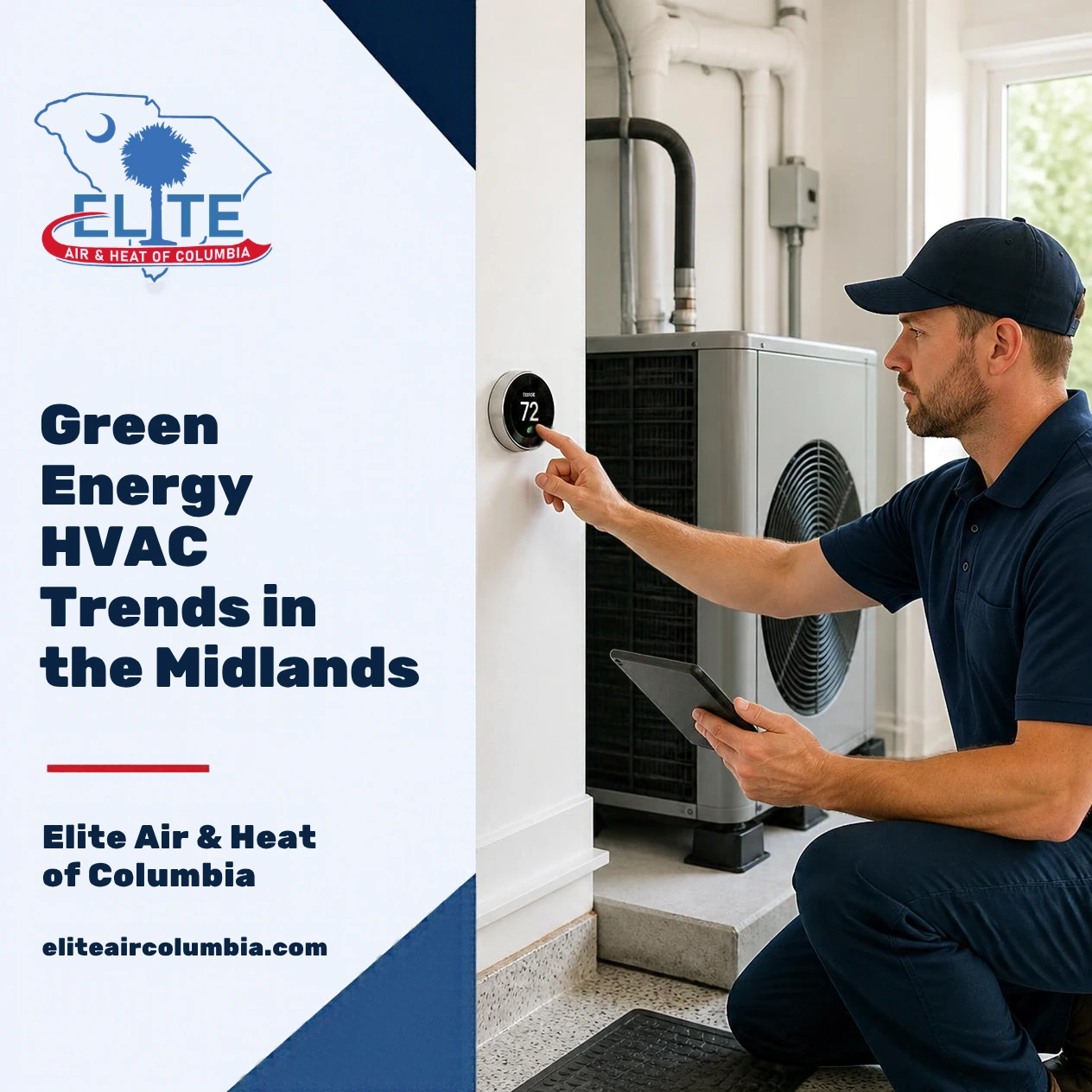
Instead of simply maintaining 72 degrees around the clock, modern HVAC controls can help homeowners:
- Reduce cooling when nobody is home
- Adjust heating schedules automatically
- Take advantage of lower-cost periods
- Monitor indoor humidity
- Coordinate variable-speed equipment
- Avoid unnecessary auxiliary heat operation
- Provide energy-use reports
- Adjust different zones independently
Some systems can also make small changes before peak periods begin.
For example, a home may be cooled slightly before the highest-cost summer period rather than asking the AC to do all of its hardest work during peak demand.
That does not mean everyone should dramatically change indoor temperatures just to chase utility rates.
Comfort still matters.
But small automated adjustments can be easier than manually managing the thermostat every day.
Smart Controls Are Especially Useful With Variable Equipment
A basic thermostat tells HVAC equipment to turn on or off.
More advanced communicating controls can sometimes work directly with variable-capacity equipment to adjust output, airflow, and humidity strategy.
That integration can be important in Columbia.
Elite currently recommends looking beyond the thermostat’s display and considering whether the control can actually help the HVAC system manage humidity and runtime appropriately.
Smart technology only creates useful energy savings when it controls the equipment intelligently.
4. “Green HVAC” Is Expanding Beyond the HVAC Unit
One of the most useful trends in 2026 is that homeowners are beginning to look beyond the efficiency sticker on the equipment.
That is good news.
You can install an extremely efficient air conditioner and still waste a lot of energy if the house has:
- Leaky ductwork
- Poor attic insulation
- Major air leaks
- Undersized returns
- Damaged duct insulation
- Excessive attic heat
- Poorly sealed doors or windows
The HVAC system cannot overcome every problem in the building itself.
Duct Leakage Is Wasted Conditioned Air
Imagine paying your AC to cool air to 55 degrees and then allowing part of that air to leak into a 125-degree attic.
The outdoor unit may be highly efficient.
The duct system is not.
That is why duct sealing and airflow testing deserve more attention in energy-focused HVAC projects.
At Elite, we already see situations where the right recommendation is not necessarily a larger or more expensive AC.
The real solution may involve:
- Sealing duct leakage
- Improving return airflow
- Correcting damaged ducts
- Adding insulation
- Reducing building air leakage
- Correcting equipment sizing
- Improving attic conditions
Our current Midlands heat-island guidance similarly emphasizes that cooling problems can come from ductwork, attic heat, insulation, airflow, or humidity rather than simply inadequate equipment capacity.
South Carolina’s Upcoming Rebate Programs Reinforce This Trend
South Carolina is developing two federally funded home-energy rebate programs:
HOMES, focused on whole-home efficiency improvements, and HEAR, focused on qualifying electrification upgrades.
As of September 2026, the South Carolina Energy Office says these rebates are not yet available, although statewide availability is anticipated in 2026.
Potential eligible improvements include:
- High-efficiency HVAC systems
- Heat pumps
- Insulation
- Air sealing
- Duct sealing
- Smart thermostats
- Electrical upgrades
The significant point is that these programs do not treat energy efficiency as an HVAC-box-only problem.
They look at the home as a system.
That is where residential efficiency is increasingly headed.
One additional clarification is important: the federal Energy Efficient Home Improvement Credit that covered qualifying heat pumps and certain other improvements applied through 2025, according to the IRS’s current guidance. Homeowners planning projects in 2026 should therefore verify current incentives rather than assuming the previous federal tax credit still applies.
Why Luxury Homeowners are Choosing Niche Cooling Contractors Over Big Brands This Spring
When big systems try to work together, cracks show fast. Deadlines slip, people get frustrated, and simple tasks turn into…
5. Zoned and Ductless HVAC Is Becoming a More Targeted Way to Save Energy
Another growing trend is moving away from treating every square foot of the house exactly the same.
Think about how many homes operate.
At night, everyone is upstairs asleep.
The downstairs living room, dining room, office, and kitchen may all be empty.
Yet one thermostat may still be conditioning the entire house to the same temperature.
That can create unnecessary energy use.
Zoning attempts to solve that problem.
What Is HVAC Zoning?
A zoned central system divides the home into separate comfort areas.
Depending on the design, dampers inside the duct system open and close to direct conditioned air where it is needed.
Each zone can have its own thermostat or temperature sensor.
A two-story home, for example, might have:
- Upstairs zone
- Downstairs zone
That can also help address one of Columbia’s most common comfort complaints:
“Why is my upstairs always hotter?”
Rather than lowering the downstairs thermostat until the first floor feels like a refrigerator, zoning may allow the HVAC system to respond more directly to each floor.
Ductless Mini-Splits Take Zoning Even Further
Ductless mini-splits are another major part of the trend.
Instead of extending conventional ductwork into every room, homeowners can add individual heating and cooling zones.
They can work especially well for:
- Finished garages
- Bonus rooms
- Home additions
- Converted attics
- Detached offices
- Sunrooms
- Older homes without ductwork
- Rooms that are consistently hotter or colder
If only one room has a comfort problem, installing an entirely new whole-house HVAC system may not be necessary.
A correctly sized mini-split can target that room directly.
This can also reduce duct-related losses because there is little or no traditional ductwork between the indoor and outdoor equipment.
Zoning Does Not Automatically Save Energy
There is an important catch.
Poorly designed zoning can create airflow and static-pressure problems in a conventional duct system.
Closing off too many ducts while the HVAC equipment continues operating at full output can cause problems.
That is why zoning works particularly well with equipment capable of reducing its output.
Variable-speed HVAC, smart controls, and zoning increasingly complement one another.
Rather than forcing 100% system output into whichever rooms happen to be calling, a variable system can potentially reduce capacity and better match the active load.
That is one reason these technologies are increasingly being designed as a package rather than separate upgrades.
What About Solar-Powered Air Conditioning?
Solar deserves a mention whenever “green HVAC” comes up.
But the terminology can be misleading.
Most residential HVAC systems are not special “solar AC units.”
Instead, homeowners with rooftop solar generate electricity that helps offset some of the home’s electrical consumption, including electricity used by the HVAC system.
A highly efficient heat pump paired with solar can therefore make sense as part of a broader home-electrification strategy.
But solar does not fix:
- Leaky ducts
- Oversized equipment
- Poor insulation
- Dirty coils
- Incorrect refrigerant charge
- Poor airflow
It simply changes where part of the electricity comes from.
Improving HVAC efficiency first can reduce how much energy the home needs regardless of whether that electricity comes from the grid or rooftop solar.
Are High-Efficiency HVAC Systems Always the Greenest Choice?
Not necessarily.
Replacing a functioning system simply because a newer one has a higher efficiency rating does not automatically make financial or environmental sense.
Manufacturing new equipment also requires materials and energy.
If your current system:
- Operates reliably
- Has reasonable efficiency
- Is properly sized
- Does not require expensive repairs
- Maintains comfort well
then maintaining it may remain the most practical choice.
On the other hand, replacement becomes more attractive when older equipment is inefficient, unreliable, poorly sized, or approaching a major repair.
The best time to discuss efficiency upgrades is usually when replacement already makes sense.
What Should Midlands Homeowners Prioritize in 2026?
If your goal is lower HVAC energy use, start with the basics before chasing the newest technology.
We recommend looking at:
- Equipment sizing
- Duct condition
- Return airflow
- Attic insulation
- Air leakage
- Indoor humidity
- Equipment efficiency
- Variable-speed options
- Zoning opportunities
- Smart thermostat compatibility
The order matters.
There is little benefit in buying an advanced 20+ SEER2 system if poor airflow keeps it from operating correctly.
Likewise, an inexpensive heat pump installed into good ductwork may outperform a premium model connected to a poorly designed distribution system.
The Bottom Line: “Green HVAC” in 2026 Is Mostly About Wasting Less
The biggest green-energy HVAC trends in the Midlands for 2026 are not futuristic gadgets.
They are practical changes designed to get more comfort from less energy.
For Columbia-area homeowners, the five trends worth watching are:
- Variable-speed heat pumps and greater electrification
- Lower-GWP refrigerants such as R-454B and R-32
- Smart thermostats that respond to usage patterns and time-of-use rates
- Whole-home improvements including duct sealing, insulation, and air sealing
- Zoned and ductless systems that condition the spaces that actually need it
Some homeowners will benefit from several of these technologies.
Others may only need one.
And sometimes the greenest HVAC improvement is much simpler: fixing leaking ducts, installing the correct filter, sealing an attic, maintaining the existing equipment, or replacing an oversized unit with one that actually matches the house.
Explore More Efficient HVAC Options With Elite Air & Heat of Columbia
At Elite Air & Heat of Columbia, we help homeowners throughout Columbia and the Midlands compare HVAC options based on how their homes actually perform.
That may mean a variable-speed heat pump, a two-stage system, a ductless mini-split, zoning, smarter controls, better ductwork, or simply correcting an airflow problem before replacing equipment.
In 2026, homeowners also need to understand newer lower-GWP refrigerants, changing utility rate structures, and South Carolina’s developing home-energy rebate programs before making a major investment.
Call Elite Air & Heat of Columbia at (803) 368-4663 or schedule an HVAC evaluation online. We can look at your current system, ductwork, humidity, energy use, and comfort problems and help you decide which efficiency upgrades make practical sense for your Midlands home.
Ready to Go Green and Save?
Upgrade to an energy-efficient HVAC system. Call now for expert recommendations and professional installation!