

When your AC is limping through another Columbia summer, the first question is usually not technical.
It is simple:
“What is this going to cost me?”
Here’s the plain answer.
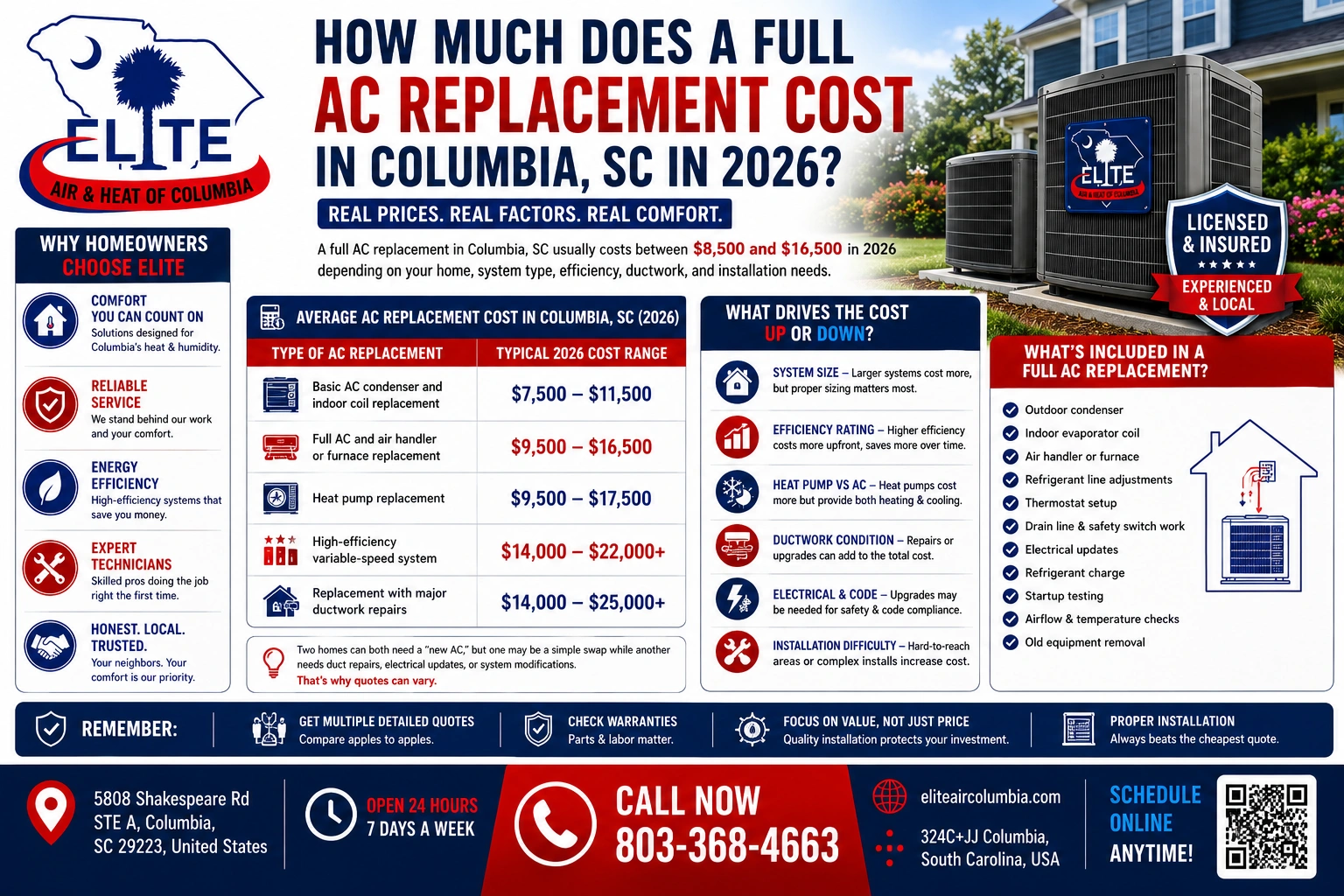
In 2026, a full AC replacement in Columbia, SC usually costs between $8,500 and $16,500, depending on the size of the home, the type of system, efficiency level, ductwork condition, electrical needs, and how difficult the installation is.
Some straightforward replacements may come in lower. Larger homes, higher-efficiency equipment, ductwork repairs, or major installation changes can push the price above that range.
That does not automatically mean you need the most expensive system. It means the quote should make sense for your home, your ductwork, and the way your system actually failed.
National and South Carolina-specific 2026 pricing sources show similar ranges, with HVAC replacement in South Carolina often landing around $6,000 to $15,000, and a 3-ton AC/furnace system in South Carolina commonly estimated around $10,800 to $13,800 installed.
Need a New AC System?
Learn how much a full AC replacement may cost in Columbia, SC in 2026 and get guidance before scheduling service.
Average AC Replacement Cost in Columbia, SC
For most Columbia-area homeowners, these are realistic 2026 replacement ranges:
| Type of AC Replacement | Typical 2026 Cost Range |
| Basic AC condenser and indoor coil replacement | $7,500–$11,500 |
| Full AC and air handler or furnace replacement | $9,500–$16,500 |
| Heat pump replacement | $9,500–$17,500 |
| High-efficiency variable-speed system | $14,000–$22,000+ |
| Replacement with major ductwork repairs | $14,000–$25,000+ |
The wide range is not a trick. Two homes can both need a “new AC,” but one may be a clean equipment swap while the other needs duct repairs, electrical updates, refrigerant line changes, drainage work, or humidity control corrections.
In Columbia’s heat and humidity, comfort is not just about cold air. A system also has to remove moisture, move air evenly, and survive long cooling seasons without running itself to death.
What Does “Full AC Replacement” Usually Include?
A full AC replacement usually means replacing more than just the outdoor unit.
A proper replacement may include:
- Outdoor condenser
- Indoor evaporator coil
- Air handler or furnace, depending on system type
- Refrigerant line adjustments or replacement
- Thermostat setup
- Drain line and safety switch work
- Electrical disconnect or whip updates
- Refrigerant charge
- Startup testing
- Airflow and temperature split checks
- Old equipment removal
This is where homeowners sometimes get into trouble.
If one quote is thousands cheaper than the others, it may not include the same work. It might only include the outdoor condenser, reuse an old coil, skip duct evaluation, or leave out electrical or drainage corrections.
The cheaper option is not always wrong, but it should make sense.
What Drives the Cost Up or Down?
1. System size
AC systems are sized by tonnage. Most Columbia homes use systems between 2 and 5 tons.
Bigger systems cost more, but bigger is not always better. An oversized AC can cool the house too quickly without removing enough humidity. That can leave the home feeling clammy even when the thermostat says 72.
A good technician should not guess based only on the size of your old unit. They should consider the home’s square footage, insulation, windows, ductwork, sun exposure, and comfort complaints.
2. Efficiency rating
Higher-efficiency systems cost more upfront.
A basic system may be less expensive, but a higher-efficiency model may lower cooling costs, reduce noise, and control humidity better when paired with the right indoor equipment.
The important part is not chasing the highest rating on the brochure. The system still has to be installed correctly. ENERGY STAR notes that proper refrigerant charge and proper airflow are critical for performance and equipment life.
3. Heat pump vs straight AC
Many homes in the Midlands use heat pumps because they provide both cooling and heating.
A heat pump replacement usually costs more than a straight AC replacement, but it may make sense if your home relies on electric heating or if the existing system is already a heat pump.
For many Columbia homeowners, a heat pump is not an exotic upgrade. It is the normal system type.
4. Ductwork condition
Ductwork can make or break a new AC system.
If the ducts are undersized, leaking, crushed, poorly insulated, or disconnected in the attic or crawlspace, a new AC may still struggle. You may get better equipment and still have hot rooms, weak airflow, high humidity, and long run times.
Duct repairs can add a few hundred dollars. Larger duct modifications or replacement can add several thousand.
This is why a replacement estimate should include a duct inspection, not just a box-for-box equipment price.
5. Electrical and code requirements
Some replacements need electrical updates.
That may include a disconnect, breaker, wiring, surge protection, or corrections to bring the installation up to current safety requirements.
This is not the exciting part of an AC replacement, but it matters. HVAC equipment uses serious electrical load, and shortcuts here are not worth it.
6. Installation difficulty
A clean ground-level installation is different from a cramped attic air handler in July.
Cost can increase when equipment is hard to access, the attic platform needs work, refrigerant lines are difficult to route, the drain system is poorly designed, or the old installation was patched together over time.
A good quote should explain this clearly.
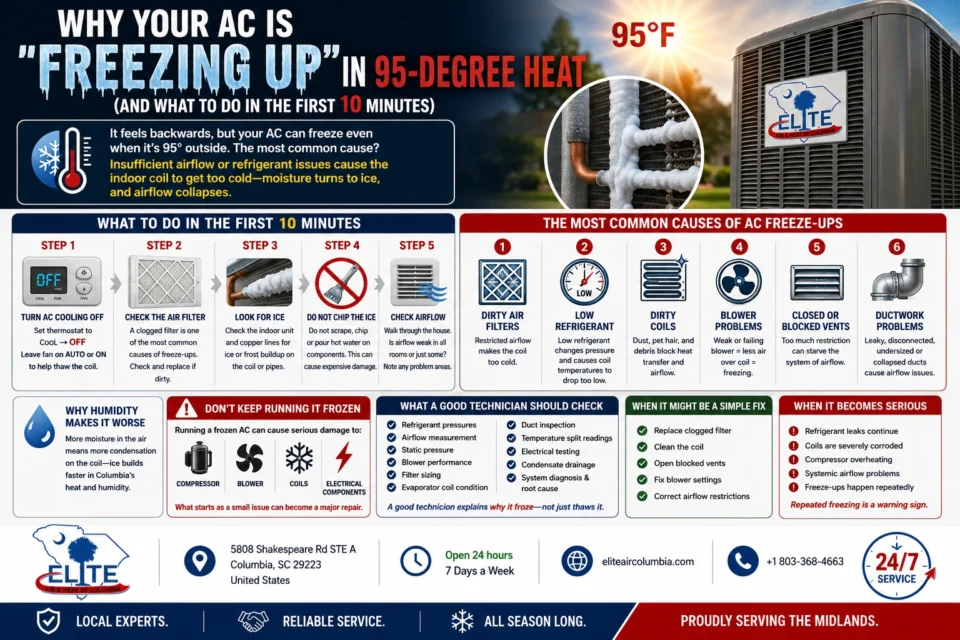
Why Your AC Is “Freezing Up” in 95-Degree Heat (And What to Do in the First 10 Minutes)
It feels backwards, but one of the most common summer AC problems in Columbia is an air conditioner literally freezing…
Why Are AC Replacement Quotes So Different?
If you get three quotes and they are far apart, do not assume the lowest quote is dishonest or the highest quote is better.
Instead, compare what each quote includes.
A good AC replacement quote should clearly show:
- Equipment model numbers
- System size
- Efficiency rating
- What indoor and outdoor components are being replaced
- Labor
- Warranty terms
- Thermostat details
- Electrical work included
- Drain line and safety switch work
- Ductwork repairs, if any
- Permits, if required
- Cleanup and removal
- Any optional upgrades
A weak quote may only say “replace AC system” with one total price.
That is not enough information for a homeowner to make a smart decision.
The goal is not to buy the biggest system. The goal is to understand what problem you actually have and what it takes to fix it correctly.
Should You Repair or Replace Your AC?
Replacement may make sense when:
- The system is 12–15+ years old
- The compressor has failed
- The evaporator coil is leaking
- The system uses outdated refrigerant
- Repair costs are getting close to 30–50% of replacement cost
- The same issue keeps coming back
- The home still has comfort problems after repeated repairs
- Utility bills have climbed sharply
- The system cannot keep up during peak summer heat
Repair may still make sense when:
- The system is newer
- The issue is isolated
- The repair is affordable
- The ductwork and airflow are in good shape
- The system has been maintained
- The failure is not part of a larger pattern
That does not automatically mean an older AC has to be replaced. Some systems are worth repairing. But if an older unit needs a major coil, compressor, or refrigerant repair, replacement should at least be part of the conversation.
What About Federal Tax Credits in 2026?
This is important because a lot of homeowners still see older information online.
As of 2026, the federal Energy Efficient Home Improvement Credit is listed by the IRS as available for qualifying improvements made through December 31, 2025. The IRS page reviewed in April 2026 states that homeowners can claim the credit for improvements made through that date.
So if you are replacing an AC system in 2026, do not assume a federal HVAC tax credit is available.
There may still be utility rebates, manufacturer promotions, financing options, or state-administered programs depending on timing and eligibility. Those change often, so ask your contractor to separate confirmed rebates from “possible” incentives.
A good estimate should not make the system look cheaper by counting a rebate you may not actually qualify for.
What Can Homeowners Safely Check Before Replacing the AC?
Before approving a full replacement, there are a few safe things you can check.
Start with the basics:
- Replace or check the air filter
- Make sure the thermostat is set correctly
- Confirm the breaker is not tripped
- Check whether the outdoor unit is blocked by weeds or debris
- Look for ice on the refrigerant lines
- Check whether supply vents are open
- Notice whether some rooms have weak airflow
- Write down how long the system runs before it shuts off
These checks will not diagnose every problem, but they help you explain what is happening.
Do not open electrical panels, handle refrigerant lines, bypass safety switches, or try to replace major AC parts yourself. Refrigerant, high voltage, and pressurized components are not DIY areas.
What Should a Technician Inspect Before Recommending Replacement?
A proper replacement recommendation should be based on more than age.
A technician should inspect:
- Outdoor condenser condition
- Indoor coil condition
- Compressor operation
- Refrigerant pressures
- Electrical components
- Blower motor and wheel
- Static pressure, which shows airflow restriction
- Duct condition
- Drain line safety
- Thermostat operation
- Temperature split
- Signs of repeated overheating or freezing
- Humidity complaints
- Repair history
A good technician should be able to show you why replacement is being recommended.
Not just say, “It’s old.”
Is the Cheapest AC Replacement a Bad Idea?
Not always.
A basic system installed correctly can be a good choice for many homes.
But a cheap quote can become expensive if it leaves out important work. The biggest problems usually come from poor sizing, weak airflow, reused mismatched components, rushed installation, skipped duct repairs, or unclear warranty coverage.
In Columbia’s long cooling season, installation quality matters. A poorly installed system may run, but it may not cool evenly, remove humidity well, or last as long as it should.
If you only remember one thing, remember this:
The equipment brand matters, but the installation matters more.
When Is a Higher-Priced System Worth It?
A higher-priced AC replacement may be worth it when it solves a real problem.
For example:
- Variable-speed equipment may help with humidity and comfort
- Better filtration may help indoor air quality concerns
- Zoning may help homes with major upstairs/downstairs temperature differences
- Duct repairs may fix airflow problems a new unit alone cannot solve
- A heat pump may make sense if heating efficiency matters
- A stronger labor warranty may reduce risk
But higher price is not automatically better.
If a contractor recommends a premium system, they should explain why your home needs it and what problem it solves.
What Is a Fair Next Step?
If your AC is failing, the next step is not guessing from a price chart.
The next step is a proper inspection.
For many Columbia homeowners, a full AC replacement in 2026 will land somewhere between $8,500 and $16,500, with higher costs when ductwork, electrical, access, or efficiency upgrades are involved. National 2026 replacement data also shows broad HVAC replacement averages in the low-to-mid five figures, depending on system type and installation scope.
A good contractor should explain:
- What failed
- Whether repair is still reasonable
- What replacement options fit your home
- What each option includes
- What can wait
- What should not be skipped
- What warranty protects you after installation
If your system keeps struggling during Columbia’s hottest months, it is worth having the full system evaluated before replacing parts blindly.
Elite Air & Heat of Columbia can help you understand what is actually causing the problem, what your replacement options look like, and what a fair estimate should include before you approve the work.
Planning an AC Replacement in Columbia, SC?
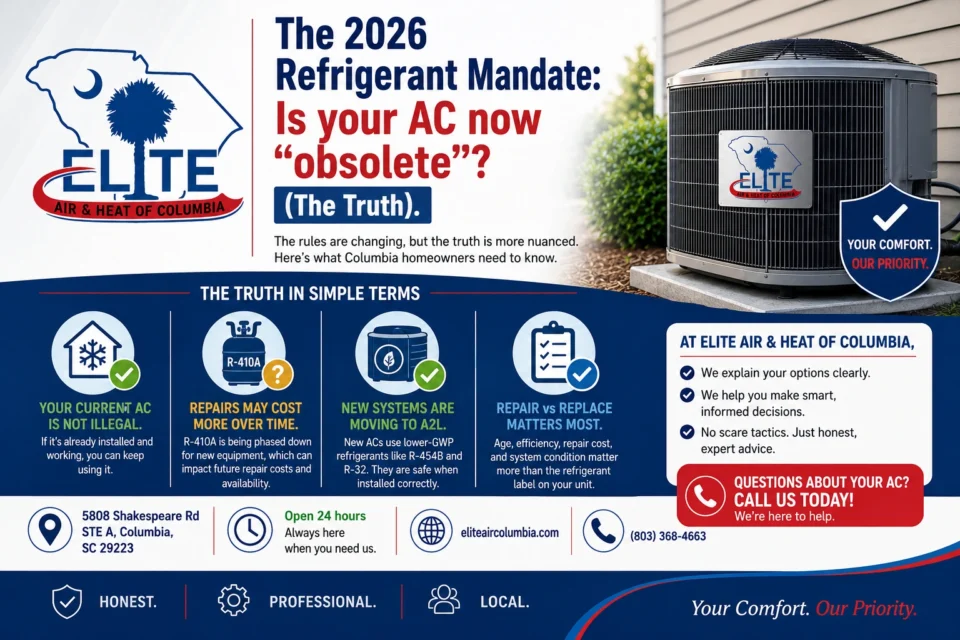
Get helpful 2026 pricing information for full AC replacement in Columbia, SC and know what to expect before you book.