
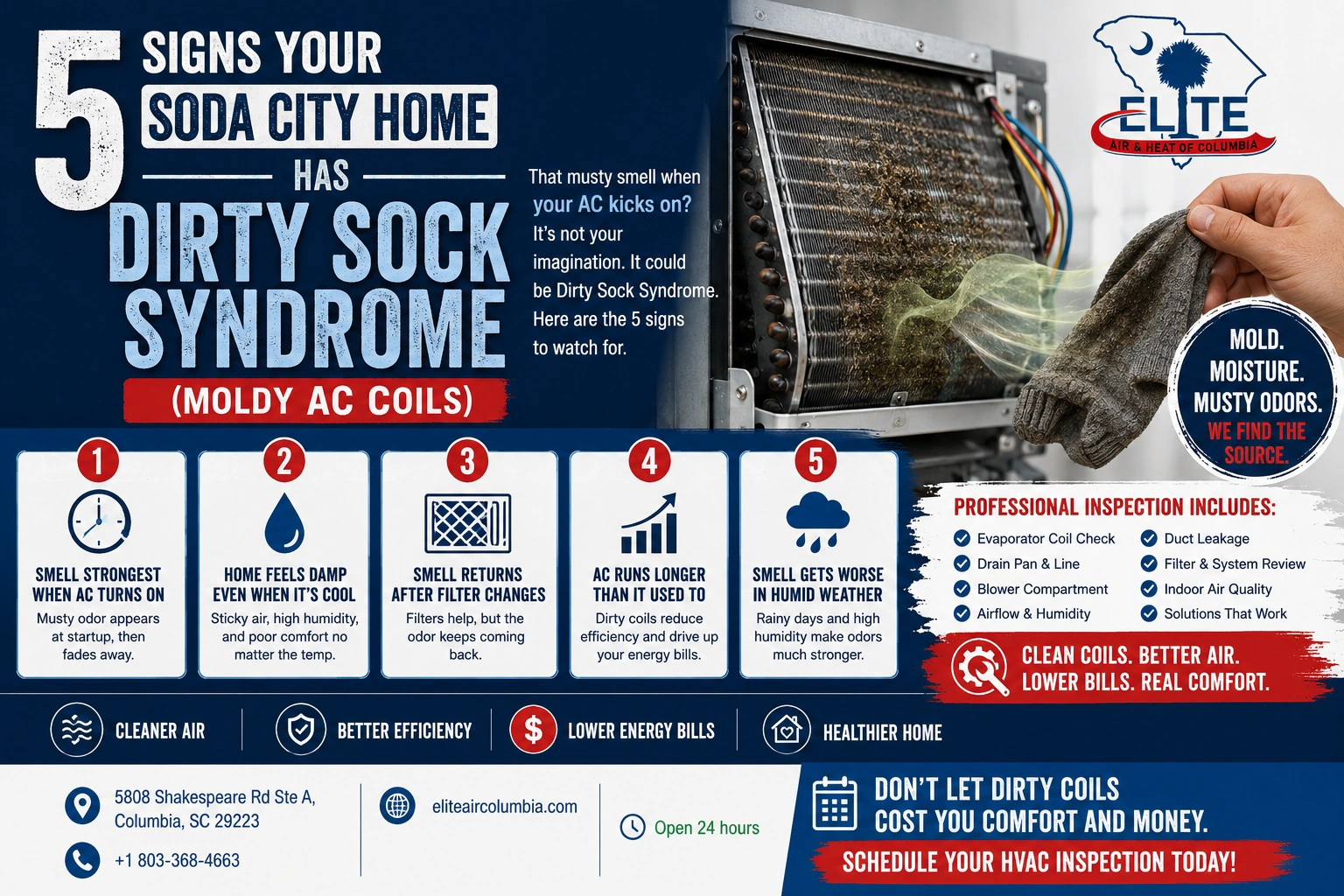

If your house smells musty every time the AC kicks on, especially during Columbia’s humid summers, you may be dealing with what HVAC technicians commonly call Dirty Sock Syndrome.
And yes, that is the actual nickname.
Homeowners usually describe it like this:
- “It smells damp when the AC starts.”
- “The house smells like wet laundry.”
- “There’s a mildew smell for a few minutes.”
- “It smells like dirty socks coming through the vents.”
- “The odor is strongest in the morning.”
Here’s the plain answer:
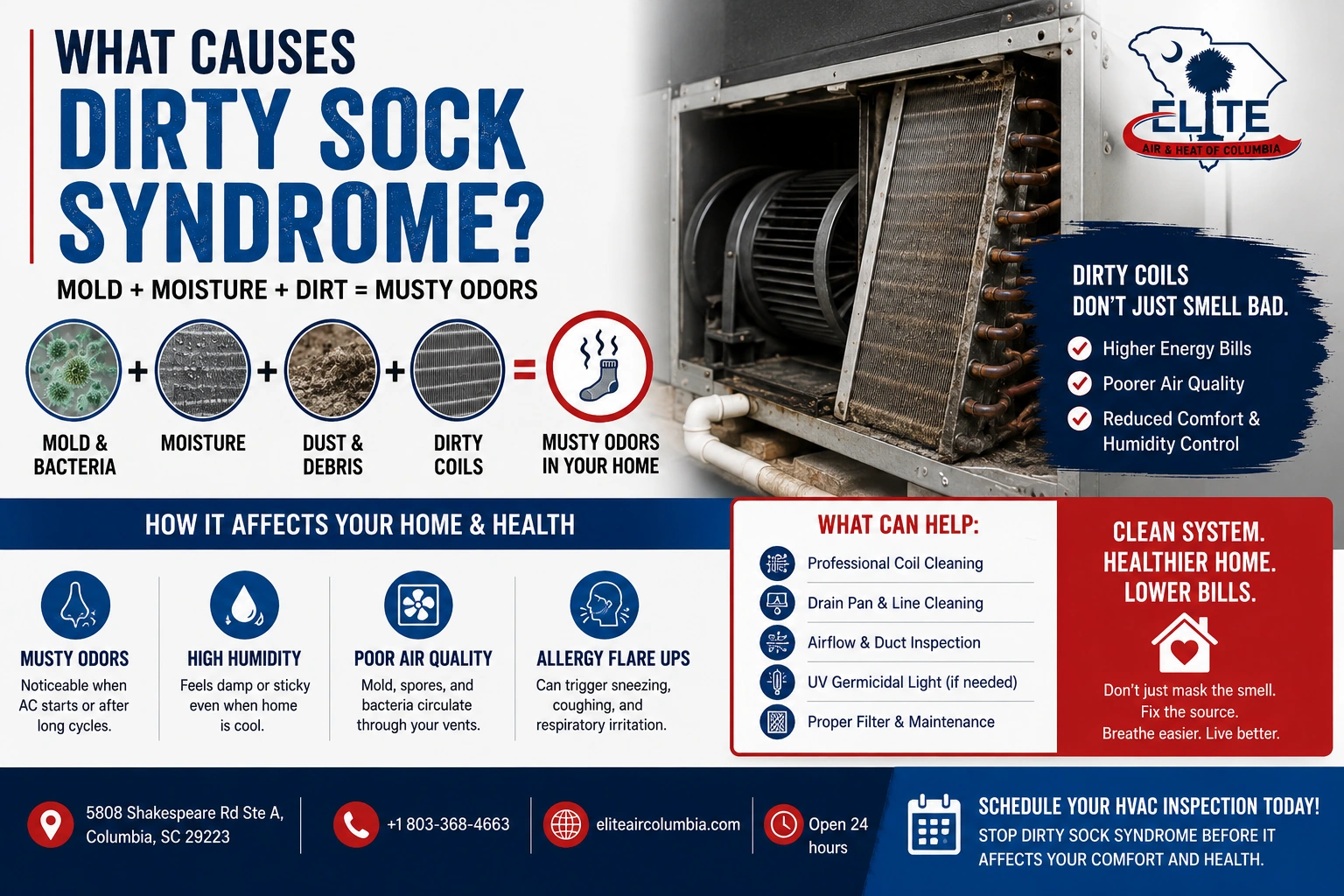
Dirty Sock Syndrome usually happens when mold, bacteria, and moisture build up on the indoor evaporator coil inside your HVAC system. When the AC starts running, airflow pushes that odor through the home.
In Columbia’s heat and humidity, this problem is extremely common because AC systems run long hours removing moisture from the air.
The good news is that Dirty Sock Syndrome is often repairable.
The bad news is that homeowners sometimes ignore it too long and end up with larger indoor air quality and airflow problems.
Smell That Musty AC Odor?
Don't ignore the warning signs. Call today for fast AC coil inspection and reliable HVAC service.
First: What Is Dirty Sock Syndrome?
Your indoor evaporator coil stays cold while your AC runs.
As warm humid air moves across that coil:
- moisture condenses on the surface
- water drains away through the condensate system
- humidity gets removed from the home
But over time, moisture combined with:
- dust
- pollen
- biological growth
- pet dander
- organic debris
can create buildup on the coil surface.
That buildup can start producing a sour, mildew-like smell.
And once airflow blows across it, the odor spreads through the house.
In Soda City’s humidity, systems work hard for much of the year, which creates ideal conditions for coil contamination if airflow and drainage are not staying clean.
Sign #1: The Smell Is Strongest When the AC First Turns On
This is the classic Dirty Sock Syndrome symptom.
The odor often:
- appears suddenly
- lasts a few minutes
- weakens after the system runs longer
Why?
Because moisture and biological growth sit on the coil while the system is off.
Then the blower starts, air hits the contaminated coil, and the smell gets pushed into the house.
Homeowners often notice it:
- first thing in the morning
- after the system cycles back on
- during mild evenings
- during humid weather swings
This is where homeowners sometimes get into trouble.
They assume:
- a dead animal is in the ductwork
- the carpet smells
- plumbing is causing it
- the problem will disappear on its own
But recurring mildew odors tied to AC cycles usually point back toward the HVAC system.
Sign #2: Your House Feels Damp Even When It Is Cool
Temperature and comfort are not the same thing.
A system with dirty coils may still lower the thermostat temperature while struggling with humidity removal.
You may notice:
- sticky indoor air
- clammy rooms
- bedding feeling damp
- lingering odors
- poor comfort despite “cool” temperatures
In Columbia’s heat and humidity, comfort is not just about temperature.
The system has to remove moisture effectively too.
Dirty evaporator coils reduce heat transfer and airflow performance, which can hurt dehumidification.
That creates the perfect environment for more microbial growth.
Sign #3: You Keep Changing Filters but the Smell Returns
A lot of homeowners do the right thing first:
- replace the filter
- spray air fresheners
- clean vents
But the smell keeps coming back.
That usually means the problem is deeper inside the system.
The evaporator coil is hidden inside the air handler or furnace cabinet, so homeowners rarely see the actual buildup.
And unfortunately, heavily contaminated coils often cannot be fixed with simple spray products from the hardware store.
A good technician should inspect:
- the coil surface
- drain pan
- condensate line
- blower compartment
- nearby insulation
- airflow conditions
The goal is not just masking odor. The goal is identifying where the biological growth is actually occurring.
Sign #4: Your AC Runs Longer Than It Used To
Dirty coils do not just affect smell.
They also affect efficiency.
As buildup accumulates:
- airflow becomes more restricted
- heat transfer becomes less effective
- runtime increases
- humidity removal worsens
That can lead to:
- higher Dominion Energy bills
- longer cooling cycles
- uneven temperatures
- weak airflow
Some homeowners assume the odor and performance issues are unrelated.
Often they are connected.
A dirty coil can create both:
- indoor air quality issues
- cooling efficiency problems
Especially in older systems.
Sign #5: The Smell Gets Worse During Rainy or Humid Weather
This is extremely common in Columbia-area homes.
Why?
Because higher humidity means:
- more moisture moving across the coil
- longer AC runtime
- slower drying conditions
- more microbial growth potential
Many homeowners notice Dirty Sock Syndrome becomes strongest:
- during rainy weeks
- during spring humidity swings
- during long cooling stretches
- after thunderstorms
That is a major clue the HVAC system is involved.
Why Your AC is Blowing Warm Air and How We Fix It
If your AC is running but your home still feels warm, you are not alone. One of the most frustrating…
Why Dirty Sock Syndrome Happens More in the South
The Southeast creates ideal conditions for coil contamination:
- long cooling seasons
- high humidity
- constant condensation
- heavy pollen
- biological growth conditions
- long AC runtime hours
Modern high-efficiency systems can also contribute in some cases because they cool very effectively while leaving coils damp for longer periods during certain operating conditions.
That does not mean high-efficiency systems are bad.
It just means moisture management matters more.
What a Professional Should Inspect
A proper Dirty Sock Syndrome evaluation should include:
- evaporator coil condition
- drain pan cleanliness
- condensate drainage
- blower wheel contamination
- duct leakage
- filter sizing
- airflow measurement
- humidity performance
- UV light options if appropriate
A good technician should be able to show you the buildup or explain exactly where the odor is originating.
Common Solutions
Depending on severity, solutions may include:
Coil Cleaning
Professional evaporator coil cleaning is often the first step.
This removes:
- biological buildup
- debris
- residue
- mold growth
Drain System Cleaning
Blocked or contaminated condensate systems can worsen odors.
Airflow Corrections
Poor airflow allows excess moisture accumulation.
UV Germicidal Lights
In some homes, UV systems help reduce recurring biological growth on coils.
These are not magic solutions for every home, but they can help in persistent cases.
Duct Repairs
Leaky ducts pulling humid attic or crawlspace air into the system can worsen moisture issues significantly.
What Homeowners Can Safely Check
You can safely:
- replace filters
- inspect visible vents
- monitor humidity
- note when odors appear
- check for standing water near the air handler
But coil cleaning inside the cabinet, electrical work, and blower disassembly are not DIY-safe for most homeowners.
This is where homeowners sometimes accidentally damage coils or insulation using harsh cleaners or pressure.
Does Dirty Sock Syndrome Mean You Need a New HVAC System?
Not necessarily.
That is one of the biggest misconceptions.
Many Dirty Sock Syndrome cases can be corrected without full replacement.
However, replacement may become part of the conversation when:
- coils are heavily corroded
- airflow design is poor
- humidity problems are severe
- biological growth keeps returning
- the system is aging and inefficient
A good technician should explain:
- whether cleaning is realistic
- whether airflow problems are contributing
- whether humidity control is adequate
- whether the issue is likely to return
The Bottom Line
If your Soda City home smells musty every time the AC starts, Dirty Sock Syndrome is a very real possibility.
The smell usually comes from:
- mold
- bacteria
- moisture buildup
- dirty evaporator coils
And in Columbia’s humid climate, the problem is extremely common.
The important thing is not just covering the smell up.
The important thing is understanding:
- why moisture is accumulating
- whether airflow is restricted
- whether drainage is working properly
- and whether indoor air quality is starting to suffer
If the odor keeps returning, Elite Air & Heat of Columbia can help determine whether the issue is dirty coils, humidity imbalance, duct leakage, or a larger airflow problem before the system develops more serious performance issues.
Is Your AC Smelling Like Dirty Socks?
Protect your comfort with professional coil cleaning and HVAC maintenance from experienced technicians.