
Most South Carolina homeowners do not spend much time worrying about frozen pipes.
That concern is usually associated with places that experience long, brutal winters and months of below-freezing temperatures.
But here’s the surprising reality:
Frozen pipes can and do happen in South Carolina. And when they do, they often catch homeowners completely off guard.
What’s even more surprising is that frozen pipes are not just a plumbing problem.
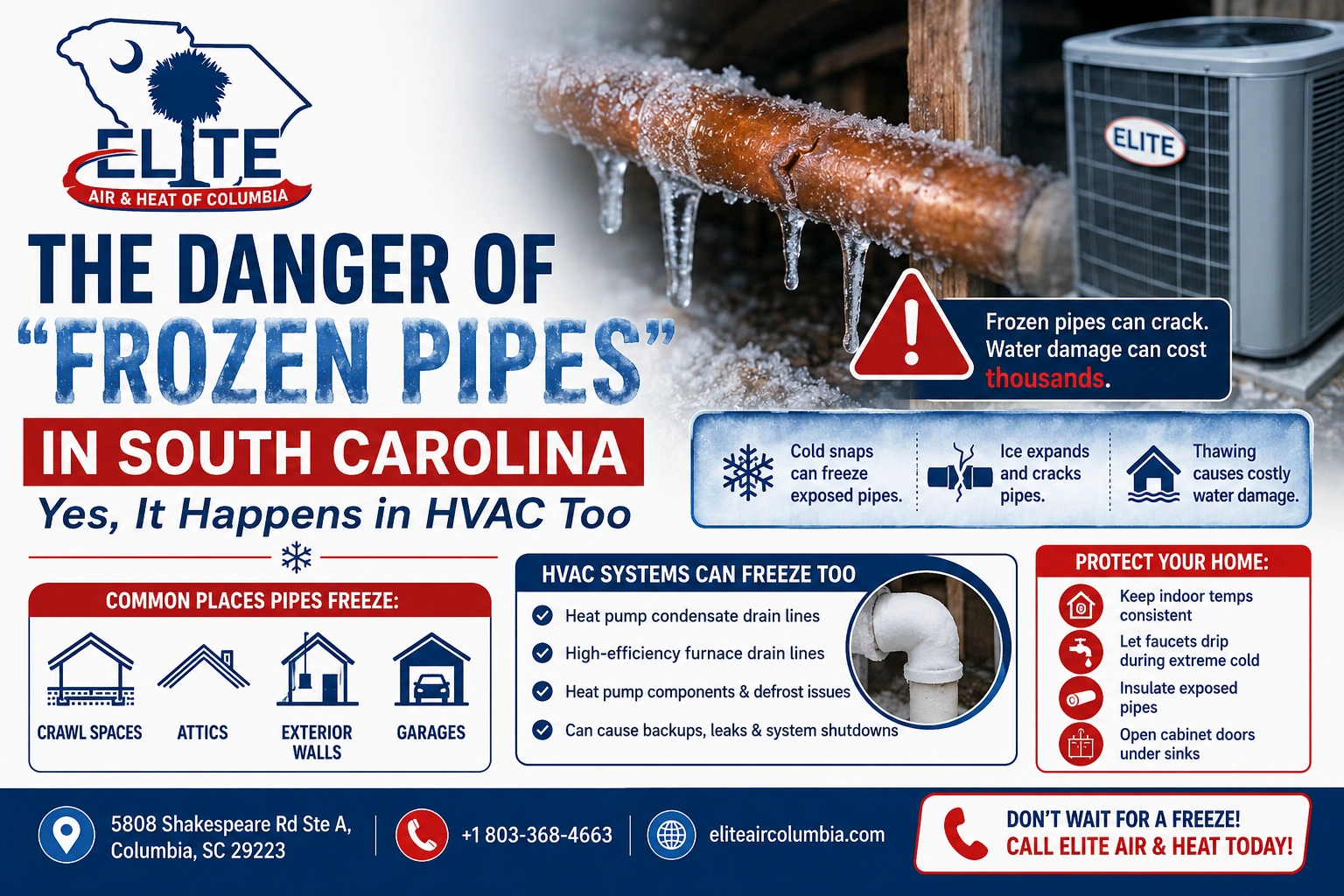
HVAC systems can experience frozen drain lines, frozen condensate pipes, frozen heat pump components, and other cold-weather issues that many homeowners never expect.
The danger is not simply the freezing itself.
The real danger is the water damage, equipment damage, and expensive repairs that can occur after temperatures rise again.
Let’s look at how frozen pipes happen, why South Carolina homes are more vulnerable than many people realize, and what homeowners should know before the next cold snap arrives.
Don't Ignore the Warning Signs
If your HVAC is freezing up or struggling in cold weather, get expert service before the damage gets worse.
Can Pipes Really Freeze in South Carolina?
Here’s the plain answer.
Absolutely.
The reason many homeowners underestimate the risk is because our winters are generally mild.
Most years, temperatures stay above freezing for long stretches.
As a result:
- Homes are often built differently than northern homes.
- Pipes may have less insulation.
- Crawl spaces may be more exposed.
- Attics may not be prepared for extended cold weather.
- Homeowners may not take preventative steps because freezing temperatures are relatively uncommon.
The combination creates a unique problem.
Homes designed primarily for heat and humidity can become vulnerable during sudden cold weather events.
A pipe doesn’t care whether you live in South Carolina or Minnesota.
If water inside the pipe freezes, pressure builds.
Eventually, something has to give.
Why Frozen Pipes Are So Dangerous
Many homeowners imagine a frozen pipe simply stops water flow.
Unfortunately, that’s not usually the expensive part.
The real damage often occurs after thawing.
When water freezes, it expands.
That expansion can crack:
- Copper pipes
- PVC pipes
- PEX fittings
- Valves
- Supply lines
The pipe may not immediately leak.
In fact, many homeowners discover the damage only after temperatures warm up and water pressure returns.
Suddenly, water begins pouring into:
- Walls
- Ceilings
- Crawl spaces
- Garages
- Attics
A small crack can release hundreds of gallons of water before it’s discovered.
This is where homeowners sometimes get into trouble.
The freezing event may last one night.
The water damage can take months to repair.
The Most Common Places Pipes Freeze
In South Carolina homes, frozen pipes usually occur in vulnerable areas.
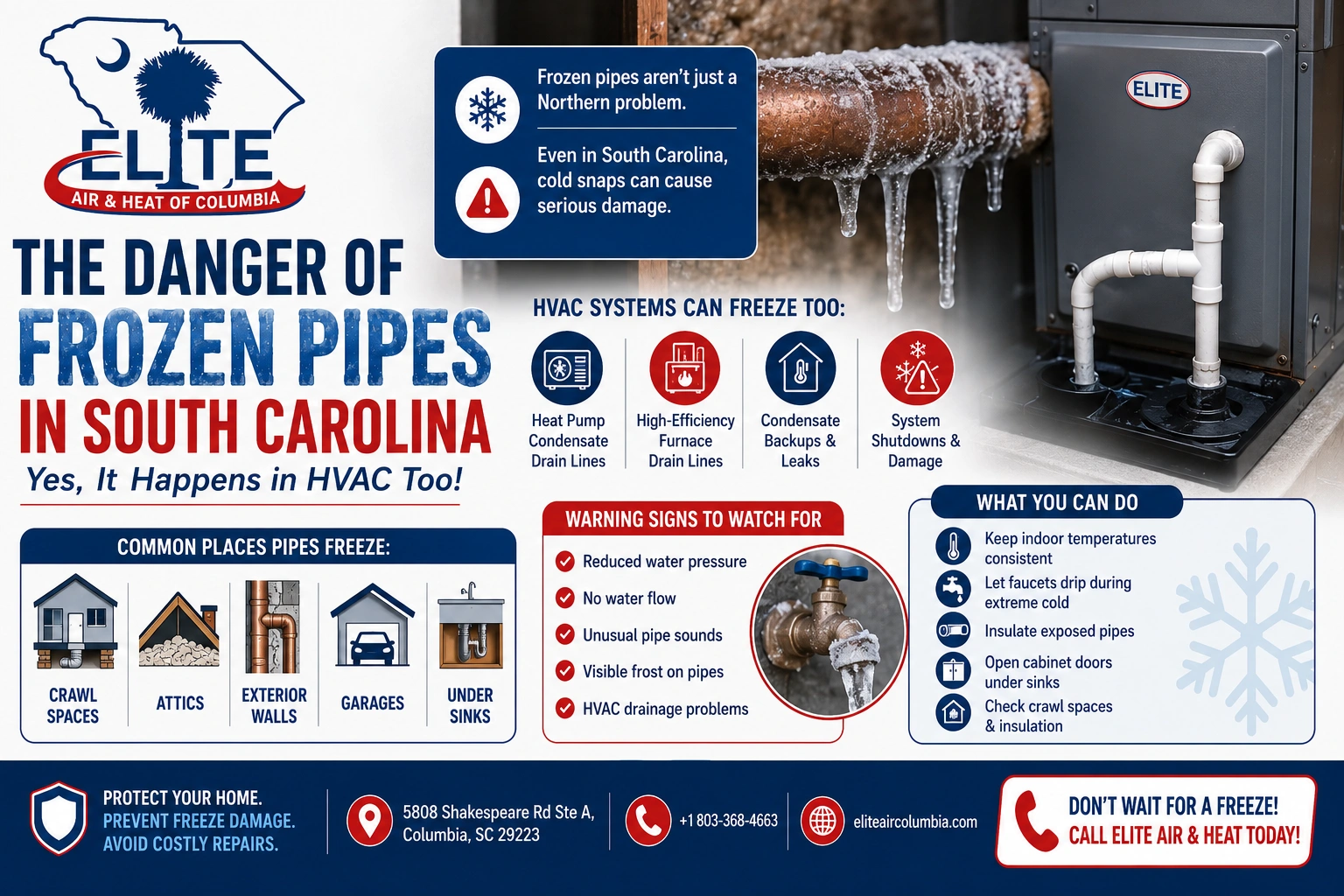
Crawl Spaces
Many Midlands homes have crawl spaces.
When temperatures drop unexpectedly, exposed plumbing beneath the house becomes vulnerable.
Especially if:
- Insulation is missing
- Vents remain open
- Cold air enters freely
Attics
Attic plumbing often receives less protection than homeowners realize.
Pipes running through unconditioned attic spaces can freeze surprisingly quickly during extended cold weather.
Exterior Walls
Pipes located along outside walls face increased exposure to freezing temperatures.
This risk increases when insulation is insufficient.
Garages
Unheated garages frequently contain plumbing lines that are vulnerable during hard freezes.
And that brings us to an HVAC-related issue many homeowners never consider.
Yes, Frozen Pipes Can Affect HVAC Systems Too
Many people hear “frozen HVAC” and immediately think about an air conditioner freezing during summer.
That’s a different issue.
Cold-weather HVAC freezing problems are very real.
Heat Pump Condensate Drain Lines
Heat pumps produce condensation during operation.
That moisture must drain away properly.
During extreme cold weather, condensate drain lines can freeze.
When this happens, water may:
- Back up into equipment
- Trigger safety switches
- Cause system shutdowns
- Create leaks inside the home
High-Efficiency Furnace Drain Lines
Many modern furnaces create condensation as part of the heating process.
These systems often rely on PVC drain piping.
If those drain lines freeze:
- Water can back up
- Furnace operation may be interrupted
- Safety controls may shut the system down
Homeowners often assume the furnace has failed when the actual problem is a frozen condensate line.
Heat Pump Outdoor Components
Heat pumps naturally develop frost during winter operation.
That’s normal.
In fact, every properly operating heat pump will frost over at certain times.
The system periodically enters a defrost cycle to remove that frost.
However, excessive ice accumulation can signal problems such as:
- Defrost control failures
- Sensor issues
- Refrigerant problems
- Airflow restrictions
A thin layer of frost is normal.
A heat pump completely encased in ice is not.
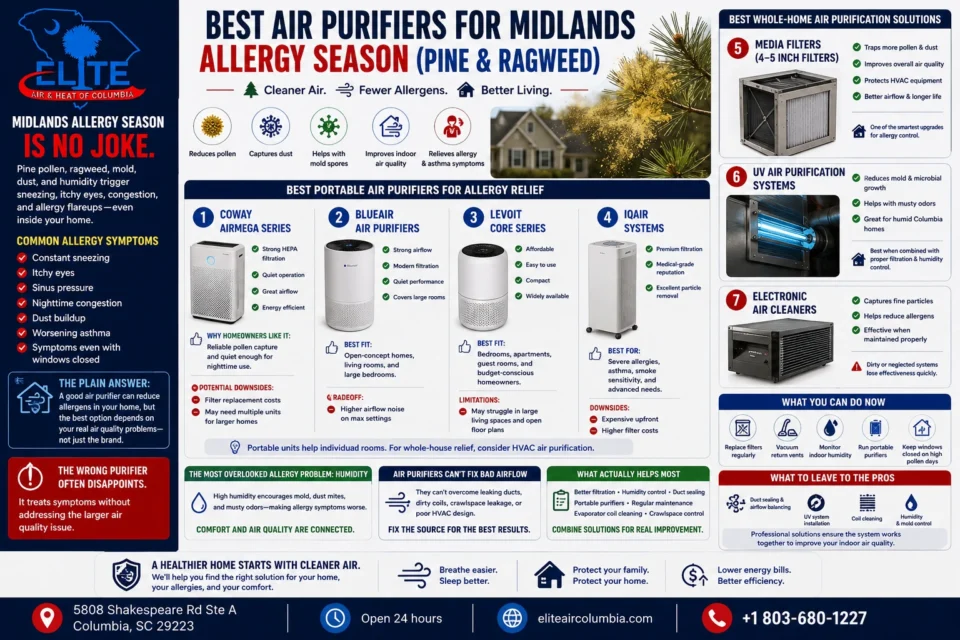
Best Air Purifiers for Midlands Allergy Season (Pine & Ragweed)
If you live in the Columbia area, you already know allergy season here is not just “a few bad days.”…
Why South Carolina Homes Can Be More Vulnerable
This seems backwards.
After all, colder states deal with freezing weather constantly.
The difference is preparation.
Homes in colder climates are typically designed with freezing temperatures in mind.
South Carolina homes often prioritize:
- Cooling performance
- Humidity control
- Ventilation
- Heat management
Because severe cold is relatively uncommon, plumbing systems may have less freeze protection.
Homeowners may also be less likely to take preventative measures because freezing events are infrequent.
The result is that a few nights below freezing can sometimes create significant damage.
Warning Signs That Pipes May Be Freezing
Recognizing the warning signs early can make a huge difference.
Watch for:
Reduced Water Pressure
If a faucet suddenly slows to a trickle, a pipe may be partially frozen.
No Water Flow
A complete loss of flow can indicate a frozen line.
Unusual Pipe Sounds
Whistling, banging, or strange noises may indicate pressure changes inside the plumbing system.
Visible Frost
Frost on exposed pipes is a clear warning sign.
HVAC Drainage Issues
If a furnace or heat pump suddenly develops water problems during freezing weather, a frozen drain line may be involved.
What Homeowners Can Safely Do
If temperatures are expected to drop significantly:
Keep Indoor Temperatures Consistent
Avoid drastically lowering the thermostat overnight.
Maintaining steady temperatures helps protect vulnerable areas.
Open Cabinet Doors
Allow warmer indoor air to circulate around plumbing under sinks.
Let Faucets Drip
A slow trickle can help prevent freezing during extreme cold events.
Protect Exposed Pipes
Insulating vulnerable plumbing is often inexpensive and effective.
Check Crawl Spaces
Verify insulation remains in place and vulnerable plumbing is protected.
What Not to Do
This is important.
Never attempt to thaw frozen pipes using:
- Open flames
- Propane torches
- Heat guns used carelessly
- Charcoal heaters
- Improvised heating devices
These methods can create fire hazards or damage plumbing.
If you suspect a frozen pipe has already burst, shut off the water supply immediately and contact a professional.
What a Good HVAC Technician Should Check
If your heating system experiences problems during freezing weather, a thorough inspection should include:
- Condensate drainage systems
- Heat pump defrost operation
- Outdoor unit condition
- Safety controls
- Drain line insulation
- Freeze-related equipment damage
A good technician should be able to explain whether the issue is truly equipment failure or simply a freeze-related condition affecting operation.
The Cost of Freeze Damage
Costs vary dramatically.
Minor issues may involve:
- Drain line clearing
- Pipe insulation
- Small plumbing repairs
More serious damage can include:
- Drywall replacement
- Flooring replacement
- Mold remediation
- Structural repairs
- HVAC component replacement
Repair costs can quickly reach thousands of dollars.
That is why prevention matters so much.
If You Only Remember One Thing
Frozen pipes are not just a northern problem.
South Carolina homeowners face a unique risk because freezing weather is uncommon enough that many homes—and many homeowners—are not fully prepared for it.
The danger is not the frozen pipe itself.
The danger is what happens when that pipe thaws and water starts going where it should not.
And remember, frozen pipes are not limited to plumbing. HVAC systems can experience freeze-related issues involving condensate drains, heat pumps, and high-efficiency heating equipment as well.
If your home experiences plumbing or heating problems during a cold snap, the next step is not guessing. A proper inspection can determine whether you’re dealing with a simple freeze issue, hidden damage, or a larger problem that needs attention before temperatures rise again.
Frozen Pipes Can Damage Your HVAC
Don't wait for costly repairs. Schedule a professional HVAC inspection and call today for fast, reliable service.