
You turn on your air conditioner and hear it.
A high-pitched screech.
Maybe it sounds like metal rubbing against metal. Maybe it resembles a squealing belt, a shrill whistle, or a loud screech that seems to come from inside the air handler.
Whatever it sounds like, one thing is certain:
Your AC should not be making that noise.
Here’s the plain answer.
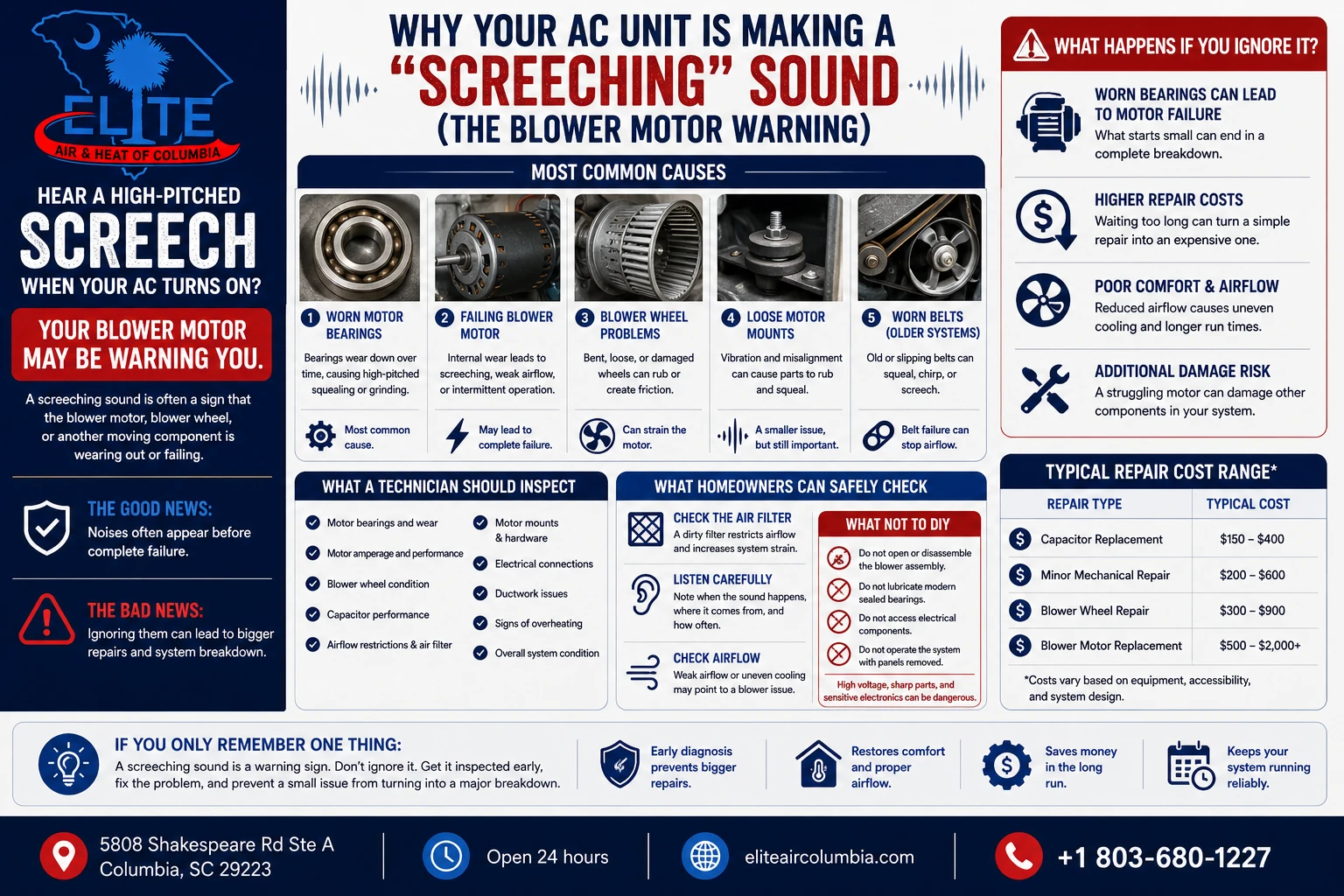
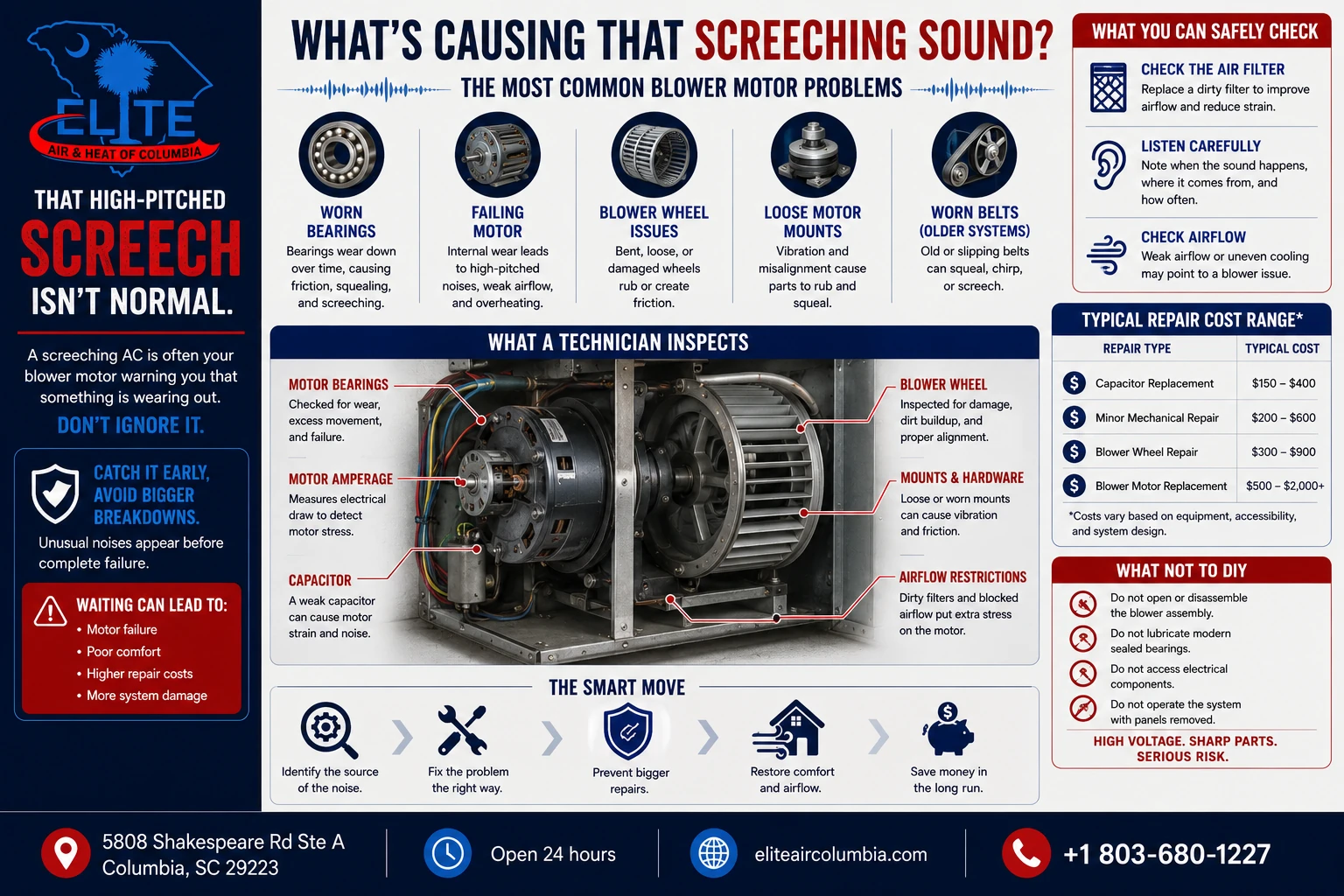
A screeching sound coming from your HVAC system is often a warning sign that the blower motor, blower wheel, or another moving component is beginning to fail. In some cases, the issue is relatively minor. In others, it’s an early warning that a major breakdown may be approaching.
The good news is that unusual noises often appear before complete failure.
The bad news is that many homeowners ignore them until the system stops working altogether.
Let’s look at what that screeching sound may mean, why the blower motor is frequently involved, and what a good HVAC technician should inspect before recommending repairs.
Screeching AC? Don’t Ignore It
A struggling blower motor can lead to bigger repairs. Call now for fast, professional AC service.
What Is the Blower Motor?
The blower motor is one of the hardest-working components in your HVAC system.
Its job is simple:
It moves air.
After your AC cools the air, the blower motor pushes that conditioned air through your ductwork and into the rooms of your home.
Without the blower motor:
- Airflow stops
- Cooling performance drops
- Comfort suffers
- The system may eventually shut down
In many homes, the blower motor runs for thousands of hours each year.
In Columbia’s long cooling season, that workload can add up quickly.
Like any mechanical component, wear eventually occurs.
And often, the first warning sign is noise.
Why a Screeching Sound Is Different from Other HVAC Noises
Not every HVAC noise means the same thing.
Different sounds often point to different problems.
Banging
Often indicates:
- Loose parts
- Damaged blower wheels
- Debris inside equipment
Clicking
May indicate:
- Electrical relays
- Control board issues
- Normal startup operation
Buzzing
Frequently associated with:
- Electrical components
- Capacitors
- Contactors
Rattling
Often points to:
- Loose panels
- Fasteners
- Ductwork vibration
Screeching or Squealing
This is where homeowners should pay close attention.
A screeching sound often involves moving parts experiencing friction, wear, or mechanical failure.
And the blower motor is one of the most common culprits.
The Most Common Blower Motor Problems That Cause Screeching
Let’s start with the most likely possibilities.
Worn Motor Bearings
This is one of the most common causes of a screeching HVAC system.
Bearings help the motor shaft spin smoothly.
Over time, bearings wear down.
As they deteriorate, homeowners may notice:
- High-pitched screeching
- Squealing sounds
- Grinding noises
- Increased vibration
Initially, the noise may come and go.
As bearing wear worsens, the sound often becomes more consistent.
This is where homeowners sometimes get into trouble.
The system may still cool the house.
Because cooling continues, many assume the noise is harmless.
Unfortunately, worn bearings rarely fix themselves.
Eventually, the motor can seize completely.
A Failing Blower Motor
Sometimes the motor itself is reaching the end of its lifespan.
Warning signs often include:
- Screeching noises
- Weak airflow
- Intermittent operation
- Overheating
- Increased utility bills
The blower motor may continue operating for weeks or even months after the first symptoms appear.
However, failure becomes increasingly likely.
A good technician should be able to measure motor performance and determine whether replacement is approaching.
Blower Wheel Problems
The blower wheel resembles a large fan inside the air handler.
Its job is to move air efficiently through the system.
If the blower wheel becomes:
- Bent
- Loose
- Damaged
- Misaligned
It may create unusual noises.
A damaged blower wheel can also place extra strain on the motor.
If left unresolved, one problem can eventually create another.
Loose Motor Mounts
HVAC systems naturally create vibration.
Motor mounts help absorb that vibration and keep components properly aligned.
When mounts become loose or deteriorate, components may shift.
The resulting friction or movement can produce squealing or screeching sounds.
Fortunately, this issue is often less expensive than full motor replacement.
Belt-Driven Systems (Older Equipment)
Most modern residential HVAC systems use direct-drive blower motors.
However, some older systems still use belts.
When belts wear out, homeowners may hear:
- Squealing
- Chirping
- Screeching
The sound can resemble what you might hear from an aging automobile belt.
If your system still uses belt-driven components, inspection should occur promptly.
A worn belt can eventually break and stop airflow entirely.
Could the Outdoor Unit Cause a Screeching Sound?
Yes.
While blower motors are common causes, outdoor equipment can also create similar noises.
Potential causes include:
Condenser Fan Motor Problems
The outdoor fan motor contains bearings similar to the indoor blower motor.
As bearings wear, screeching may occur.
Fan Blade Issues
Bent or damaged fan blades can create unusual noises during operation.
Compressor Problems
Although less common, certain compressor failures can create high-pitched sounds.
Compressor issues tend to be more serious and more expensive than blower-related repairs.
This is why proper diagnosis matters.
The goal is not to guess.
The goal is to identify the actual source of the sound.

Why “Free Service Calls” in Columbia Are Usually a Marketing Trap
If you've ever searched for HVAC repair in Columbia, you've probably seen ads that promise “Free Service Calls,” “Free Diagnostics,”…
What Happens If You Ignore the Screeching?
Many homeowners ask this question.
Sometimes the system continues operating for quite a while.
Other times, failure occurs quickly.
The risk is that a small problem can become a larger one.
For example:
Worn Bearings Can Lead to Motor Failure
Replacing bearings early may be possible in some situations.
Waiting too long often means replacing the entire motor.
Airflow Problems Can Affect Cooling Performance
Reduced airflow can cause:
- Uneven cooling
- Longer run times
- Higher utility bills
Additional Components Can Become Damaged
A struggling motor places stress on surrounding parts.
Ignoring the root cause may create secondary failures.
If the issue keeps coming back, replacing parts blindly usually is not the answer.
A good technician should determine why the component failed in the first place.
What a Technician Should Inspect
A proper diagnosis involves more than simply listening to the noise.
A thorough inspection should include:
Motor Bearings
Checking for wear, excessive movement, and signs of failure.
Motor Amperage
Measuring electrical draw helps identify motors under stress.
Blower Wheel Condition
Inspecting for damage, dirt buildup, or alignment issues.
Capacitor Performance
A failing capacitor can create conditions that strain the motor.
Airflow Restrictions
Dirty filters and airflow problems can contribute to motor stress.
Mounting Hardware
Inspecting brackets, mounts, and vibration isolators.
A good technician should be able to show you what they found rather than simply recommending replacement.
What Homeowners Can Safely Check
There are a few things homeowners can do safely before calling for service.
Check the Air Filter
A severely clogged filter restricts airflow.
Restricted airflow can increase system strain.
Replacing a dirty filter is simple and often worthwhile.
Listen Carefully
Try to determine:
- Is the sound indoors or outdoors?
- Does it occur constantly?
- Does it happen only during startup?
- Does it disappear after a few minutes?
These details help technicians diagnose the problem more quickly.
Check Airflow
Are some rooms receiving less airflow than usual?
Weak airflow combined with screeching often points toward blower-related issues.
What Not to DIY
This is important.
Do not attempt to:
- Disassemble the blower assembly
- Lubricate modern sealed bearings
- Access electrical components
- Operate the system with panels removed
Modern HVAC systems contain:
- High-voltage components
- Sharp metal edges
- Sensitive electronics
Improper repairs can create safety risks and additional damage.
How Much Does a Blower Motor Repair Cost?
Costs vary depending on the issue.
Typical ranges may include:
| Repair Type | Typical Cost Range |
| Capacitor Replacement | $150–$400 |
| Minor Mechanical Repair | $200–$600 |
| Blower Wheel Repair | $300–$900 |
| Blower Motor Replacement | $500–$2,000+ |
The exact cost depends on:
- Equipment type
- Motor design
- Labor requirements
- Warranty status
- Accessibility
The cheaper option is not always wrong, but it should make sense.
A good estimate should clearly explain what failed and why.
Could It Be Time for Replacement?
Not necessarily.
A screeching blower motor does not automatically mean you need a new HVAC system.
In many cases, replacing the motor restores reliable operation.
However, replacement discussions may become reasonable when:
- The system is 15+ years old
- Major repairs are recurring
- Efficiency has declined significantly
- Multiple components are failing
That decision should be based on the overall condition of the system—not fear caused by a noise.
If You Only Remember One Thing
A screeching HVAC system is rarely a noise you should ignore.
The sound often indicates a blower motor issue, worn bearings, blower wheel problems, or another mechanical component beginning to fail. While the system may continue running for a while, waiting too long can turn a manageable repair into a larger and more expensive problem.
If your AC has started making a high-pitched screeching sound, the next step is a proper diagnosis rather than guessing. A good technician should be able to identify the source of the noise, explain the condition of the affected component, and help you understand whether a repair, replacement, or simple adjustment makes the most sense for your situation.
Hear a Screech When Your AC Runs?
That sharp noise could signal a blower motor problem. Get it checked before your system breaks down.