
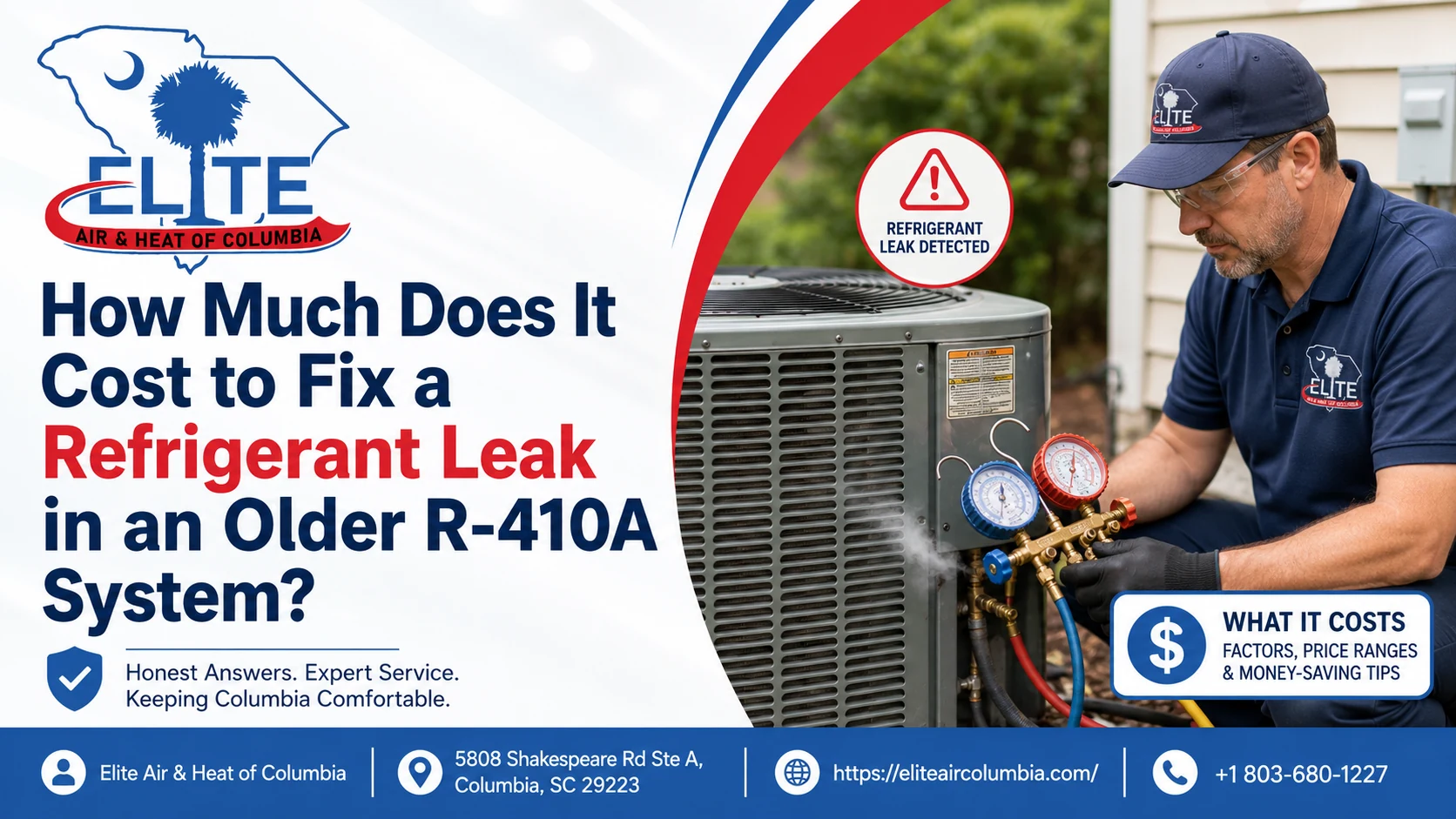

If your air conditioner is low on refrigerant and a technician tells you there’s a leak, one of the first questions you’re likely to ask is:
“How much is this going to cost me?”
Unfortunately, the answer is rarely as simple as adding refrigerant and moving on.
The cost to repair a refrigerant leak in an older R-410A system can range anywhere from $300 to more than $3,500, depending on where the leak is located, how extensive the damage is, and whether the system is still a good candidate for repair.
Here’s the plain answer:
Many refrigerant leaks can be repaired, but not every leak should be repaired.
In some cases, fixing the leak and recharging the system makes perfect sense.
In others, the repair cost approaches replacement territory, especially when the system is older, has multiple issues, or is nearing the end of its expected lifespan.
The goal is not to automatically repair it or automatically replace it.
The goal is to understand what failed, what it will cost to fix, and whether the investment makes sense for the age and condition of the equipment.
Refrigerant Leak Driving Up Repair Costs?
Get a professional diagnosis before spending more on an older R-410A system. Call now for reliable service.
What Is a Refrigerant Leak?
Your air conditioner operates as a sealed system.
Refrigerant circulates between the indoor and outdoor components, absorbing heat from your home and releasing it outside.
Under normal conditions, refrigerant is not consumed like gasoline.
If refrigerant levels are low, there’s usually only one explanation:
The refrigerant escaped somewhere.
That means a leak exists.
Adding refrigerant without fixing the leak is similar to repeatedly filling a tire with air without repairing the hole.
It may temporarily restore performance, but the problem usually returns.
This is where homeowners sometimes get into trouble.
A quick refrigerant recharge may be cheaper today, but if the leak remains, you’ll often end up paying for refrigerant again later.
Why Older R-410A Systems Present a Unique Challenge
Many homeowners have heard discussions about refrigerant changes in recent years.
While R-410A systems are still widely used, older equipment is beginning to reach an age where major repairs require closer evaluation.
A system that is:
- 10 to 15 years old
- Out of warranty
- Experiencing recurring repairs
- Losing efficiency
may not justify a large leak repair investment.
That does not automatically mean you need a replacement.
However, age becomes an important factor when comparing repair costs against the remaining life expectancy of the equipment.
A good technician should be able to explain where your system falls on that spectrum.
What Causes Refrigerant Leaks?
Refrigerant leaks can develop for several reasons.
Common causes include:
Coil Corrosion
Over time, indoor evaporator coils can develop tiny pinhole leaks.
These leaks are often caused by chemical reactions between copper tubing and airborne contaminants.
They may start small and gradually worsen.
Vibration Damage
HVAC systems constantly expand, contract, and vibrate during operation.
Over many years, stress can weaken joints, fittings, or brazed connections.
Physical Damage
Outdoor condenser coils can be damaged by:
- Storm debris
- Lawn equipment
- Falling branches
- Accidental impacts
Manufacturing Defects
Although less common, some systems develop leaks due to material defects or manufacturing issues.
Improper Previous Repairs
Poor workmanship during earlier service visits can occasionally contribute to future refrigerant leaks.
Average Cost to Repair an R-410A Refrigerant Leak
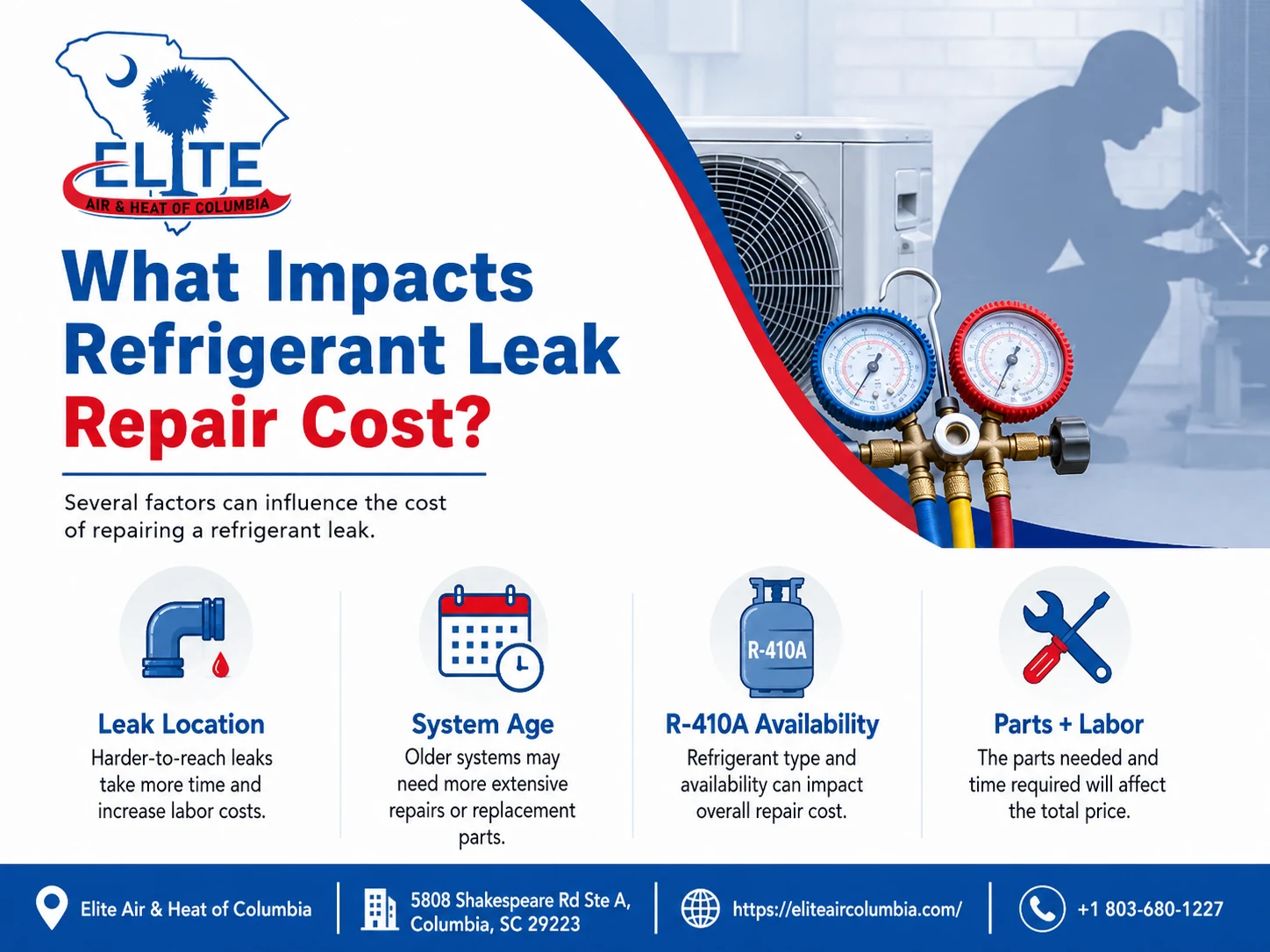
The repair cost depends heavily on where the leak is found.
Here are realistic ranges homeowners commonly encounter.
| Repair Type | Typical Cost Range |
| Leak detection and diagnosis | $200–$600 |
| Minor fitting or connection repair | $300–$900 |
| Brazing small copper leak | $500–$1,200 |
| Refrigerant recharge after repair | $300–$1,000+ |
| Evaporator coil replacement | $1,500–$3,500+ |
| Condenser coil replacement | $1,800–$4,000+ |
These figures vary by system size, accessibility, labor requirements, and refrigerant quantity.
The important thing to understand is that the refrigerant itself is often only part of the bill.
Finding the leak and performing the actual repair can account for much of the cost.
Why Refrigerant Prices Matter
R-410A is not free, and larger systems require more of it.
Depending on the size of the equipment, a recharge may require several pounds of refrigerant.
That cost can add up quickly.
However, homeowners sometimes focus too much on refrigerant pricing and not enough on the leak itself.
The refrigerant is not usually the root problem.
The leak is.
If the issue keeps coming back, adding refrigerant repeatedly is rarely the most cost-effective strategy.
Why Leak Detection Can Be Expensive
One of the biggest surprises homeowners encounter is the diagnostic process.
Finding a refrigerant leak is not always straightforward.
Some leaks are obvious.
Others are extremely small and difficult to locate.
Technicians may use:
- Electronic leak detectors
- Nitrogen pressure testing
- UV dye testing
- Soap bubble testing
- Isolation testing
A thorough diagnosis takes time.
The technician isn’t simply looking for low refrigerant.
They’re trying to determine:
- Where the refrigerant escaped
- Whether the leak is repairable
- Whether additional leaks exist
- Whether the repair is likely to last
This diagnostic process often determines whether a repair makes financial sense.
When a Refrigerant Leak Is Usually Worth Repairing
Many leak repairs are reasonable investments.
Repair often makes sense when:
- The system is under 10 years old
- The leak is isolated
- The compressor is healthy
- The system has otherwise been reliable
- Repair costs remain relatively low
For example:
A small leak at a brazed joint costing $700 to repair on an eight-year-old system may be a very sensible repair.
In many cases, homeowners get several additional years of service afterward.
When Repair Starts Becoming Questionable
There comes a point where leak repairs become harder to justify.
Warning signs include:
- Multiple refrigerant leaks
- Major coil failures
- Aging equipment
- Frequent repair history
- Declining efficiency
- Large repair estimates
For example:
If a 14-year-old system requires a $3,000 evaporator coil replacement and has already experienced several expensive repairs, replacement may deserve serious consideration.
The cheaper option is not always wrong, but it should make sense.
A good technician should be able to show you why they’re recommending one path over another.
The Most Expensive Leak Repairs: Coil Replacements
When homeowners hear “refrigerant leak,” they often assume a simple repair.
Unfortunately, some leaks occur within the coils themselves.
Evaporator Coil Leaks
The evaporator coil sits inside your home and absorbs heat from indoor air.
When it develops multiple leaks, replacement is often the only practical solution.
Typical costs:
$1,500–$3,500 or more

Why “Discount” HVAC Companies in Lexington Might Cost You More in Repairs
When your air conditioner stops cooling or your heating system suddenly quits, choosing the lowest-priced HVAC company can seem like…
Condenser Coil Leaks
The outdoor condenser coil releases heat outdoors.
Repairs are sometimes possible, but widespread damage often requires replacement.
Typical costs:
$1,800–$4,000 or more
At this point, replacement discussions become much more common.
Why Some Companies Immediately Recommend Replacement
Homeowners are often skeptical when replacement enters the conversation.
That’s understandable.
Sometimes replacement recommendations are justified.
Sometimes they deserve further discussion.
Factors that may legitimately support replacement include:
- Major coil failure
- Aging equipment
- Multiple refrigerant leaks
- Compressor wear
- High repair costs
- Poor efficiency
However, a good technician should explain the reasoning clearly.
You should understand:
- What failed
- Why it failed
- What repair options exist
- Expected repair lifespan
- Expected replacement benefits
The goal is not to buy the biggest repair.
The goal is to understand the actual problem.
What Homeowners Can Safely Check
While refrigerant work should always be handled by licensed HVAC professionals, homeowners can look for warning signs.
Common indicators include:
Reduced Cooling
The house takes longer to cool than normal.
Ice Formation
Frozen refrigerant lines or ice on indoor coils can indicate low refrigerant levels.
High Utility Bills
A struggling system often runs longer and uses more electricity.
Warm Air From Vents
Airflow may feel normal while cooling performance declines.
Hissing Sounds
Some refrigerant leaks produce audible hissing or bubbling sounds.
These symptoms do not automatically confirm a refrigerant leak.
However, they do warrant professional evaluation.
What Not to Do
This is where homeowners sometimes make costly mistakes.
Avoid:
- Continuously adding refrigerant without finding the leak
- Approving major repairs without understanding the diagnosis
- Ignoring recurring low-refrigerant problems
- Assuming every leak requires full replacement
A thorough diagnosis should come before major decisions.
If the issue keeps returning, replacing parts blindly usually is not the answer.
The Repair vs. Replace Question Most Homeowners Face
When dealing with an older R-410A system, the real question often isn’t:
“Can it be repaired?”
It’s:
“Should it be repaired?”
Those are very different questions.
Many systems can technically be repaired.
The better question is whether the repair provides enough remaining value to justify the investment.
A $700 repair on a reliable system may be easy to justify.
A $3,500 repair on a system nearing the end of its life may be much harder to justify.
Every situation is different.
That’s why understanding the diagnosis matters more than simply hearing a repair price.
Before You Approve a Refrigerant Leak Repair, Ask for These Answers
If you’re facing a refrigerant leak in an older R-410A system, don’t focus solely on the repair estimate.
Ask the technician:
- Where exactly is the leak?
- How confident are you in the diagnosis?
- Are there signs of additional leaks?
- What is the expected lifespan after repair?
- What are the repair versus replacement costs?
- What would you do if this were your own system?
A good technician should be able to explain the problem, the options, and the tradeoffs clearly.
Understand the Leak Before You Decide on the Fix
A refrigerant leak is one of the most common reasons homeowners begin thinking about replacement, but it doesn’t automatically mean your system is finished.
Some leaks are relatively minor and affordable to repair. Others signal larger issues that make replacement worth discussing.
Before spending thousands of dollars either way, make sure you understand exactly where the leak is, what caused it, and how the repair fits into the overall condition of the system.
If you’re dealing with recurring refrigerant issues, unexplained cooling problems, or a large repair recommendation, Elite Air & Heat of Columbia can help you evaluate the diagnosis, compare your options, and determine whether repairing or replacing the system makes the most financial sense for your home.
Is Your Older AC Losing Refrigerant?
Find the leak and understand your repair costs before the problem gets worse. Schedule professional service today.