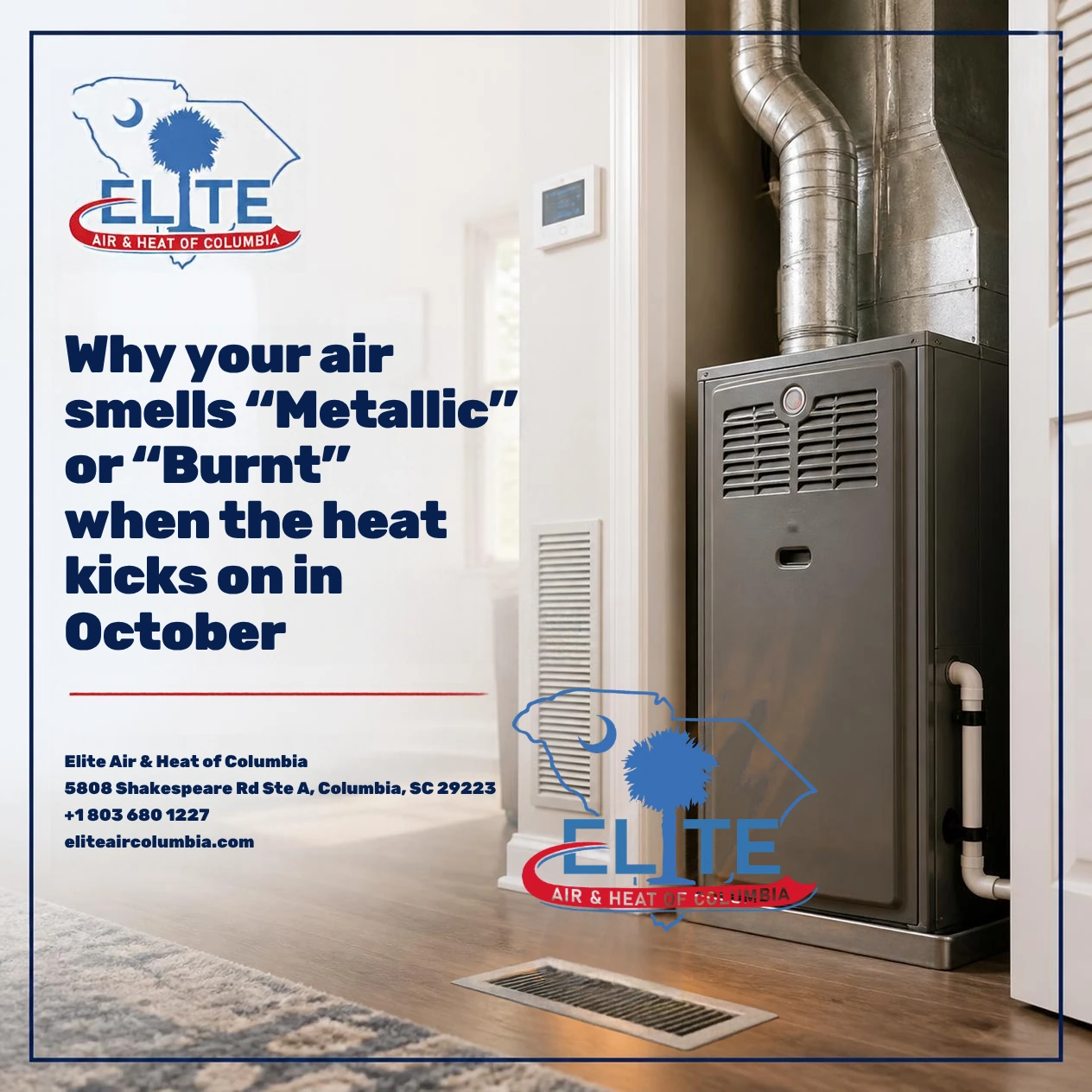

The first cool morning of October arrives, you switch on the heat, and suddenly there is a strange smell coming from the vents. Maybe it smells dusty and burnt. Maybe it has a sharper metallic quality. Either way, it is enough to make you wonder whether something inside the HVAC system is overheating.
Sometimes, that first burnt smell of the season is completely normal. Dust can settle on heating components during months of little or no use, then briefly burn off when the system starts heating again. But if the odor is strong, persistent, electrical, plastic-like, or getting worse, it can point to a problem that needs professional attention. HVAC manufacturers specifically distinguish between temporary dust odors and more concerning burning or electrical smells.
At Elite Air & Heat of Columbia, we help homeowners throughout the Columbia area get their heating systems ready for cooler weather. Here is what different fall heating smells can mean, when they are normal, and when shutting the system down is the safer move.
Smelling Something Burning When Your Heat Turns On?
Don't ignore unusual heating odors. Call now for a professional HVAC inspection and safe, reliable repairs.
Why Does the Heat Smell Burnt the First Time You Turn It On?
If your furnace or heat pump has been sitting mostly idle through spring and summer, dust can accumulate on components.
When the heating system operates for the first time in fall, those surfaces heat up.
The dust begins to burn off.
That can create an odor that people describe in several ways:
- Burnt dust
- Hot metal
- Toasted or dry air
- Slightly smoky
- Metallic
- Musty and warm
Trane identifies burning dust as a common cause of furnace odors when heating is first used in the fall. The company notes that the odor should generally dissipate relatively quickly as accumulated dust burns away.
So if you turn on the heat in October and notice a mild burnt-dust smell for a short period, there may not be anything seriously wrong.
The important question is what happens next.
If the smell fades, the system heats normally, and you do not notice smoke, unusual noises, or electrical symptoms, it was likely seasonal dust.
If the smell stays, intensifies, or changes character, that is different.
Why October Is When Columbia Homeowners Notice It
Heating systems around Columbia can go months without being used heavily.
South Carolina’s warm season is long, so most households spend much more time thinking about air conditioning than heating during spring and summer.
Then the first real cool-down arrives.
The thermostat is moved from cooling to heating, and equipment that has been mostly dormant is suddenly brought back into operation.
During that inactive period, the HVAC system can collect:
- Household dust
- Pet hair
- Fine debris
- Dirt around burners or heating components
- Material on coils or internal surfaces
The first heating cycle warms everything quickly.
That is why the smell is often most noticeable in October or whenever the homeowner first starts using the heat for the season.
The odor may seem alarming because you have not smelled it for months.
But not every burnt smell has the same cause.
What Does a “Metallic” HVAC Smell Mean?
A metallic smell is harder to diagnose based on odor alone.
Some homeowners describe the normal first heating cycle as metallic simply because heated metal, dust, and dry air create an unfamiliar odor.
In other cases, a metallic or hot-electrical smell can indicate overheating components.
Potential sources can include:
- Electrical connections
- Motors
- Wiring
- Capacitors
- Relays
- Blower components
- Electric heating elements
An odor by itself cannot tell you which part is responsible.
That is why the duration and intensity of the smell matter.
If the smell is light and disappears shortly after the first heating cycle, seasonal dust is a reasonable possibility.
If it remains every time the system starts, becomes increasingly sharp, or resembles overheated electronics, have the system inspected.
Carrier advises homeowners to take persistent electrical, plastic, or unusually strong burning odors seriously rather than assuming they are simply normal seasonal dust.
How Long Should the First-Heat Burning Smell Last?
There is no exact stopwatch that applies to every heating system.
Generally, the smell from accumulated dust should begin fading fairly quickly after the heating system starts operating.
It should not continue getting stronger for hours or return at the same intensity day after day.
A useful rule is to look at the pattern.
More Likely to Be Normal Seasonal Dust
The smell:
- Happens on the first heating cycle of fall
- Is relatively mild
- Gradually fades
- Does not come with smoke
- Does not accompany unusual noises
- Does not cause the system to shut down
More Concerning
The smell:
- Is strong or acrid
- Continues for several hours
- Returns every time the heater runs
- Smells like melting plastic
- Smells strongly electrical
- Is accompanied by visible smoke
- Comes with buzzing, popping, or sparking sounds
- Appears along with repeated breaker trips
Carrier recommends shutting down the furnace and arranging professional inspection if the odor persists, becomes stronger, or smells like burning plastic or electrical wiring.
Why a Dirty Air Filter Can Make Heating Problems Worse
Before the heating season begins, check your HVAC filter.
A severely clogged filter restricts airflow.
When airflow through the system drops, heating equipment may operate at higher temperatures than intended.
That does not mean every burning smell is caused by the filter.
But poor airflow can contribute to overheating and place unnecessary stress on equipment.
A dirty filter can also cause other symptoms, including:
- Weak airflow from vents
- Longer heating cycles
- Uneven temperatures
- Higher energy use
- Increased strain on the blower
Trane specifically recommends checking the HVAC air filter when homeowners notice the first seasonal burning-dust smell.
Starting the heating season with a clean filter is a simple step, but it should not be used as a substitute for diagnosis if the odor is severe or persistent.
Replacing the filter will not repair damaged wiring or a failing motor.
Could the Blower Motor Be Creating the Burnt Smell?
Yes, blower-related problems are one possibility.
Your blower moves conditioned air through the ductwork and into your rooms.
Depending on the system, it operates during both heating and cooling, which means the motor has already accumulated substantial runtime by the time fall arrives.
If a blower motor begins overheating, homeowners may notice:
- Hot or burnt smells
- Metallic or electrical odors
- Reduced airflow
- Unusual humming
- Intermittent operation
- System shutdowns
The cause could involve the motor itself, electrical components, airflow restriction, or another problem.
Do not assume that a hot-metal smell automatically means the blower needs replacement.
A technician should test the system and identify what is actually overheating before parts are replaced.
What Does a Burning Plastic Smell Mean?
Burning plastic deserves more caution than ordinary burnt dust.
It may indicate overheated wiring, insulation, connectors, or another electrical component.
Trane identifies burning-plastic odors as a possible sign of an electrical problem, while Carrier similarly recommends professional attention for plastic or electrical burning smells.
If you smell melting plastic:
- Turn the heating system off.
- Avoid repeatedly restarting it to “see if it clears.”
- Look for visible smoke without opening electrical panels.
- Arrange professional HVAC service.
If you see active smoke or fire, leave the area and contact emergency services as appropriate.
The important thing is not to dismiss an electrical odor simply because the system still appears to be heating.
Electrical components can fail gradually before a complete breakdown occurs.
Why Electrical Problems Can Smell Metallic
Electrical problems do not always smell exactly like burnt plastic.
Some people describe them as:
- Hot metal
- Ozone-like
- Sharp
- Fishy
- Chemical
- Acrid
- Burnt electronics
Human descriptions of odors vary considerably.
That is why smell alone cannot diagnose the fault.
Potential electrical problems inside HVAC equipment can involve connections, wiring, relays, controls, motors, or other components.
A loose electrical connection, for example, may create excessive resistance and heat.
A failing motor may also run unusually hot.
Either situation deserves inspection if the smell continues.
Elite’s own emergency HVAC guidance lists electrical malfunctions and overheating components among potential causes of persistent burning odors and recommends shutting down the system when the smell is strong or ongoing.

What If You Have a Heat Pump Instead of a Furnace?
Many Columbia-area homes use heat pumps.
A heat pump does not produce heat the same way a gas furnace does. During normal heating operation, it moves heat from outdoor air into the home.
However, heat pumps can still produce unusual odors.
Dust can accumulate within the HVAC system over the off-season, and electric auxiliary heat strips may operate under certain conditions.
When electric resistance heat is used for the first time in months, accumulated dust can sometimes produce a temporary burnt smell.
A heat pump can also develop electrical or mechanical problems that create odors unrelated to normal dust.
Possible signs that something needs attention include:
- Repeated burning odors
- Weak heating
- Electrical smells
- Unusual noises
- Frequent auxiliary heat operation
- Breaker trips
- System shutdowns
Elite Air & Heat of Columbia provides heat pump repair and diagnostic service for these types of heating problems and currently services all brands and models.
Who’s the Go-To HVAC Company for Residential AC Services in Westwood, Columbia, SC?
For homeowners in Westwood, Columbia, SC, Elite Air & Heat of Columbia stands out as a trusted name in residential…
Could the Furnace Burner Be Dirty?
Gas furnaces contain burners that need to operate correctly for safe, reliable heating.
Dust, dirt, combustion problems, or other burner-related conditions can sometimes affect system performance.
However, homeowners should not attempt to disassemble or clean burner components without appropriate training.
Gas heating equipment involves combustion, electrical controls, and fuel supply components.
If the furnace smells unusual beyond the brief seasonal dust period, professional inspection is the better approach.
A technician can examine:
- Burners
- Ignition components
- Flame sensors
- Electrical connections
- Blower operation
- Safety controls
- Venting
- Overall combustion performance
That provides far more useful information than guessing from the smell alone.
What About a Rotten-Egg Smell?
A sulfur or rotten-egg odor is different from a dusty or metallic heating smell.
Natural gas is odorized so leaks are easier to detect.
If you suspect a gas leak, do not treat it as a routine HVAC repair.
Leave the building and follow your gas utility’s emergency guidance. Avoid operating switches, lighting flames, or doing anything that could create an ignition source inside the property.
Carrier also separates rotten-egg or sulfur odors from normal furnace dust smells and advises treating them as a potential gas-related issue.
This is one situation where “waiting to see whether the smell clears” is not appropriate.
Can Dust in the Ductwork Cause the Smell?
Dust within the HVAC system can contribute to the first-use odor, but homeowners sometimes overestimate how much dust actually “burns” inside the ducts.
Most ductwork itself does not become hot enough to burn household dust.
The more likely source is dust on or near heated equipment, such as furnace components, heating elements, or other warm surfaces.
Once the blower starts moving air, the odor travels through the ducts and comes out of the vents.
That makes it seem as though every duct is producing the smell.
This distinction matters because duct cleaning is not automatically the solution to every seasonal heating odor.
If the smell is coming from overheating equipment, cleaning ducts will not fix the underlying problem.
Should You Open Windows When the Heat Smells Dusty?
If the odor appears to be the mild first-use dust smell and there are no other warning signs, briefly opening windows can help ventilate the house while the odor dissipates.
However, ventilation should not be used to ignore a persistent burnt smell.
If you are repeatedly opening windows because the heater smells bad every time it starts, the system should be inspected.
The goal is not simply to remove the odor from the room.
It is to determine why the odor exists.
Why Heating Maintenance Before October Helps
A heating tune-up before the first cool weather can catch problems before you depend on the system.
Instead of discovering an electrical issue at 6 a.m. on the first cold morning, a technician can inspect the equipment while the weather is still mild.
A seasonal heating inspection can involve checking areas such as:
- Electrical connections
- Filters and airflow
- Blower operation
- Thermostat performance
- Burners and ignition components on furnaces
- Safety controls
- Heat pump operation
- General system condition
Elite Air & Heat of Columbia currently provides furnace tune-ups, heat pump service, heating repairs, and replacement services throughout the Columbia area. The company also lists same-day heating repair availability and 24/7 emergency coverage for heating problems.
Preventive maintenance cannot guarantee that no component will ever fail.
But it gives you a chance to identify worn or unsafe conditions before the system enters regular winter operation.
When Should You Turn the Heat Off Immediately?
Shut the system down and seek professional help if you notice symptoms such as:
- Visible smoke from the HVAC equipment or vents
- Strong burning-plastic odor
- Persistent electrical smell
- Sparks
- Repeated breaker trips
- Buzzing or popping from electrical components
- An odor that becomes stronger instead of fading
- Equipment that repeatedly shuts itself off
- Signs of overheating
- A suspected gas odor
These symptoms go beyond the ordinary first-use dust smell.
Elite’s current emergency HVAC guidance likewise recommends turning off the system when a burning odor is strong or persistent because electrical failure or overheating may be involved.
Do not repeatedly reset breakers or restart a system that appears to have an electrical fault.
A tripped breaker is a safety device doing its job.
When Is It Safe to Keep Running the Heat?
A mild dusty smell during the first heating cycle of fall is generally less concerning when:
- It is the first time the system has run in months
- There is no visible smoke
- The smell fades fairly quickly
- The system operates normally
- Airflow feels normal
- No breakers trip
- There are no unusual sounds
Even then, pay attention.
If you thought the smell had disappeared but it returns strongly the next morning, that is useful information to give your HVAC technician.
Explain:
- When the smell happens
- How long it lasts
- Where it seems strongest
- Whether the heat is working normally
- Whether you hear unusual sounds
- Whether any breakers have tripped
The more specific you can be, the easier it is to begin troubleshooting.
Do Not Ignore a Smell Just Because the Heat Still Works
One of the easiest mistakes to make is assuming that working heat means the equipment is healthy.
Many failing HVAC components continue operating temporarily.
A motor can overheat and still turn.
A loose electrical connection can continue conducting electricity.
A control can work intermittently.
An overheating component may produce odor before it fails completely.
Catching the problem at that stage may give you an opportunity to repair it before you lose heat entirely.
This becomes particularly useful when colder weather arrives and HVAC companies receive more service calls.
Get Your Heating System Checked Before a Strange Smell Becomes a Breakdown
That first burnt smell of October is often nothing more than dust heating up after months of inactivity.
But there is an important difference between a light seasonal odor that quickly disappears and a strong metallic, electrical, plastic, or persistent burnt smell.
If something smells wrong every time your heating system turns on, you do not need to guess what is causing it.
At Elite Air & Heat of Columbia, we diagnose and repair furnaces and heat pumps throughout the Columbia area. Our technicians inspect the system, identify the source of the problem, and explain the available repair options before work begins. Elite currently offers furnace and heat pump repair, same-day service options, and 24/7 emergency availability for heating problems.
If your heat smells unusually burnt, metallic, or electrical this October, have it checked before colder weather puts the system under heavier demand.
Call Elite Air & Heat of Columbia at (803) 368-4663 or schedule your heating service online today. We can determine whether you are simply smelling the first dusty heating cycle of the season or whether your system is warning you about a problem that should be repaired.
Metallic Smell Coming From Your Vents?
Your heating system may need attention. Schedule an expert inspection today to keep your home safe.