
If you’ve researched new air conditioning systems recently, you’ve probably come across terms like A2L refrigerants, R-454B, R-32, or even warnings about refrigerant leak detectors.
For many homeowners, the conversation gets confusing quickly.
You may hear things like:
- “The new refrigerants are mildly flammable.”
- “You’ll need a leak sensor.”
- “The air handler can’t go in a closet anymore.”
- “The new systems are completely different.”
That naturally leads to one question:
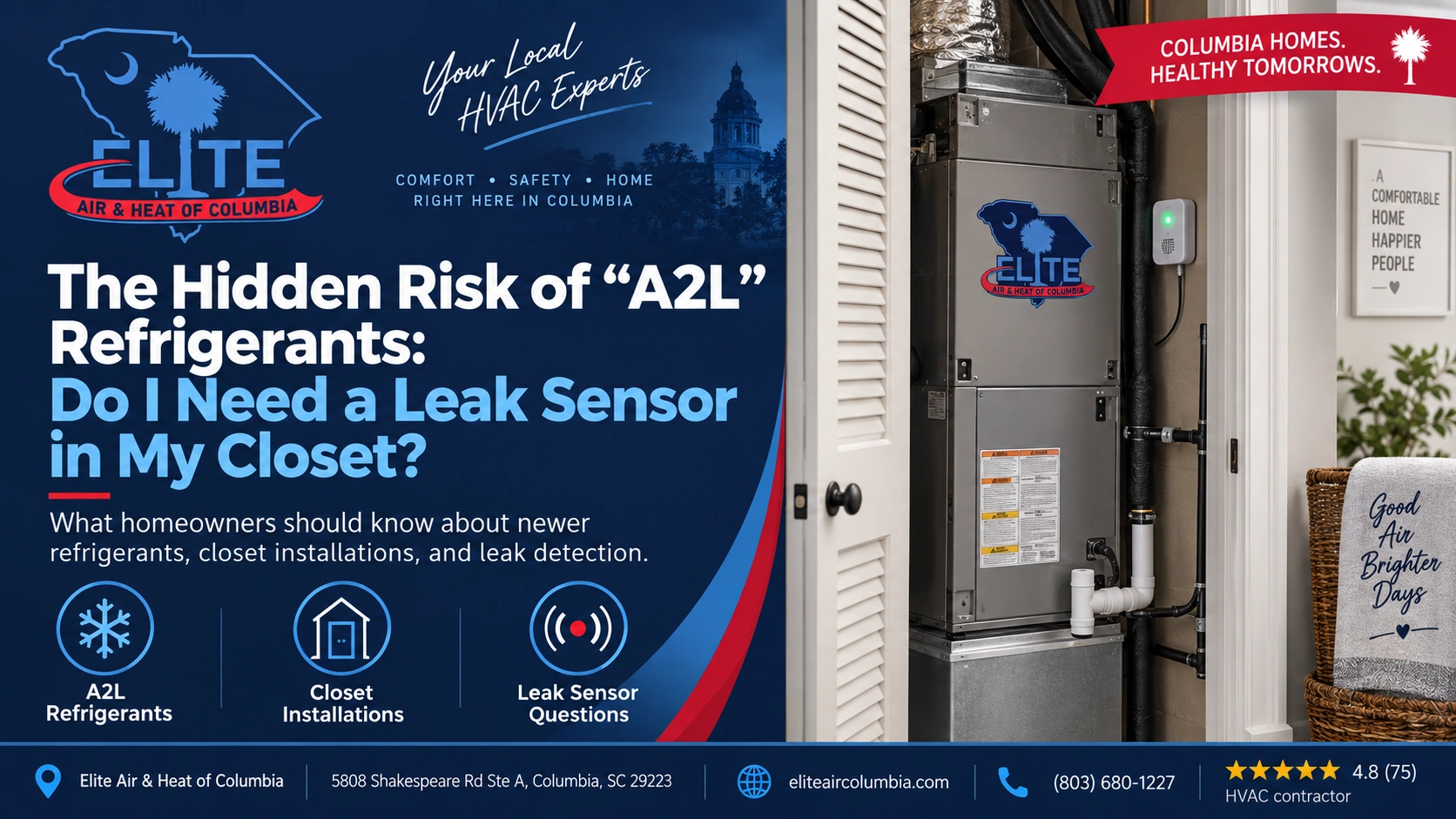
“If I install a new HVAC system with an A2L refrigerant, do I need a leak sensor in my closet?”
Here’s the plain answer:
In many cases, yes. If your indoor HVAC equipment is installed in a closet, attic access room, utility room, or other enclosed space, modern A2L systems often require refrigerant leak detection equipment as part of the installation.
Before that causes alarm, it’s important to understand what these sensors actually do, why they’re required, and what risks they’re designed to address.
The reality is much less dramatic than many homeowners imagine.
In fact, the presence of a leak sensor is often evidence that the system was designed with additional safety measures in mind.
The goal is not to fear A2L refrigerants.
The goal is to understand how the technology works and what it means for your home.
What Are A2L Refrigerants?
A2L refrigerants are the next generation of refrigerants being used in residential air conditioning and heat pump systems.
They were developed primarily to reduce environmental impact compared to older refrigerants.
Examples include:
- R-454B
- R-32
These refrigerants have significantly lower global warming potential (GWP) than previous options such as R-410A.
As the HVAC industry transitions to newer standards, many new systems are being designed around A2L refrigerants.
For homeowners, the equipment often looks very similar to previous systems.
However, one important difference exists:
A2L refrigerants are classified as mildly flammable under specific conditions.
That classification is what drives the leak sensor discussion.
What Does “Mildly Flammable” Actually Mean?
This is where homeowners sometimes get into trouble.
They hear the word “flammable” and immediately picture something similar to propane or natural gas.
That’s not an accurate comparison.
A2L refrigerants have very different ignition characteristics.
They require specific conditions to ignite, including:
- Sufficient refrigerant concentration
- Proper air mixture
- An ignition source
- Particular environmental conditions
In practical terms, they are significantly less flammable than many common fuels found around the home.
That said, safety standards are built around worst-case scenarios.
Building codes and equipment manufacturers assume that even unlikely events should be addressed through engineering and safety controls.
That’s where leak sensors enter the picture.
Why Are Leak Sensors Being Installed?
The purpose of a refrigerant leak sensor is straightforward.
It monitors the area around the indoor HVAC equipment for elevated refrigerant concentrations.
If refrigerant reaches a predetermined threshold, the system can respond automatically.
Depending on the equipment design, that response may include:
- Shutting down system operation
- Activating ventilation measures
- Preventing refrigerant circulation
- Generating fault notifications
In simple terms, the sensor is there to detect an abnormal condition before it becomes a safety concern.
Think of it like:
- Smoke detectors
- Carbon monoxide detectors
- Furnace safety switches
- Float switches on drain pans
Most homeowners never expect these devices to activate.
They’re there because safety systems are designed around prevention rather than reaction.
Why Closets Receive So Much Attention
You may have noticed that many discussions specifically mention HVAC closets.
There’s a reason for that.
A refrigerant leak behaves differently in a small enclosed space than it does in a large open area.
Imagine two scenarios.
Scenario One: Large Open Living Room
If a refrigerant leak occurred in a large open space, the refrigerant would disperse across a much larger air volume.
Concentrations remain lower because the space is larger.
Scenario Two: Small HVAC Closet
A leak inside a confined utility closet has less air volume available for dilution.
The refrigerant concentration can increase more rapidly.
That doesn’t mean danger is automatically present.
It simply means safety standards treat enclosed mechanical spaces differently.
As a result, many installations require refrigerant detection devices when indoor equipment is located in:
- Hall closets
- Utility closets
- Mechanical rooms
- Storage rooms
- Small enclosed spaces
Does Every New A2L System Need a Leak Sensor?
No.
This is one of the biggest misconceptions homeowners have.
Leak sensor requirements depend on several factors, including:
- Equipment design
- Refrigerant charge size
- Installation location
- Room volume
- Manufacturer requirements
- Applicable building codes
Some systems incorporate detection devices as standard equipment.
Others use alternative design approaches that satisfy safety requirements differently.
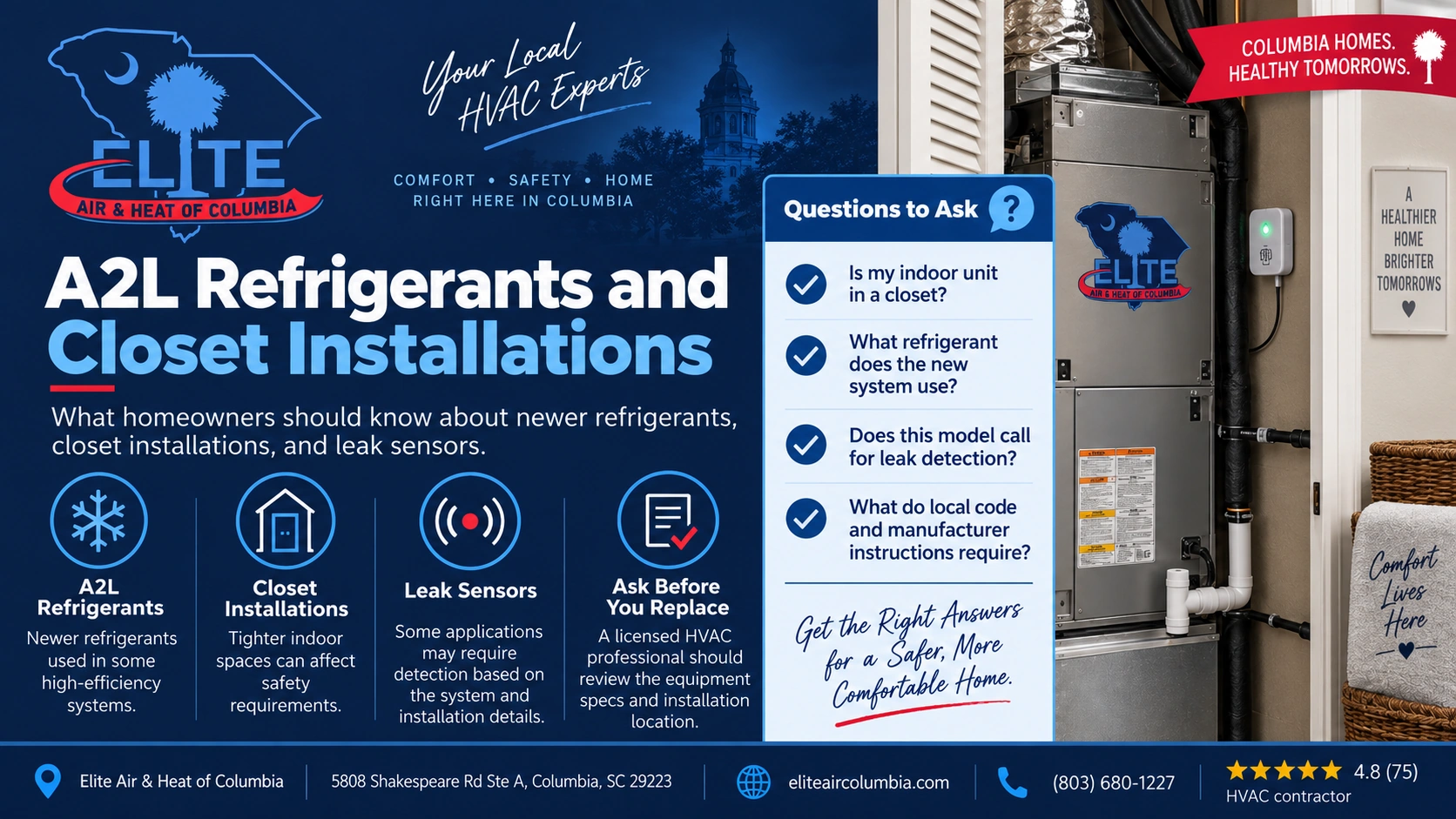
A good HVAC contractor should be able to explain exactly what applies to your specific installation.
If the answer sounds vague, ask for clarification.
The requirements are generally determined before installation not afterward.
What Happens if a Leak Sensor Detects Refrigerant?
Many homeowners worry that a leak sensor means something dangerous is happening.
In reality, the sensor’s job is to prevent conditions from progressing.
If elevated refrigerant levels are detected, the system may:
- Shut itself down
- Disable cooling operation
- Display fault codes
- Alert service personnel
The response varies by manufacturer and system design.
The important thing to understand is that the sensor is part of the protection strategy.
It isn’t evidence that the equipment is unsafe.
It’s evidence that safety features have been built into the system.
Are A2L Refrigerants Safe for Homes?
For most homeowners, this is the real question.
Here’s the plain answer:
Yes. Modern A2L systems are designed to operate safely in residential environments when installed according to manufacturer specifications and applicable codes.
Manufacturers, engineers, code organizations, and regulatory agencies spent years developing the standards governing these systems.
Those standards address:
- Equipment construction
- Refrigerant charge limits
- Airflow requirements
- Leak detection
- Electrical components
- Installation procedures
The transition to A2L refrigerants did not happen overnight.
Extensive testing and safety evaluations occurred before widespread adoption.
What Are the Actual Risks Homeowners Should Understand?
Every HVAC system carries some level of risk.
Older refrigerants had their own considerations.
Gas furnaces have theirs.
Electrical systems have theirs.
The key is understanding realistic risks rather than worst-case internet headlines.
For A2L systems, homeowners should focus on:
Proper Installation
A poorly installed system creates more risk than the refrigerant itself.
Proper sizing, piping, charging, and commissioning matter.
Equipment Compatibility
Only approved equipment combinations should be used.
Mixing incompatible components creates unnecessary problems.
Professional Repairs
Refrigerant work should always be handled by qualified HVAC technicians.
This is not a DIY project.
Routine Maintenance
Regular inspections help identify issues before they become larger problems.
The same principle applied to R-22 and R-410A systems.
What Happens During a Refrigerant Leak?
This is another area where online discussions often create unnecessary anxiety.
Most refrigerant leaks do not occur suddenly.
Many develop gradually over time.
Common signs include:
- Reduced cooling performance
- Longer runtimes
- Ice accumulation
- Elevated utility bills
- System faults
A small leak may exist for months before performance noticeably declines.
The leak sensor isn’t intended to respond to every tiny refrigerant loss.
It’s designed to respond when refrigerant concentration reaches established safety thresholds.
Those are very different situations.
Will Leak Sensors Increase Repair Costs?
Potentially—but usually not significantly.
Like any additional component, leak sensors can eventually require service or replacement.
However, homeowners should view them similarly to:
- Thermostats
- Safety switches
- Pressure sensors
- Condensate overflow protection devices
Modern HVAC systems already contain numerous electronic monitoring components.
Leak detection is simply becoming another part of the safety package.
Should You Avoid Buying an A2L System?
In most cases, no.
Homeowners sometimes wonder if they should delay replacement because of refrigerant changes.
That decision usually creates more problems than it solves.
If your existing system:
- Is unreliable
- Requires expensive repairs
- Struggles to cool properly
- Has reached the end of its service life
the refrigerant transition alone typically isn’t a reason to postpone replacement.
The technology is already being adopted across the industry.
The more important consideration is choosing an installer who understands the requirements.
A good technician should be able to explain:
- Which refrigerant the system uses
- Whether leak detection is required
- How the safety systems function
- What maintenance recommendations apply
The Bigger Risk Isn’t the Leak Sensor
Ironically, many homeowners focus on the leak detector itself and miss the larger issue.
The bigger risk is hiring someone unfamiliar with A2L installation requirements.
The HVAC industry is adapting to new refrigerants, new regulations, and updated installation practices.
Not every contractor has embraced those changes equally.
That’s why understanding the installation process matters far more than worrying about the sensor.
The leak detector is simply one component within a much larger safety framework.
Before You Worry About the Sensor, Understand the System
If you’re considering a new HVAC system and hear that an A2L refrigerant leak sensor may be installed in your closet, remember that this requirement exists because modern equipment is being designed with additional layers of protection.
The presence of a leak sensor doesn’t mean your home is becoming less safe.
In many ways, it means safety considerations have become more sophisticated.
Ask About the Entire Installation—Not Just the Refrigerant
When evaluating a new HVAC system, don’t focus solely on the refrigerant label.
Ask how the equipment will be installed, whether leak detection is required, how the safety systems operate, and what future maintenance looks like.
A good contractor should be able to explain all of those details in plain language without relying on fear or technical jargon.
If you’re considering replacing your HVAC system and have questions about A2L refrigerants, leak sensors, equipment closets, or upcoming code requirements, Elite Air & Heat of Columbia can help you understand exactly what applies to your home and what installation options make the most sense before you make a decision.