
If your Dominion Energy bill keeps climbing every summer, you are not imagining it.
Columbia’s long cooling season, high humidity, and extreme afternoon heat can push HVAC systems hard for months at a time. And when your AC struggles, your electric bill usually follows.
The frustrating part is this:
Many homeowners assume the only way to lower summer cooling costs is buying a brand-new HVAC system.
Sometimes that helps.
But often, the biggest energy waste comes from airflow problems, humidity issues, bad thermostat habits, duct leakage, or systems running longer than necessary.
Here’s the plain answer:
The best way to lower your Dominion Energy bill is reducing how hard and how long your AC has to work during South Carolina’s hottest months.
And some of the most effective improvements are far less expensive than homeowners expect.
High Energy Bills This Summer?
Stop wasting money on unnecessary electricity use. Let us help make your home more energy-efficient.
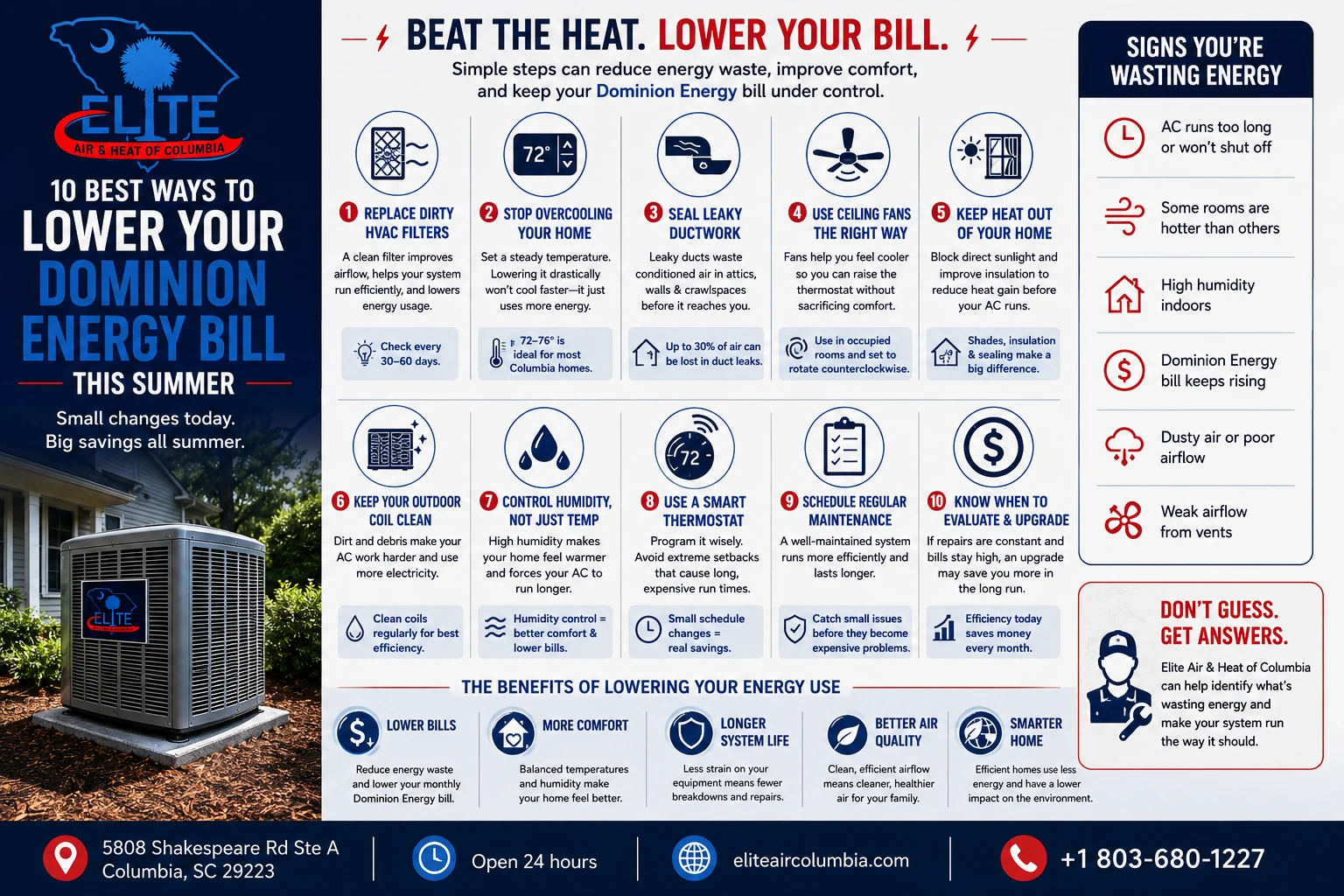
1. Replace Dirty HVAC Filters Before They Restrict Airflow
This sounds basic because it is basic.
But it matters more than most homeowners realize.
A clogged air filter restricts airflow across your indoor coil, forcing the system to:
- run longer
- cool less efficiently
- remove humidity poorly
- consume more electricity
In Columbia’s summer humidity, filters can load up quickly.
Especially if you have:
- pets
- older ductwork
- high pollen exposure
- recent remodeling dust
- multiple occupants
A severely restricted filter can increase runtime dramatically.
General Rule:
Check filters every 30–60 days during peak cooling season.
But this is important:
The thickest filter is not always the best filter.
Some ultra-high-MERV filters restrict airflow too much for certain residential systems.
A good technician should help match the filter to the system.
2. Stop Lowering the Thermostat to “Catch Up” the House
This is one of the biggest summer mistakes homeowners make.
If the house feels warm, many people drop the thermostat from:
- 74 → 68
hoping the AC works faster.
But residential AC systems do not work like gas pedals.
Lowering the thermostat drastically usually just forces:
- longer runtime
- higher energy usage
- increased humidity strain
without cooling the house significantly faster.
A steady, realistic temperature setting is usually more efficient.
For many homes, somewhere around:
- 72–76 degrees
balances comfort and energy use reasonably well.
3. Seal Leaky Ductwork
This is one of the most overlooked energy problems in older Columbia homes.
Leaky ducts can dump conditioned air into:
- attics
- crawlspaces
- wall cavities
before it ever reaches the rooms you are paying to cool.
In some homes, duct leakage wastes enormous amounts of energy.
Signs may include:
- weak airflow
- hot rooms
- dusty air
- humidity problems
- long AC runtime
This is where homeowners sometimes get into trouble.
They replace the HVAC equipment while leaving badly leaking ducts untouched.
The new system still struggles because the airflow system itself is compromised.
4. Use Ceiling Fans Correctly
Fans do not lower room temperature.
They help people feel cooler by improving evaporation and air movement.
That means you can often keep the thermostat slightly higher while maintaining comfort.
But only if:
- fans rotate correctly
- they are used in occupied rooms
During summer:
- ceiling fans should rotate counterclockwise
to push air downward.
And remember:
Fans cool people, not empty rooms.
Leaving them running constantly in unused rooms only adds electrical load.
5. Keep Heat Out Before Your AC Has to Remove It
A lot of energy waste starts before the HVAC system even turns on.
South Carolina sun creates major heat gain through:
- windows
- attic spaces
- uninsulated walls
- west-facing rooms
Simple improvements can help significantly:
- blackout curtains
- solar shades
- attic insulation upgrades
- sealing attic penetrations
- reducing direct afternoon sunlight
Older homes especially may struggle because insulation standards were very different decades ago.
Your AC cannot operate efficiently if the house constantly absorbs excessive heat.
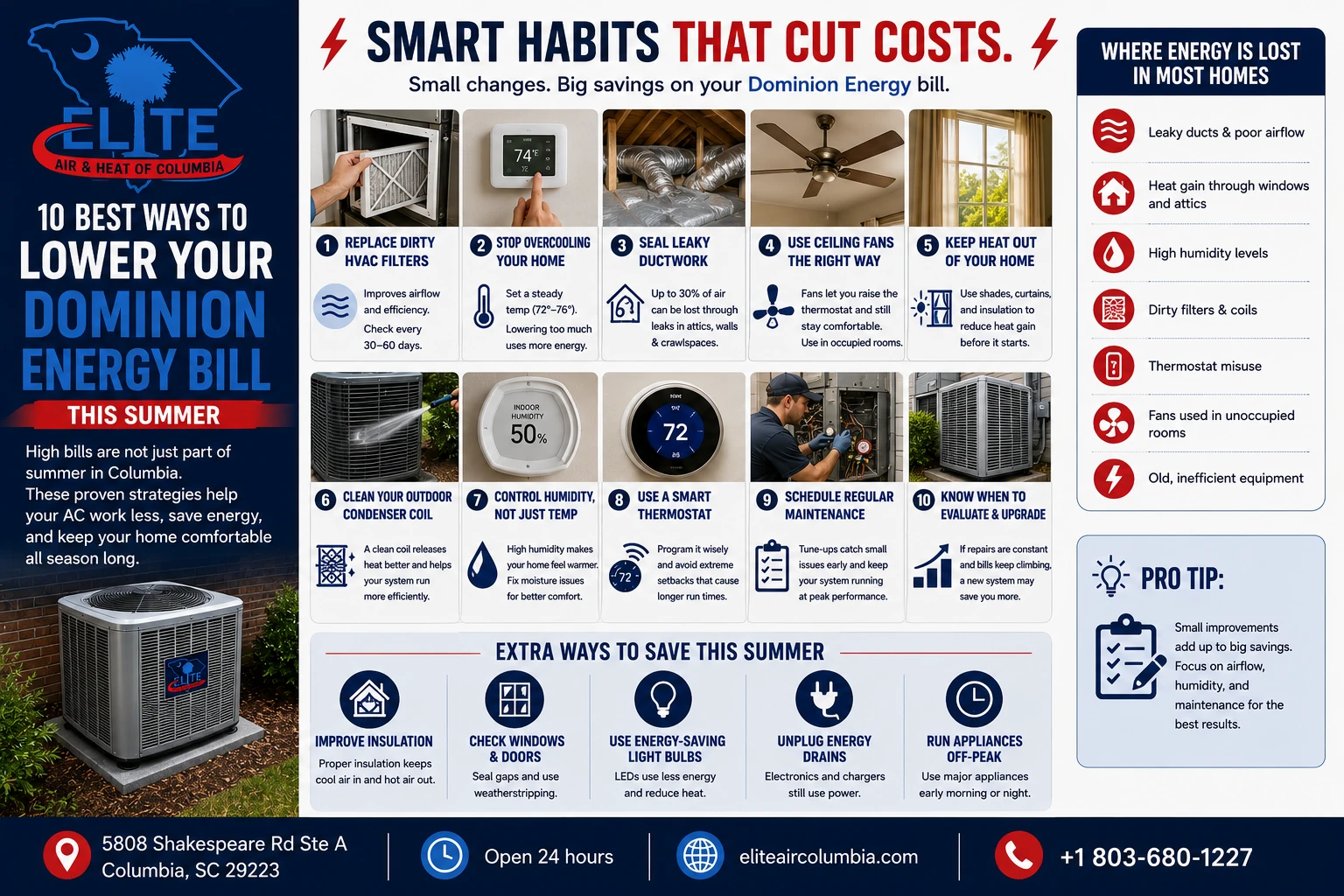
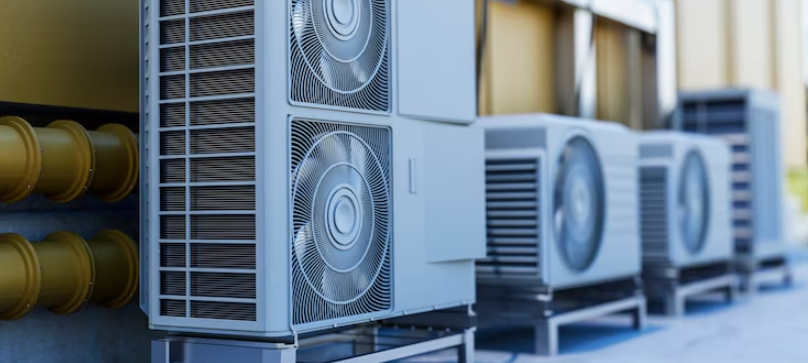
6. Have the Outdoor Coil Professionally Cleaned
Your outdoor condenser needs proper airflow to release heat.
But over time, outdoor coils collect:
- pollen
- dirt
- grass clippings
- cottonwood
- debris
That buildup forces the system to work harder.
A dirty condenser can increase energy usage and reduce cooling capacity significantly.
Homeowners can safely:
- gently rinse debris from the exterior with light water pressure
But coil cleaning involving chemicals or internal disassembly should be left to professionals.
This is where homeowners sometimes accidentally bend fins or damage equipment trying to pressure wash the unit aggressively.
When AC Repairs Reveal Bigger Issues: What Technicians are Noticing This Spring
That first AC repair call of the season isn’t always as simple as it looks. This spring, technicians are noticing…
7. Address Humidity Problems — Not Just Temperature
In Columbia’s heat and humidity, moisture control matters enormously.
A house can technically reach:
- 72 degrees
while still feeling uncomfortable because humidity stays high.
When humidity rises:
- homeowners lower thermostats further
- runtime increases
- energy bills climb
Poor humidity control may involve:
- oversized systems
- airflow problems
- duct leakage
- dirty coils
- attic infiltration
- oversized equipment short-cycling
A good technician should evaluate humidity performance, not just temperature readings.
8. Use a Programmable or Smart Thermostat Properly
Smart thermostats can help reduce energy waste.
But only if they are programmed realistically.
Extreme setbacks often backfire in South Carolina summers.
For example:
- raising the house to 82 all day
- then demanding 72 degrees at 5 PM
can force enormous evening runtime during peak heat.
Gradual adjustments usually work better.
Some smart thermostats also help by:
- reducing unnecessary runtime
- tracking usage trends
- improving scheduling consistency
But technology alone cannot overcome:
- bad ductwork
- poor airflow
- oversized systems
9. Schedule HVAC Maintenance Before Peak Failure Season
A struggling system often wastes energy long before it fully breaks down.
Routine maintenance can identify:
- weak capacitors
- dirty coils
- airflow restrictions
- refrigerant issues
- drainage problems
- blower inefficiency
before they create massive runtime increases.
A neglected system may still “work” while quietly consuming far more electricity than necessary.
A good maintenance visit should include:
- airflow inspection
- coil condition checks
- refrigerant evaluation
- electrical testing
- condensate inspection
- temperature readings
Not just changing a filter and leaving.
10. Know When Your AC Is Costing More Than It Is Worth
Sometimes the problem is not maintenance.
Sometimes the system is simply aging inefficiently.
Older systems may:
- run constantly
- struggle with humidity
- lose efficiency gradually
- require repeated repairs
- consume excessive electricity
This is especially true for:
- oversized older systems
- neglected systems
- aging heat pumps
- systems with poor duct design
That does not automatically mean replacement is necessary.
But if:
- repairs are frequent
- comfort keeps declining
- Dominion bills keep climbing
- runtime never stops
then a full system evaluation starts making financial sense.
The goal is not to buy the biggest repair. The goal is to understand where the waste is actually happening.
Bonus Tip: Stop Closing Vents Around the House
A lot of homeowners close vents trying to:
- force air elsewhere
- reduce cooling costs
- cool only occupied rooms
But most residential systems are designed for specific airflow volumes.
Closing too many vents can:
- increase static pressure
- reduce efficiency
- strain blower motors
- contribute to frozen coils
The cheaper-looking solution is not always the smarter one.
The Biggest Myth About High Power Bills
Here is the myth:
“My AC is old, so I automatically need a new one.”
Sometimes that is true.
But many high bills actually come from:
- airflow restrictions
- leaking ducts
- humidity imbalance
- poor insulation
- maintenance neglect
- oversized systems
A newer unit installed on a bad airflow system can still produce disappointing energy bills.
The Bottom Line
Lowering your Dominion Energy bill this summer is usually about reducing HVAC runtime, improving airflow, controlling humidity, and stopping energy waste before it compounds.
The most effective improvements often include:
- filter maintenance
- duct sealing
- airflow correction
- humidity management
- insulation improvements
- realistic thermostat settings
- proper HVAC maintenance
And sometimes, yes, replacement becomes part of the conversation.
But a good HVAC company should be able to explain:
- where your energy loss is happening
- whether repairs can realistically improve efficiency
- whether the duct system is contributing
- and whether upgrading the equipment would produce meaningful savings
If your AC keeps struggling through Columbia’s hottest months, Elite Air & Heat of Columbia can help evaluate whether the real issue is the equipment, airflow, duct leakage, humidity imbalance, or a combination of problems before you spend money on the wrong fix.
Take Control of Your Power Bill
An inefficient electrical system could be costing you more every month. Call us for trusted HVAC service.