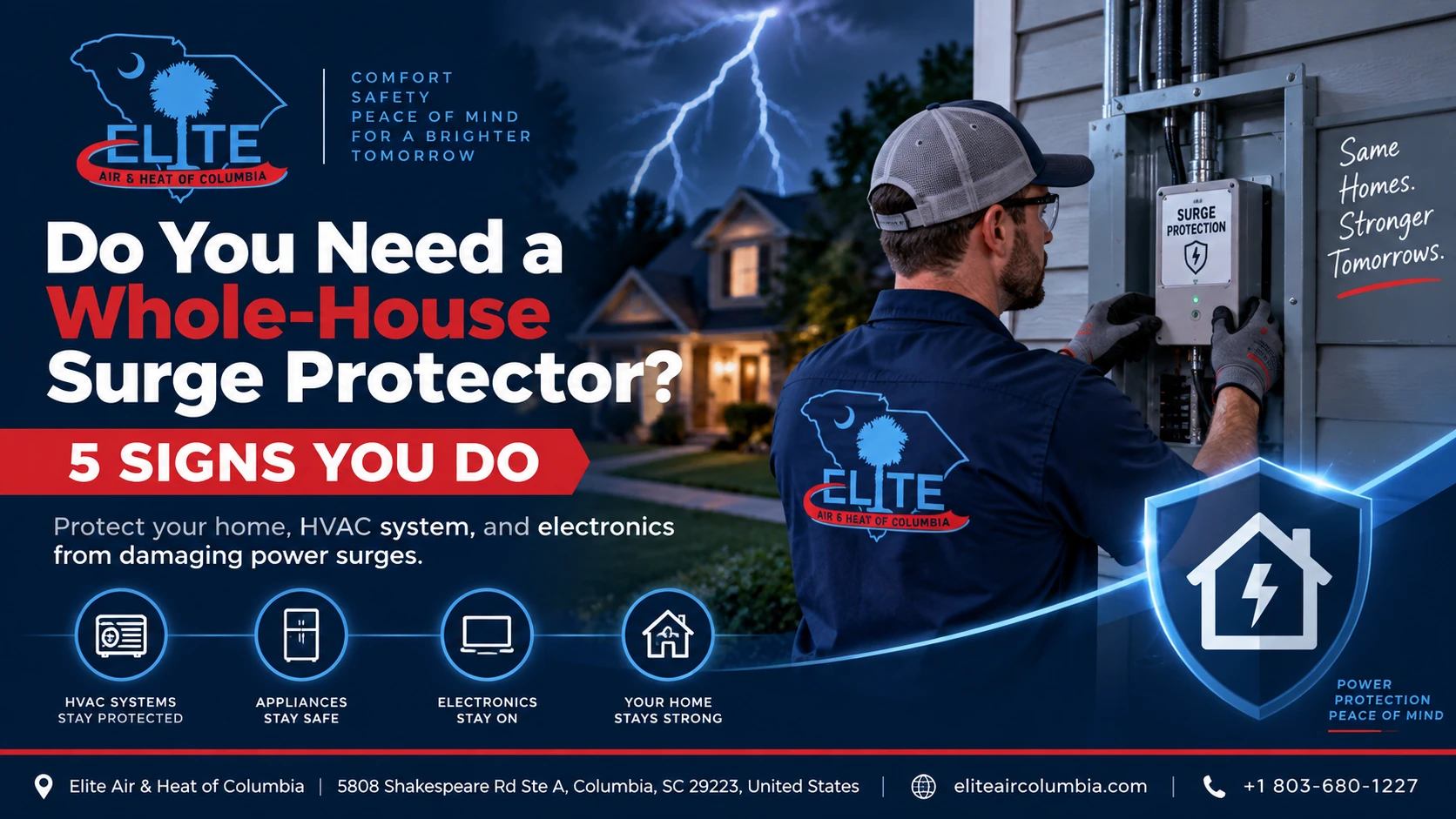

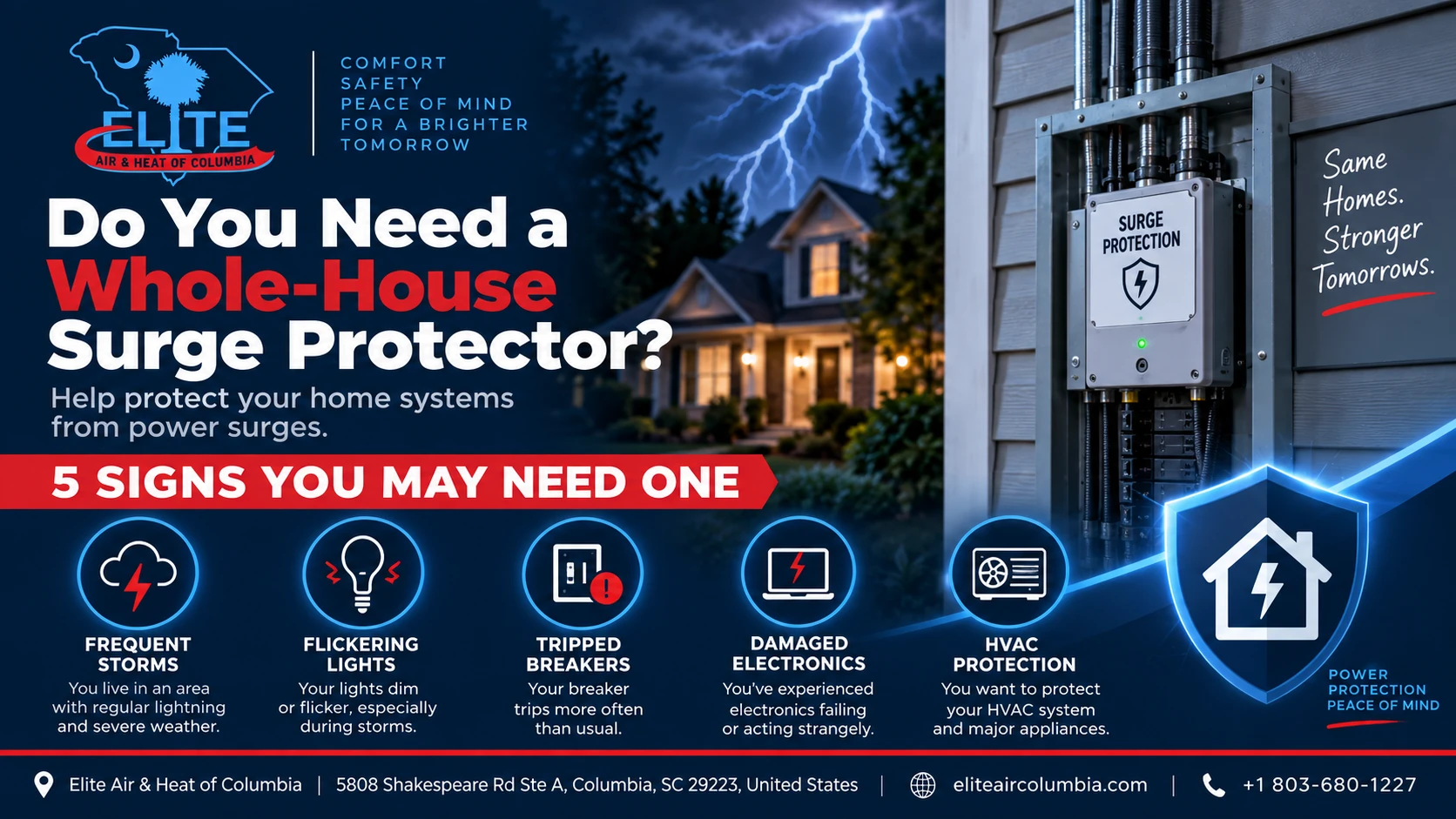
A power strip with a surge protector built in only protects whatever’s plugged into it. A whole-house surge protector, installed at or near your electrical panel, helps protect your home’s electrical system and connected equipment at once, including large appliances, HVAC equipment, and hardwired devices. Here are five signs it’s worth considering one, and what it actually costs.
Key Takeaways
• A whole-house surge protector installed at the panel typically costs $200–$800 including professional installation (HomeGuide, 2026).
• South Carolina experiences frequent thunderstorms, particularly during spring and summer, creating regular exposure to lightning-related electrical surges.
• Frequent flickering lights, unexplained breaker trips, or repeated electronics and appliance failures are all signs worth having your electrical system investigated.
• A whole-house unit works alongside point-of-use surge protectors, not necessarily instead of them. Layered surge protection can provide added protection for sensitive electronics.
1. You’ve Had a Direct or Nearby Lightning Strike
York County sees regular thunderstorm activity, and a nearby lightning strike can create a surge that travels through electrical or utility lines into your home. It does not necessarily have to strike your property directly to create a damaging voltage spike.
If you’ve had significant lightning activity nearby recently, or if you’ve experienced electrical problems after a storm, that’s a good reason to have your system inspected and consider whole-house surge protection.
2. Lights Flicker or Dim When Large Appliances Cycle On
If your lights noticeably flicker or dim when the AC compressor or another large appliance starts, it’s worth having the electrical system evaluated.
That symptom can be related to voltage drop, circuit or service capacity, loose connections, or other power-quality issues. It isn’t proof that damaging surges are occurring, and a surge protector may not correct the underlying problem, but it can be a good reason to have an electrician inspect the system and determine whether surge protection should be part of the solution.
3. You’ve Replaced the Same Type of Appliance or Electronics Repeatedly
A TV, computer, appliance control board, or other electronic device failing once may simply be normal wear or an isolated equipment problem.
Repeated failures without an obvious cause are worth investigating. Power surges can damage electronics immediately or contribute to cumulative degradation over time, but repeated failures can also result from wiring problems, voltage variations, overheating, defective equipment, or other electrical issues.
An electrician can help determine whether power quality or surge exposure may be contributing to the problem.
4. You Have Sensitive HVAC, Security, or Smart-Home Equipment
Modern HVAC systems, smart thermostats, security systems, televisions, computers, networking equipment, and smart-home devices commonly rely on electronic controls and circuit boards that can be vulnerable to transient overvoltage.
If you’ve invested in this type of equipment, a whole-house surge protector can provide another layer of protection against many of the electrical surges that may enter or originate within your home’s electrical system.
5. Your Home Doesn’t Already Have One
Many older homes were built before panel-level surge protection became common, so they may not have a whole-house surge protective device installed.
If you’re not sure whether your home already has one, it’s worth checking. An electrician can inspect the panel, identify any existing surge protection, and determine whether adding or replacing a device makes sense for your electrical system.
| Repair / Item | Typical Cost Range |
| Type 2 whole-house unit (installed) | $200–$450 |
| Type 1 whole-house unit (installed) | $250–$800 |
| Installation labor only | $140–$300 |
National average ranges, HomeGuide 2026 Whole-House Surge Protector Cost report. Confirm against Elite’s current pricing before publishing.
⚠ Confirm before publishing: These cost ranges are national 2026 averages (HomeGuide), not Elite Air & Heat’s own price sheet. Confirm actual Rock Hill/York County pricing before publishing.
Does This Replace My Power Strips?
No. A whole-house surge protector and point-of-use surge protectors can work together as part of a layered approach.
The panel-level device helps reduce larger surges before they reach connected equipment throughout the home, while listed point-of-use surge protectors can provide another layer of protection for sensitive electronics such as computers, televisions, networking equipment, and other valuable devices.
If you’re also considering electrical upgrades such as an EV charger installed or generator equipment, an electrician can review your overall electrical system and recommend appropriate surge protection for the installation.
Frequently Asked Questions
How long does a whole-house surge protector last?
There is no single lifespan for every whole-house surge protector. Service life depends on the device, the number and severity of surge events it experiences, and local electrical conditions. Many models include a status or indicator light that shows whether the unit is still providing protection and may need replacement after a significant surge or once the device reaches the end of its service life.
Can a whole-house surge protector stop damage from a direct lightning strike?
No surge protector can guarantee protection against a direct lightning strike. A whole-house surge protective device can reduce the risk of damage from many lightning-related surges, including nearby strikes, grid switching, and other transient overvoltage events. Direct lightning protection is a separate system and may require additional equipment beyond a standard surge protector.
Is a whole-house surge protector required by code?
The National Electrical Code includes surge-protection requirements for certain dwelling services, but South Carolina has modified the NEC so that this specific requirement does not currently apply statewide.
Local project requirements can still vary, so homeowners should confirm current Rock Hill or York County permitting and electrical requirements with their licensed electrician before electrical service or panel work begins.
How is it installed?
A licensed electrician typically installs a whole-house surge protective device at or near the home’s main electrical panel or service equipment, depending on the device type and electrical system.
Straightforward installations may be relatively quick, but actual installation time can vary based on panel access, available breaker space, equipment configuration, and whether any other electrical work is needed.
Protect Your Whole Home, Not Just What’s Plugged Into a Power Strip
A panel-level surge protector is a relatively small electrical upgrade that can help protect equipment throughout your home, from your HVAC system and appliances to smart-home devices and other sensitive electronics.
Call (803) 366-4663 or request service online to schedule.
Elite Air & Heat LLC | (803) 366-4663 | 2175 Mt Gallant Rd, Rock Hill, SC 29732